Employee Lifecycle Management in Pakistan (2026) : A comprehensive guide

Employee Lifecycle Management in Pakistan(2026): From Onboarding to Offboarding with Full Compliance

Employee lifecycle management in Pakistan is more than just an HR activity – it is a strategy for directing all employees from the time they are recruited until they leave the company, while being fully compliant with the law and creating a good employee Experience. Companies who have a successful elm will see improvements in productivity, lower turnover and improved organizational performance.

From Talent Acquisition and Employee Onboarding to performance management, every single stage of elm forms part of the total employee Experience and contributes to long-term business growth whether you are a local Pakistani employer or an international employer looking to hire staff in Pakistan.

What Is Employee Lifecycle Management?
what is Employee lifecycle management

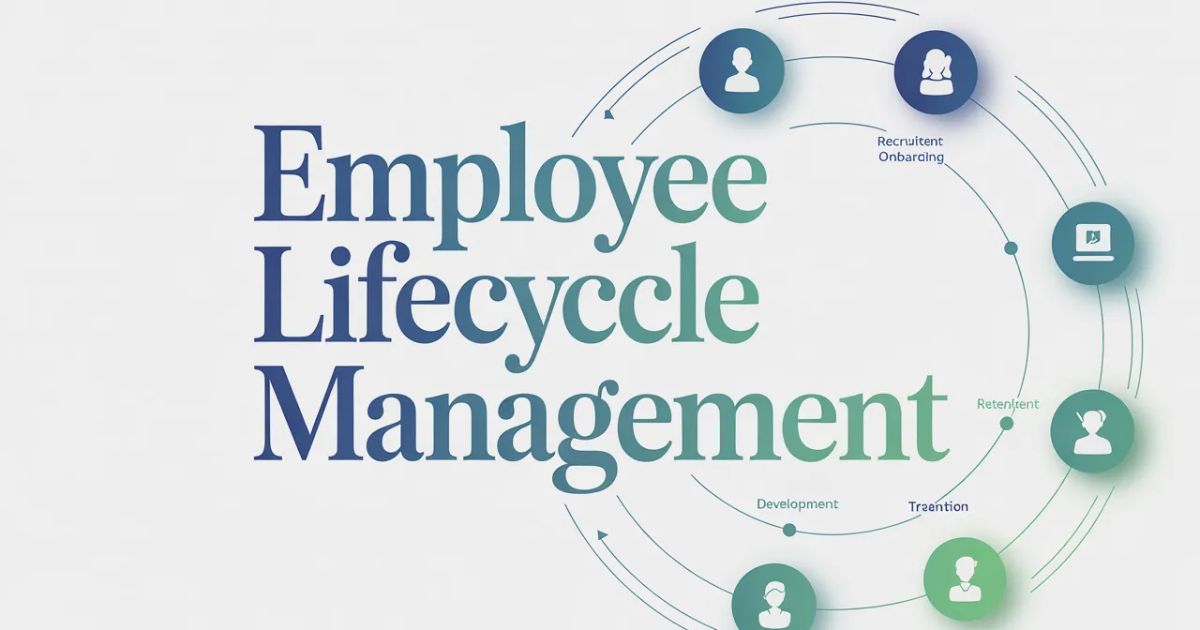
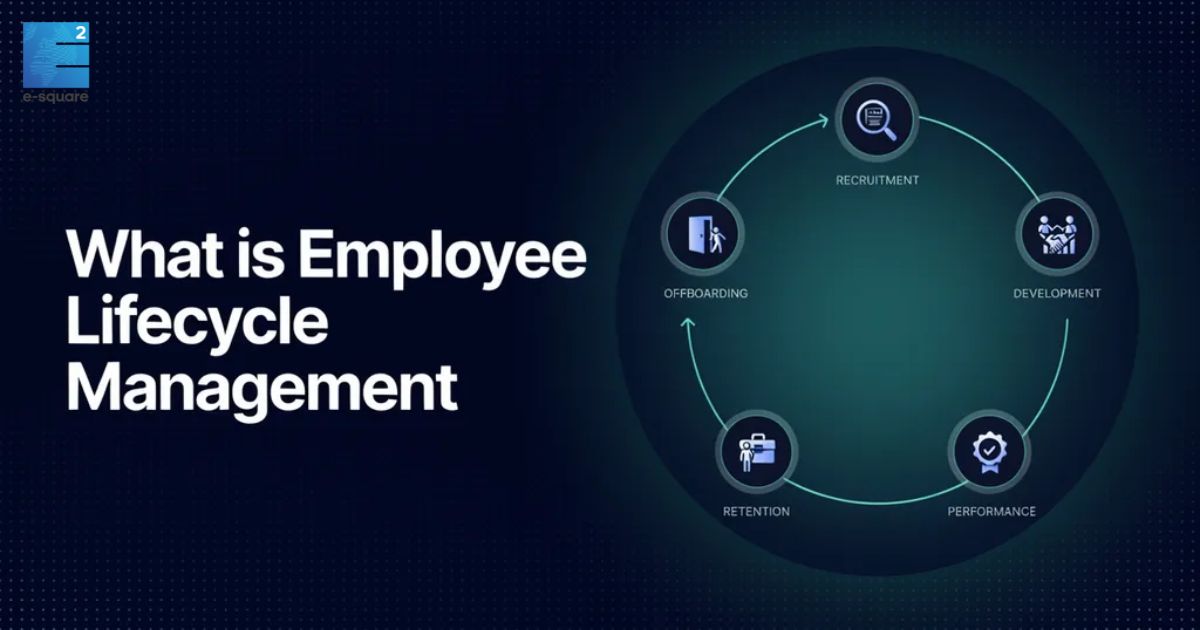
Employee Lifecycle Management in Pakistan refers to managing all aspects of the entire employee journey from the moment an individual is attracted to join the company, through recruitment, onboarding, Employee Development, retention, and finally leaving. Simply put, it is the entire pathway an employee travels while employed by an employer.

This model is important as work does not start on a new employee’s first day and finish on their last day. The way an employer develops the employee Experience throughout this pathway significantly impacts the workforce. As such, effective Workforce Management relies heavily upon having defined processes, clean records and consistent treatment of all employees throughout the entire lifecycle.

Why Employee Lifecycle Management in Pakistan goes beyond hiring and resignation?

A number of employers today believe that elm is simply about employing talented individuals and providing them with a correct final settlement. However, there is far more to it than that. Realistic elm also encompasses; engagement, learning, performance, Compliance, day-to-day support etc. Should any stage of the cycle fail to meet expectations, subsequent stages will generally become more difficult, slower and therefore more costly.

Why Employee Lifecycle Management Is Critical for Pakistani Businesses?
Why Employee Lifecycle Management Is Critical for Pakistani Businesses?

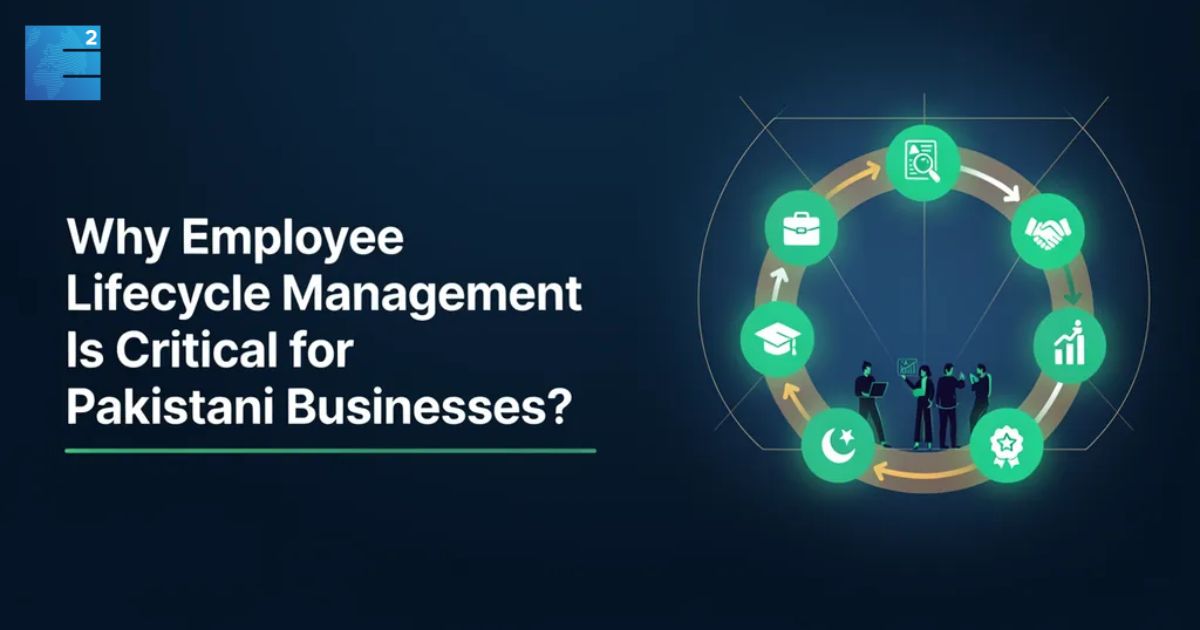
Local employers operating in Pakistan typically expand much faster than do their own internal systems. This expansion leads to friction. Consequently, employers’ recruitment becomes rushed, onboarding becomes informal, performance reviews cease to occur and exits occur without process. An appropriate elm model prevents drift prior to drift becoming payable disputes over payroll, turnover or unnecessary Compliance stress.

Given the above, elm is especially significant for foreign employers hiring staff in Pakistan. Where teams operate remotely or through outsourcing models, each lifecycle stage needs to be clearer not looser. Effective HR Compliance and good Payroll Management practice lead to predictability, legality and ease-of-management across functions when dealing with remote and outsourced employees.

Why weak lifecycle control creates cost and compliance risk?

Weak design of Employee Lifecycle Management generates hidden costs. Hiring mistakes generate replacement expenses. Poor onboarding generates delays in productivity. Lack of documentation creates problems in payroll and final settlements. Low engagement increases attrition. Essentially a broken lifecycle leaks money quietly. You normally recognize it late when morale falls or Compliance issues arise.

The 7 Stages of the Employee Lifecycle
The 7 Stages of the Employee Lifecycle

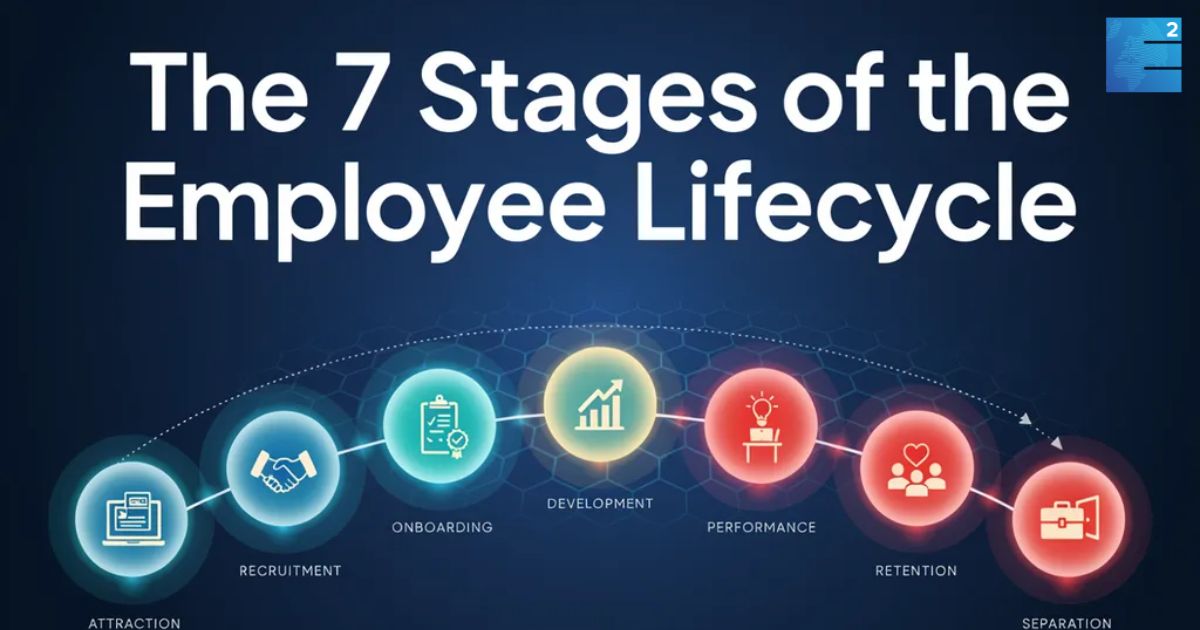
There are 7 interconnected stages in the standard lifecycle: Attraction, recruitment, onboarding, engagement, learning, performance and retention/offboarding. Each stage of the employee lifecycle is not randomly placed but forms part of One continuous chain. Should any link fail within the chain the entire employee Experience will start to wobble.

It would be possible to compare it to a relay race where each stage hands the baton onto the next. Therefore, talent acquisition supports better onboarding. Better onboarding improves engagement. Improved engagement enhances Employee Development. Enhanced Employee Development improves performance. Fair performance management strengthens retention or provides cleaner exit as required.

Stage Main purpose
Attraction Bring the right people into the funnel
Recruitment Select and hire well
Onboarding Start clearly and lawfully
Engagement Build connection and trust
Learning Improve capability over time
Performance Measure and guide results
Retention / Offboarding Keep the right people or exit well


Why every stage affects the whole lifecycle?

Each stage lives within another. Poor talent acquisition generally leads to poor onboarding. Poor onboarding generally results in poor engagement. Poorly engaged employees rarely perform at their full potential. Therefore, employers need to manage the whole flow together rather than treating each stage as separate administrative tasks.

Stage 1: attracting the right talent

1st stage of the employee lifecycle - attracting the right talent

Attraction takes place before your vacancy goes live. Candidates first react to your reputation clarity and visible workplace culture. Employer Branding has more importance than most employers recognize. If your market image appears vague or inconsistent then strong candidates may never enter your funnel in the first instance.

Attracting the right people also means defining the role clearly. Vague job descriptions generate vague applicants. Sharper messages attract better-fit applicants. Intelligent talent acquisition is not about collecting more CVs but rather drawing the right people toward the right role in the first instance.

How talent attraction shapes later retention?

Attraction acts as the first filter for long-term fit. If you attract individuals with wrong expectations then retention problems will begin early. What you promise during hire must match reality of the job. Otherwise, you win the employee briefly and lose trust soon after joining.

Stage 2: Recruitment and Hiring
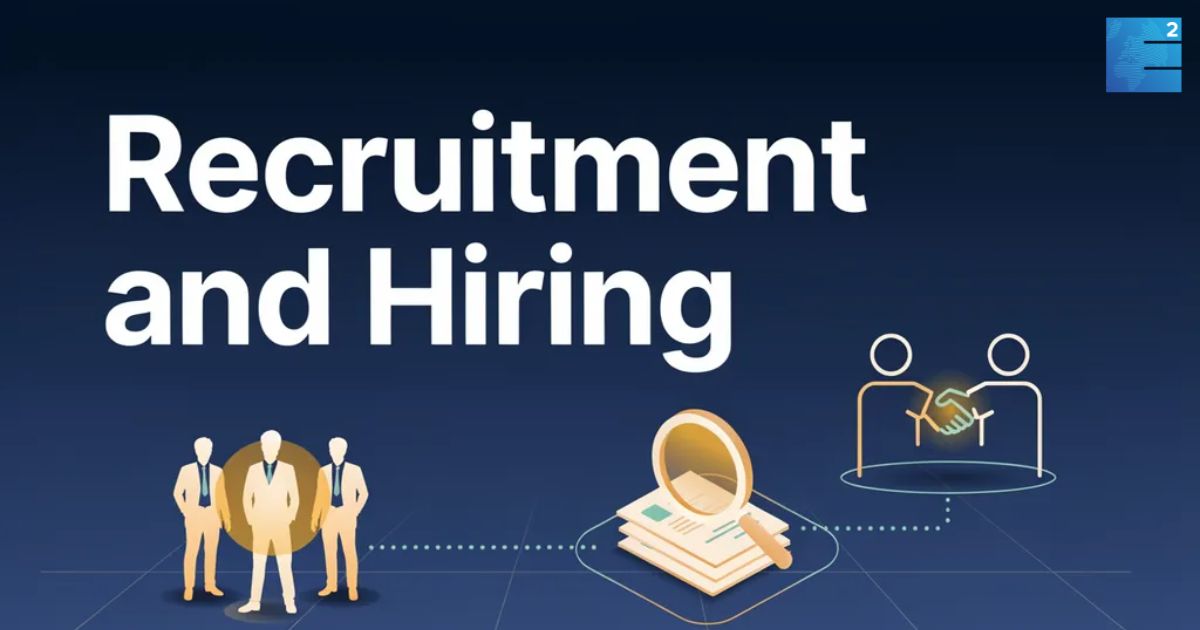
2nd stage of the employee life cycle - Recruitment and Hiring

Recruitment is the stage where an intention to recruit is turned into a recruitment decision. At this point in the cycle, we are assessing your potential candidates’ technical ability, personal values, salary requirements, and overall preparedness for employment. Great Recruitment does not simply mean selecting someone with great qualifications; rather it means choosing the best candidate at the right time.

Similarly, the recruitment process should be systematic and have documentation. Organizations should comply with Pakistan’s employment regulations published by the Ministry of Overseas Pakistanis & Human Resource Development. Your offer letter, approval route, pay logic, and expected join date should all be clear. Unfortunately, in Pakistan, hasty recruitment processes often lead to later problems such as payroll errors or low employee performance. Therefore, having a structured recruitment process will make the rest of the employment life-cycle much easier to handle.

Why poor hiring decisions create long downstream problems?

An ill-advised recruitment decision typically does not remain isolated to the hiring manager. An ill-advised hire can affect multiple aspects of a company including team morale, manager’s time, training costs, and replace personnel costs. Ill-conceived recruiting decisions can impact numerous other areas of the company. As such, effective recruiting is not simply a matter of making sure you find qualified candidates. Rather it is a matter of controlling costs and maintaining stability within the employment life-cycle.

Stage 3 – Employee Onboarding
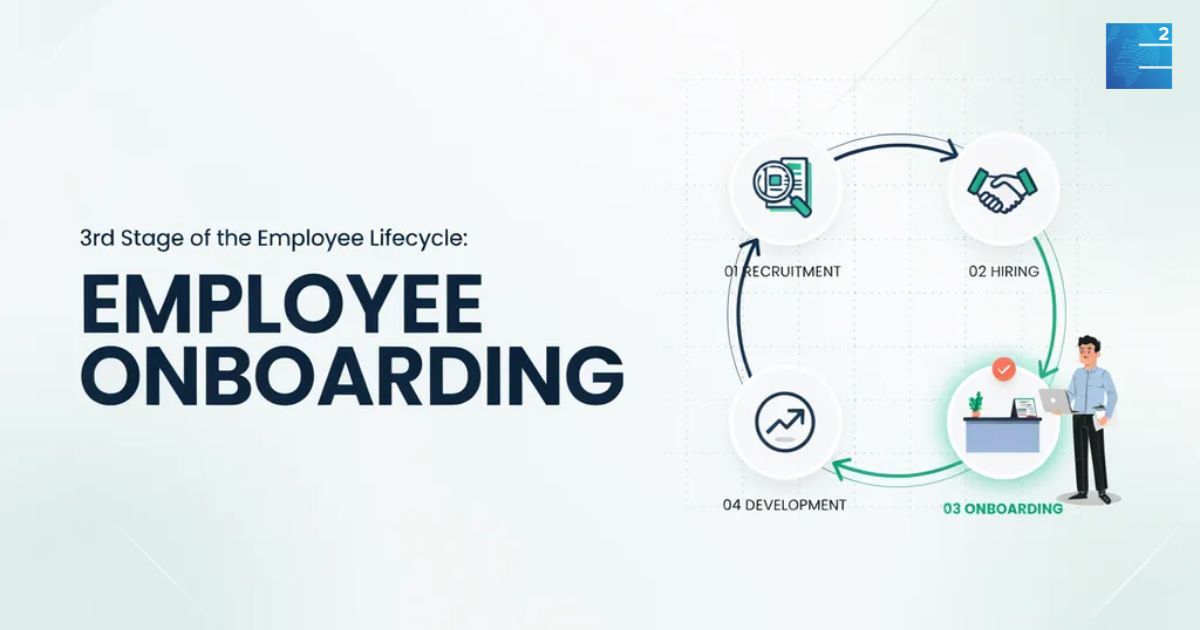
3rd stage of the employee life cycle - Employee Onboarding

Employee onboarding is the stage of the employment life-cycle where the employer transforms a recruited employee into a productive and contributing member of the team. Some of the items included in this area include contracts, job descriptions, explanations of policies and procedures, payroll information, reporting responsibilities, and orientations. If this area is not conducted in a timely and organized manner, even the most talented hires may become confused, upset, frustrated or detached from their new role. Employers should complete tax registration and payroll documentation according to the Federal Board of Revenue (FBR) guidelines.

As previously mentioned, in Pakistan, there is a compliance aspect to onboarding as well. Employee data collection (payroll records), benefit enrollment (health insurance etc.), tax information (employee identification number etc.) and attendance tracking must be initiated immediately upon commencement of employment. Technology can assist in facilitating better onboarding by providing automation to assist in creating cleaner files and reducing payroll error. Additionally, technology can provide greater efficiency to the onboarding process allowing employees to focus on becoming productive sooner than if manual processing was used.

Why onboarding is one of the highest-impact lifecycle stages?

Onboarding is critical as it sets the tone for both emotional and operational connection of an employee to the organization. New employees will recall how they were greeted when arriving at the office or how easily they could navigate through our system of policies and procedures. Better onboarding leads to increased confidence for employees earlier in their tenure. Conversely, poorly managed onboarding will result in doubts for employees prior to them settling into their position.

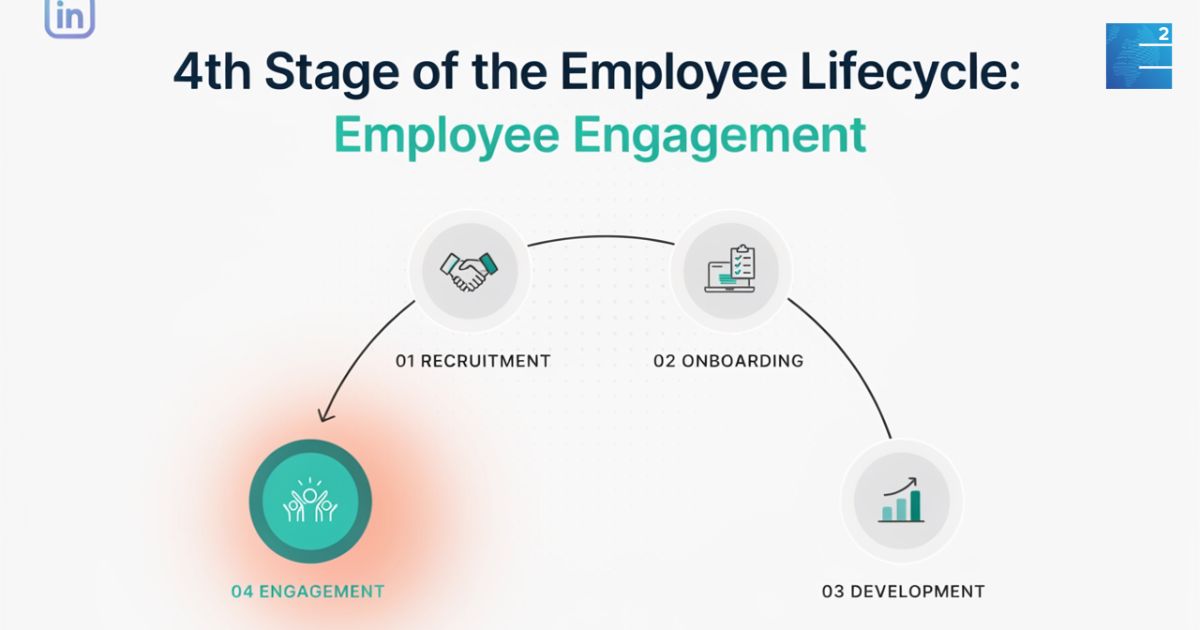
Stage 4 – Employee Engagement

4th stage of the employee life cycle - Employee Engagement

Employee engagement is when an employee decides that they want to be fully invested in their job versus being physically present. Employee engagement develops through open communication, building trust, treating employees fairly and consistently, recognizing accomplishments and consistent leadership behavior. The foundation for engagement lies heavily in Workplace Culture since culture represents everything employees experience while working at an organization excluding formal presentations.

Employee engagement is not simply soft stuff. It impacts employee production levels, attendance rates, collaboration among teams/employees and employee turnover. Employees who are engaged tend to produce at higher levels and attend regularly compared to those who do not feel valued or supported. Employee wellbeing plays a significant role in engagement as well. Workplaces that are perceived as draining or confusing will generally suffer from lower levels of employee engagement which ultimately translates to decreased productivity prior to resignation.

Why disengagement becomes expensive very quickly?

Disengaged employees typically do not declare themselves disengaged. Disengagement presents itself in various forms including: lower quality work products, reduced sense of ownership for tasks/projects, lower level of interdepartmental collaboration and increasing likelihood of voluntary turnover. Frequently managers fail to recognize these symptoms as indicative of lack of communication, lack of career opportunities or lack of adequate support. Thus, engagement must be measured continually and not assumed based solely on observation.

Stage 5 – Learning & Development
5th stage of the employee life cycle - learning and development

Learning and Development continues to grow the employment life-cycle for each individual employee. After an employee settles into his/her role(s) and demonstrates some level of competence (regardless of job type), they require ongoing education/training and skill development in order to continue growing professionally. If an employee does not receive continued development, even extremely capable individuals can stagnate. Developing employees allows organizations to utilize them as a valuable asset internally and increases confidence within each employee regarding their long-term prospects.

This stage provides support for employee internal mobility as well as preparation for future roles. Organizations that develop their current employees develop bench strength (as opposed to solely utilizing outside recruitment). Bench strength contributes positively toward improving succession planning practices as well as increasing confidence in manager’s abilities to select/promote employees appropriately.

Why employers lose strong people when development is ignored?

Employees frequently leave an organization not due to any fault in the organization but due to the fact that they perceive little opportunity for future advancement/growth. If employees perceive that there is no way to learn, grow professionally or improve their capabilities within the organization, they will begin searching elsewhere. As such, development is not merely an optional component in supporting employee retention; it serves as a tangible retention mechanism masked as a developmental resource.

Stage 6 – Performance Management

6th stage of the employee life cycle - performance management

Performance management establishes structure around expectations for performance (e.g., goals), establishing regular dialogue with respect to performance (e.g., feedback), and ensuring accountability for achieving expectations (e.g., evaluations). Performance management assists employees in understanding what constitutes successful performance and facilitates the conversation between managers and employees with regard to employee performance.

Without established performance structures (e.g., annual review forms) promotions appear random; underperforming employees continue to linger; and high-performing employees may feel unappreciated/unutilized. This stage includes multiple components beyond a single evaluation document. Effective performance management includes setting goals, conducting regular meetings/check-ins/coaching sessions, documenting discussions/feedback/progress towards objectives/goals and discussing development options for improvement. With proper use of performance management tools and systems, organizations establish clearer standards for measuring performance; and create improved decision-making processes related to promotion/increment/pay increases/etc. Conversely, when performance management is performed ineffectively (i.e., casually), decision-making appears subjective/emotional.

Why documentation matters in performance decisions?

When considering a performance-related issue with an employee without evidence/documentation, addressing the issue effectively is nearly impossible. Documenting performance concerns ensures that both parties involved are treated equally/fairly. In addition to fairness documentation aids in future reference during decision-making related to increases/promotions/training needs/exits. In many instances, poorly executed documentation is the primary cause behind performance management disputes becoming strained/tense/ unresolved.

Stage 7: Employee retention & offboarding
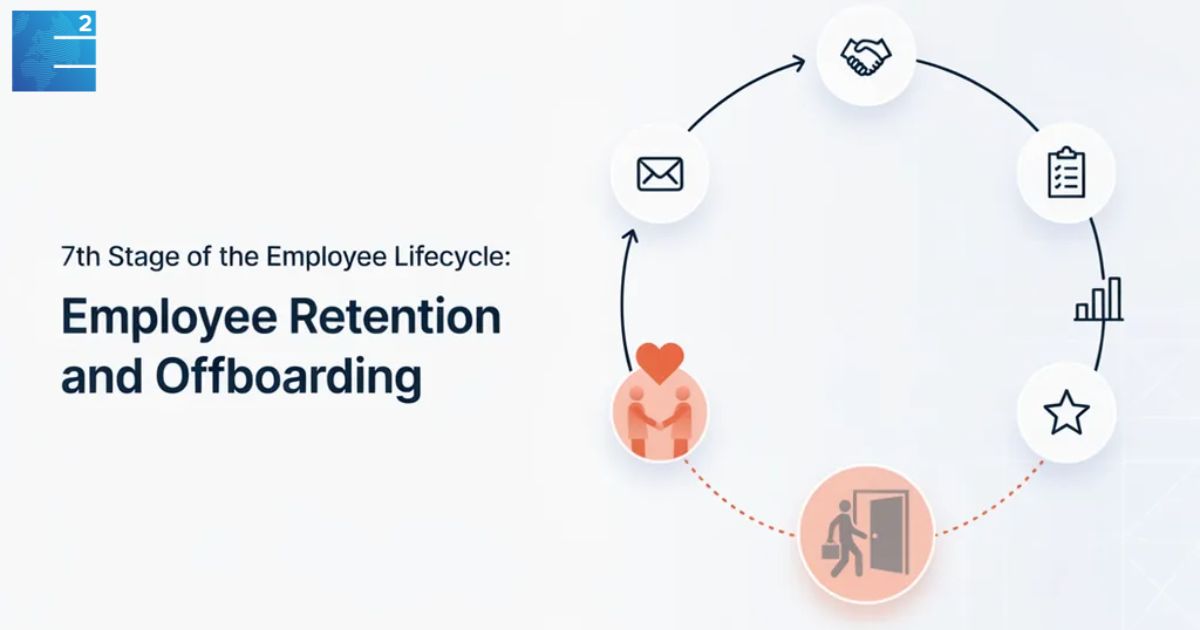
7th stage of the employee life cycle - employee retention & offboarding

Retention and offboarding are two sides of the same coin. Retention involves ensuring you keep the right people employed for a long time. Offboarding ensures a good end to an Employee’s employment; i.e., respectful, clear and proper. Together they protect your business’ knowledge base, culture, payroll accuracy and reputation.

A good exit is just as important as a good entrance. Properly handing over final tasks, removing system access, closing payroll accounts, updating records and communicating professionally will impact how credible your business appears. Many times this concludes with an Exit Interview. An Exit Interview conducted honestly and maturely can provide valuable insights into the experiences of your departing Employee.

Why Offboarding should never be treated as an afterthought?

A disorganized departure causes rapid loss of trust. It can cause problems with payroll processing, affect the integrity of documentation, affect team morale, and lead to unnecessary disputes. Good offboarding is not simply about exiting. It is about maintaining continuity, maintaining professionalism during the transition period, and creating opportunities for feedback from the departing Employee regarding his/her Experience prior to termination.

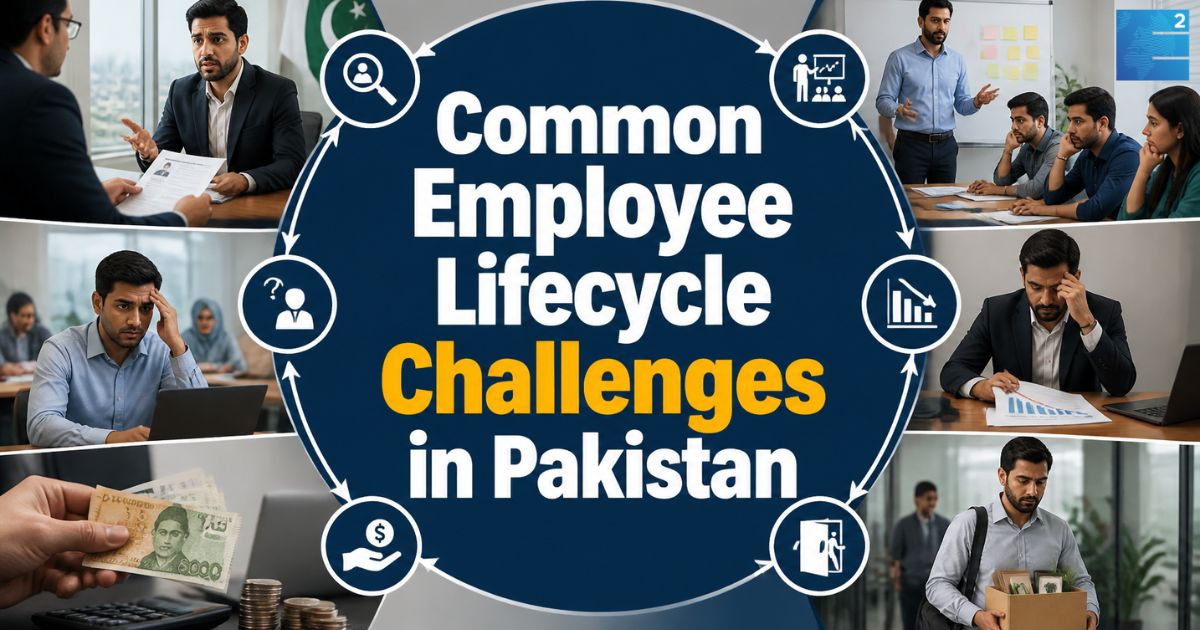
Common Employee Lifecycle Challenges in Pakistan:
Common Employee Lifecycle Challenges in Pakistan

Fragmentation is a major issue in Pakistan. Typically there is a lack of coordination between the various stages of an Employee’s Lifecycle (hiring, payroll, HR records, engagement and exiting) causing inefficiencies and inconsistencies. Informality is another major challenge facing Pakistani businesses. Verbal communication remains the primary method of instruction for some organizations. Additionally, as organizations expand (in terms of size), manual systems are unable to accommodate new hires effectively.

Why manual processes break down over time?

At first glance, using manual processes seems cost-effective. However, as time progresses these processes typically become cumbersome. Files disappear. Follow-up communications are delayed. Payroll input arrives late. There is a lack of completion for exit details. Therefore, businesses often realize issues related to lifecycles after expansion has taken place. Issues surrounding lifecycles are not caused by expansion. They are caused by a lack of structure within expansion.

Best Practices for Effective Employee Lifecycle Management:

Good Lifecycle management starts with definition. Clearly define each role. Standardize each step of the hiring process. Create checklists for onboarding. Keep performance history up-to-date. Treat exits with respect. Each of these basic principles provides structural elements to facilitate less ambiguity and enhance the overall Employee Experience significantly more than most high-priced HR catchphrases.

An additional principle of successful Lifecycle management includes integration. Hr, payroll, managers and operations should be working together toward the same Employee Lifecycle journey. If these entities are functioning independently, then the Lifecycle will function poorly. Sometimes, utilizing managed-service/HR-outsourced support can assist in aligning fragmented processes into a cohesive organizational model.

Why consistency beats improvisation?

Organizations typically value the creative spirit of improvisation highly. Consistency wins more frequently in Lifecycle management. Repeated processes produce fewer unexpected events, cleaner outcomes and increased Employee trust in systems that operate consistently throughout the organization. Consistency may seem dull, but it is among the greatest measures of operational maturity.

How HR Technology Simplifies Employee Lifecycle Management?
How HR Technology Simplifies Employee Lifecycle Management?

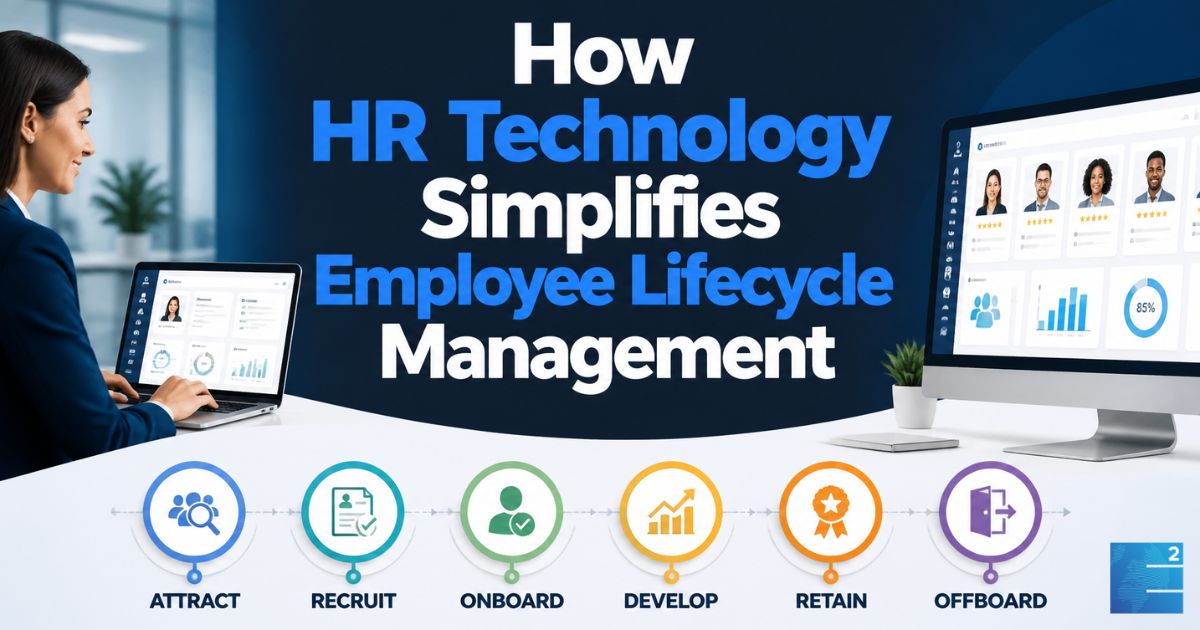
Hr Technology facilitates Lifecycle management by integrating all aspects of an Employee’s life cycle including records, leave requests, attendance, payroll approval and Employee documentation into a single platform. Good HR automation removes redundant manual processes and enhances visibility for teams. By enabling managers to respond quicker due to the ease of locating and verifying data, it also facilitates timely action.

Software cannot solve cultural issues by itself; however, software can eliminate obstacles in providing effective Lifecycle management through streamlined processes. Strong systems allow for clean onboarding processes, smooth payroll handoff processes, quick document updates and tight exit controls. Used correctly it enables greater efficiency in completing administrative tasks while increasing Employee confidence in the process.

Why digital HR creates stronger operational control?

Digital platforms establish a central source of truth. This is particularly important as organizations grow or have employees working across geographically dispersed areas. Without a centralized source of truth, the same Employee could appear differently in various areas (hr files, payroll records and manager notes). Technology eliminates these discrepancies and allows organizations to maintain a consistent Lifecycle from beginning to end.

Why Outsourcing HR and Payroll Improves the Employee Lifecycle?
Why Outsourcing HR and Payroll Improves the Employee Lifecycle?

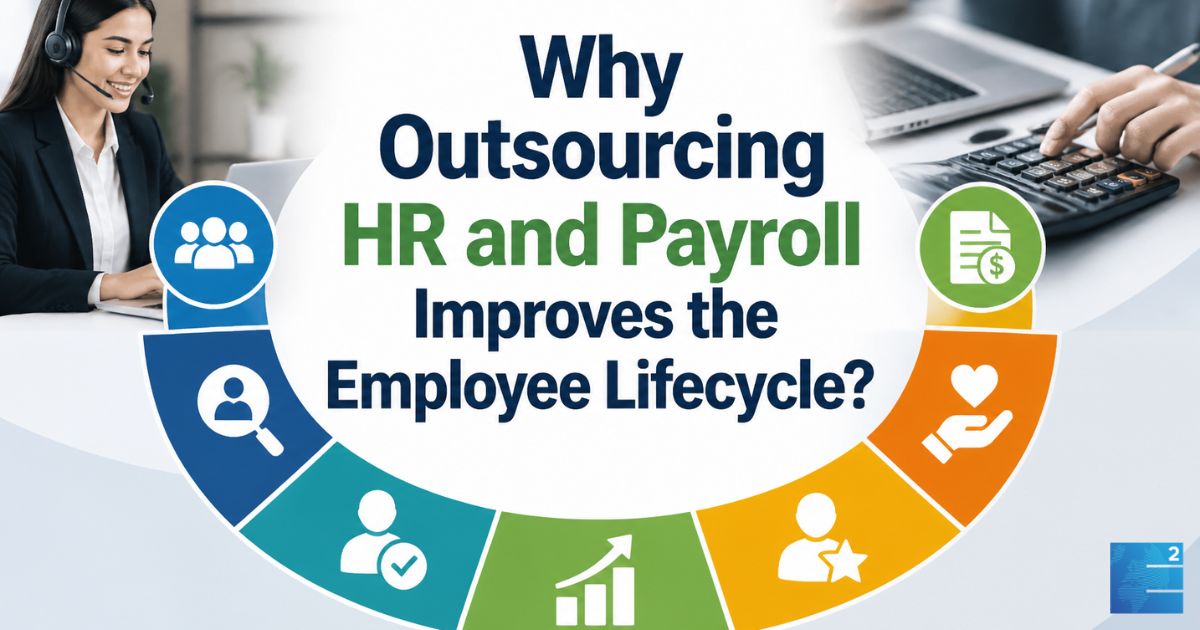
When organizations need assistance in managing disparate parts of their Lifecycle internally due to limited resources or inconsistency; Outsourcing can assist in improving the Lifecycle by bringing discipline to processes, synchronizing payroll practices with existing HR practices and providing onboarding/offboarding structure. Utilizing Outsourcing services can be beneficial for international employers hiring employees in Pakistan or domestic employers expanding rapidly beyond their current HR capabilities.

This is where HR Outsourcing relates to service models such as Employer of Record (EOR). EOR models provide employers with mechanisms to better manage the hiring process, creation/maintenance of Employee records, payroll administration and compliance requirements associated with employing personnel. When a suitable outsourced partner exists for an employer’s needs, Outsourcing does not diminish control; rather it usually increases it.

Why specialist support can make the whole journey cleaner?

Specialist partners see the lifecycle from start to finish. This broader perspective can help eliminate handoffs in employee onboarding, payrolls, and other processes throughout the lifecycle by creating a steady flow of support.


Conclusion

Employee Lifecycle Management in Pakistan is more than an HR function. It is a long-term strategy that supports every employee from hiring to separation. Organisations that invest in structured HR processes, legal compliance, employee development, and modern technology create a stronger workforce and a better Employee Experience. By combining effective Workforce Management, reliable Payroll Management, and professional HR practices, businesses in Pakistan and international employers can improve productivity, retain talented employees, and achieve sustainable business growth.

FAQ’s

What are the 7 stages of the employee life cycle?

The 7 stages are Attraction, Recruitment, Onboarding, Development, Retention, Separation (Offboarding), and Alumni. They represent an employee’s journey from hiring to leaving the organization.

What is the process of onboarding and offboarding?

Onboarding is the process of integrating new employees into the company, while offboarding is the structured process of managing an employee’s exit, including knowledge transfer and return of company assets.

What are the 5 C’s of onboarding?

The 5 C’s of onboarding are Compliance, Clarification, Culture, Connection, and Check-back, ensuring new employees adapt successfully to their roles.

What are the 4 phases of onboarding?

The 4 phases of onboarding are Pre-boarding, Orientation, Role-specific Training, and Ongoing Integration, helping employees become productive and engaged.

Employee Compensation & Benefits in Pakistan: Complete Guide for Employers (2026)

Employee Compensation & Benefits in Pakistan: Complete Guide for Employers (2026)

Employee compensation and benefits in Pakistan play a critical role in attracting, retaining and managing a productive workforce in 2026. A well-designed compensation structure goes beyond monthly salaries and includes statutory benefits, incentives, medical coverage, paid leave and other forms of employee support.

Today, businesses are increasingly focusing on employee benefits, total compensation, payroll compliance, compensation strategy and long-term workforce stability to remain competitive in the market. Whether you are a local employer or an international company hiring in Pakistan, understanding compensation laws, benefit structures, and HR best practices is essential for building a compliant, motivated and high-performing workforce while reducing operational and legal risks.

What Are Compensation and benefits?

What Are Compensation and benefits?

What exactly does compensation and benefits mean to an employer? Compensation and benefits mean every single thing that you provide to your employee as a result of their work. Compensation and benefits include compensation, cash payments, Incentives and the broader employee benefits program that provides additional support to the employee in addition to their monthly payment.

In Pakistan, most employer packages have two layers. One layer is a financial layer. The second layer is a statutory and optional layer. When you put the two together, you form a real compensation and benefit package for your employee, not just a salary line item in an agreement.

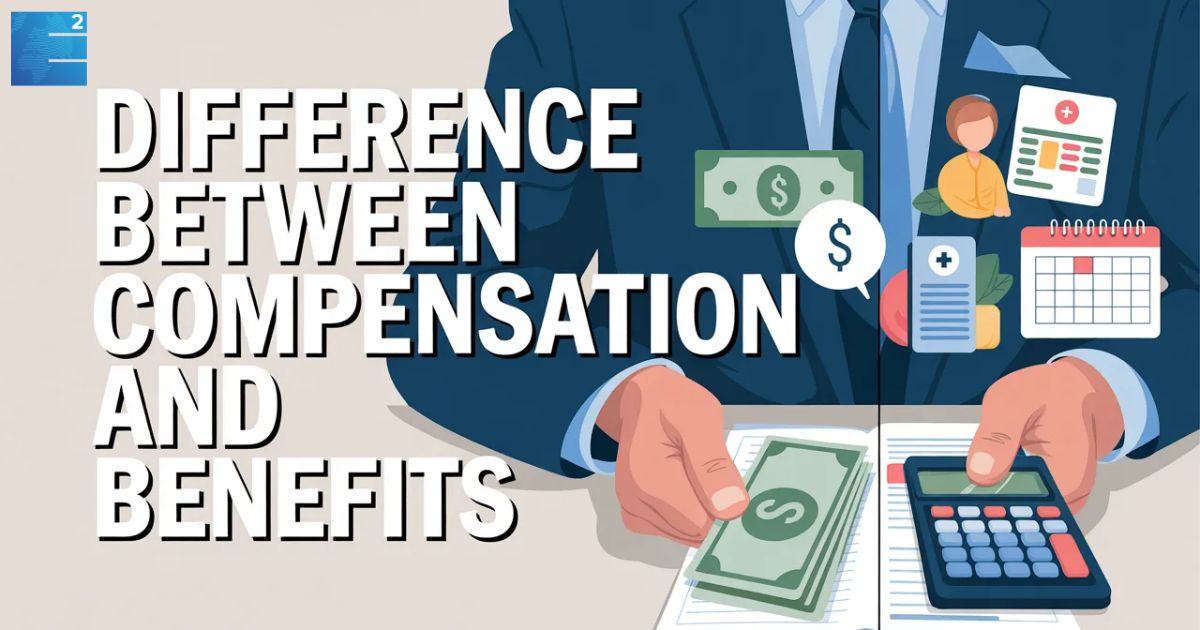
Difference between compensation & benefits

Difference between compensation & benefits

Once you eliminate all of the HR jargon, the differences between compensation and benefits is very easy to understand. Compensation refers to the amount of money the employee receives directly. Benefits refer to the things the employee receive related to their pay, including leave, medical coverage, pension protection and other forms of structured support.

The difference matters since salary will never tell the complete picture. two companies may offer a new hire the exact same salary, but if there is a big difference in leave, medical support, pension options etc., the new hire will likely go with the company that offers the best benefit package. This is when salary and benefits start becoming a true business lever.

Types of compensation (direct & indirect)

HR professionals will often break down compensation into two basic areas. Direct compensation includes salary, bonuses, and all forms of cash Incentives. Indirect compensation includes benefits, paid time-off and all non-cash forms of support that enhance an employee’s overall compensation package.
A good employer does not view the two as competitive. Rather, a good employer views both as part of a solid compensation plan. When direct and indirect compensation work together to create a solid compensation package, the employer can develop better compensation planning strategies for its employees, while providing its employees with a more legitimate value proposition.

Direct compensation (explained – salary, bonuses, Incentives)

Difference between compensation & benefits

Direct pay represents the “visible” portion of the equation. Base salaries represent One portion. Overtime pay represents another. Commissions represent a third portion. Variable compensation plans represent yet another. And lastly, formal Bonus structures represent a final portion. In sales-oriented organizations, sales compensation and incentive pay are typically far more influential upon employee behavior than base pay.

This is often where many employers begin to understand how compensation works in practice. If direct compensation is unclear, then so too will be payroll. But if direct compensation is clear then so too will be contracts; approvals; and performance discussions. Therefore, direct-compensation language needs to be clear from day One in the first job offer letter. (download1.fbr.gov.pk)

Indirect Compensation (Benefits & Non-Monetary Rewards)

Indirect Compensation (Benefits & Non-Monetary Rewards)

While indirect value may hide in plain sight, it encompasses leave policies; employer-supported medical costs; retirement-based protections; learning opportunities; and everyday conveniences that remove friction from work. These are employee perks; fringe benefits; and non-monetary Incentives that contribute to creating a thoughtfully created versus mechanically constructed employee package.

Many employers underestimate the value of this layer. However, strong indirect-value contributions improve employee motivation; and indirectly support a superior talent-retention strategy. While statutory benefits provide a foundation for most employees in Pakistan, employers can strengthen this foundation by adding Voluntary components that differentiate their long-term employment propositions.

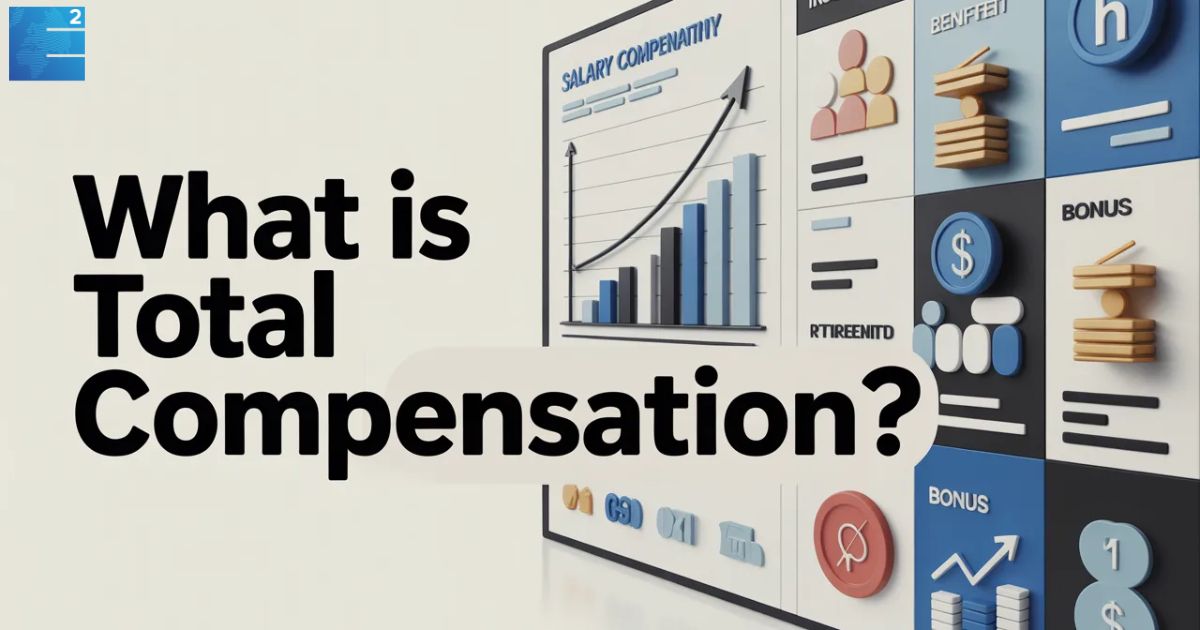
 What is total compensation?

What is total compensation?

Total compensation simply defined is as follows: add-up an employee’s base salary, Incentives provided to them, their entitlements to statutory benefits through their employer; and any additional funding that the employer contributes towards employee-benefits programs outside of mandatory-statutory programs.

As an employer tool for determining total compensation is useful for developing offer designs; estimating costs associated with recruiting staff; comparing market offerings; and presenting full value to employees. As presented in a manner that makes sense to employees; managers can evaluate positions based on comparable factors other than guesswork or office experience. 

Element of total compensation Element of total compensation
Base pay Core monthly earning
Variable pay Bonus, incentive, overtime
Statutory benefits EOBI, social security, paid leave
Voluntary benefits Medical top-ups, transport, wellness
Non-cash support Flexibility, learning, recognition

Types of Employee Benefits (Complete Breakdown)

When employers inquire regarding various categories of employee benefits, the simplest response would be to group those categories into four broad categories: statutory, Voluntary, monetary, and non-monetary. Within Pakistan, many statutory categories include EOBI; provincial social security programs and paid-legal leave provisions contained in relevant provincial labor laws.

Above this statutory base are Voluntary benefits. Some examples of Voluntary benefits include health insurance benefits; commuting assistance; meals provided on-site; flexible work arrangements; and wellness programs. Together, these four categories comprise all categories of employee benefits available to employees at any organization; thereby allowing employers to articulate their value proposition in a more understandable way.

Mandatory Employee Benefits in Pakistan

Mandatory Employee Benefits in Pakistan

First, we start with the legal obligations which set the standard. For covered employers, there are generally two types of benefits that need to be included as part of the payroll – an old age benefit and a social security contribution, depending on the province; similarly, wage and leave regulations will influence the real purchasing power of an offer of formal employment. This is the foundation of compulsory employee benefits within the local environment.

Herein lies the importance of designing from a compliance perspective. If statutory benefits are overlooked, the entire program will be unstable regardless of how alluring the headline salary might appear. Only good employers place their legal entitlements at the forefront of their HR strategies and add optional extras around these entitlements.

Non-Mandatory (Fringe) Benefits in Pakistan

Non-Mandatory Benefits in Pakistan

It is here that employers can demonstrate individuality. Fringe benefits can comprise additional health insurance coverage, transport reimbursement, meal vouchers, remote working allowances, assistance with educational costs related to children, and other modest improvements to day-to-day work that enhance the overall quality of work-life. These elements frequently contribute significantly to making an employee’s package remembered.

Therefore, for businesses seeking to develop competitive compensation packages for retaining employees, it is not always the case that more costly fringe benefits are preferable. Practical, visible and communicated fringe benefits often surpass vague commitments. Frequently, a functional fringe package is superior to a marginally increased salary as it enhances the quality of day-to-day work life rather than simply increasing the amount shown on the payslip.

Why Compensation and Benefits Are Important for Businesses

Why Compensation and Benefits Are Important

To provide a straightforward response to why compensation and benefits are crucial to business success, the response is: they determine the quality of hires, retention and an organization’s reputation among potential talent. Poorly constructed packages create turnover, thereby creating greater difficulty in filling available positions. High-quality packages promote stability and enhance an organization’s reputation in the labor market.

In addition, compensation packages link directly to how to keep employees. Employees do not typically remain due to salaries alone. Employees remain when they believe their pay is commensurate with their contributions, when opportunities for advancement exist and when support exists. A total rewards strategy provides employers with flexibility to create this perception without overpaying unnecessarily.

How to Design a Compensation and Benefits Strategy

The best method for developing a compensation package strategy is not duplicating what competitors are doing. First, understand your roles, the relevant market conditions, your risk profile and the experience you wish employees to experience. Sound compensation planning starts by using logic based on job requirements, affordability constraints, statutory obligations and desired employee experiences.

Subsequently, consider structure. A sound compensation planning process establishes alignment between pay bands, benefits, performance logic and internal fairness. As such, salary benchmarking, pay equity and establishing a reasonable pay structure assist employers in creating order rather than making ad-hoc decision-making processes in haste.

Payroll, Taxation & Compliance in Pakistan

Payroll, Taxation & Compliance in Pakistan

Compensation development ultimately leads to payroll development. Salary, allowances and benefits will impact taxable income, withholdings and reporting requirements. In Pakistan, employment income is subject to taxation under the salaries head and employers are required to withhold and remit taxes as part of payroll administration. (PwC Tax Summaries)

Thus, as businesses evaluate salary packaging options, they should concurrently evaluate the compliance implications associated therewith. Failure to properly classify items results in tax and payroll complexity. An effective compensation package develops clarity in payroll processing, facilitates communications with employees regarding payroll and decreases the likelihood of repeated issues with employee compensation in organizations.

Key Compensation Metrics HR Should Track

Key Compensation Metrics HR Should Track

HR departments who plan wisely use data prior to taking action. Useful metrics to monitor include comparison ratio; employee’s internal range position; retention effectiveness; hire acceptance ratios; and total compensation costs. These metrics enable employers to transition from relying solely upon intuition for determining pay adjustments or offer redesigns to measuring results.

This is where compensation KPIs for HR become actionable. Departments that understand how to measure comparison ratios; assess salary ranges penetrated; and analyze their compensation practices periodically typically make better decisions than those that rely solely on anecdotal information from line managers. Data adds discipline to HR’s compensation practice.

Metric Why it helps
Comparison ratio Shows pay against midpoint
Salary range penetration Shows position inside pay band
Turnover after pay revision Tests retention effect
Offer acceptance rate Tests market competitiveness
Total compensation cost Shows full employer spend

HR’s Role in Compensation and Benefits Management

HR’s Role in Compensation and Benefits Management

How does HR manage compensation and benefits? Simply put: HR takes organizational policies and transforms them into tangible realities for employees. Thus, HR develops compensation systems; ensures fairness; communicates benefit programs; coordinates input into payroll and maintains clarity for both managers and employees regarding the compensation system.

As stated previously, this is why a robust HR-based compensation management framework is critical. When HR works collaboratively with payroll functions, employers achieve enhanced governance; clearer communication and fewer errors regarding employee compensation programs. Conversely, when HR and payroll operate independently of one another, an otherwise satisfactory compensation package may still be perceived as being unclear; inconsistent; or inequitable by employees receiving said compensation package.

How e-square Can Help with Employee Benefits in Pakistan

e-square provides you with hands-on assistance to get your compensation plan aligned with payroll, benefits, and compliance-related administration issues in Pakistan. That is, we provide you with hands-on assistance for managing payroll processes, maintaining employee records, administering employee benefits, and defining compliant processes for employers in Pakistan-based operations.
e-square assists both local employers based in Pakistan and international employers that hire employees into Pakistan in developing an administratively efficient and compliant employee benefit model to support a strong employee experience while also supporting a stable long-term workforce.

Conclusion

Compensation is what you pay for labor, while employee benefits represent the quality of your workforce. A strong compensation package, combined with a great set of benefits will lead to better hiring decisions, better retention rates and lower business risks. Packages in Pakistan are generally constructed by starting with legally compliant base levels (minimum requirements) and then adding additional value through strategic selection. Establish the solid base and the remainder of the structure will be much stronger.

FAQ’s

What are the types of compensation and benefits?

Compensation is generally divided into direct compensation (salary, bonuses, commissions) and indirect compensation (benefits, insurance, paid leave, incentives). Employee benefits may include health coverage, retirement plans, flexible work arrangements and wellness programs.

What are the 4 pillars of compensation?

The four pillars of compensation are base pay, variable pay, benefits and non-monetary rewards. Together, these pillars help organizations attract, motivate and retain employees effectively.

What are the 4 benefits of employees?

The four major employee benefits are health benefits, financial benefits, work-life balance benefits and career development benefits. These improve employee satisfaction, productivity and long-term retention.

What are the three methods of compensation?

The three common methods of compensation are salary-based pay, hourly wages and performance-based compensation such as commissions or bonuses. Companies often combine these methods depending on the role and industry.

What are some examples of compensation and benefits?

Examples of compensation include salary, overtime pay, bonuses and commissions. Examples of benefits include health insurance, paid leave, retirement plans, flexible working hours and employee wellness programs.

What is the meaning of compensation and benefits?

Compensation and benefits refer to the total rewards employees receive in exchange for their work. This includes direct pay such as salaries and bonuses, along with indirect benefits like health insurance, paid leave and retirement plans.

What is the KPI for compensation and benefits?

Compensation and benefits KPIs are metrics used to measure the effectiveness of pay and benefits programs. Common KPIs include coma ratio, employee retention rate, salary competitiveness, benefits utilization and total compensation cost.

Is compensation the same as benefits?

No, compensation and benefits are not the same. Compensation refers to direct monetary payments like salary and bonuses, while benefits are non-cash rewards such as insurance, paid leave and wellness programs.

EOBI & Social Security in Pakistan: Employer Contributions, Compliance & Payroll Guide (2026)

EOBI & Social Security in Pakistan: Employer Contributions, Compliance & Payroll Guide (2026)

Payroll in Pakistan encompasses much more than simply paying employees—payroll management includes all aspects of statutory benefits, ensuring that an employer has all required information or documentation and compliance with ever-changing laws and regulations. By 2026, organizations will be required to have their respective payroll processes meet federal as well as provincial requirements; i.e., meeting EOBI Pakistan requirements (retirement pension), social security Pakistan requirements (healthcare) and general payroll compliance requirements Pakistan.

These entities are designed to protect employees financially by providing retirement pensions, health insurance and other work-related benefits. To employers, it is imperative to integrate these statutory contribution Pakistan into a formalized payroll management system in order to avoid fines, loss of employee confidence and/or damage to their reputation. An effective payroll operation not only provides an organization’s compliance with all applicable laws and regulations, but it also helps improve the overall effectiveness of business operations while enhancing long-term employee satisfaction.

Overview of Payroll, Compliance and Employee Benefits in Pakistan

Payroll, Compliance and Employee Benefits in Pakistan

In a single, integrated payroll-compliance system in Pakistan, employers have access to all elements of their employees’ payrolls including payroll taxes withheld, employee benefits and record keeping. To keep their payroll compliance up-to-date in Pakistan, employers must track and maintain accurate data about employment status, and contributions and wages paid for every employee. Therefore, a modern HR-Payroll System is important today; this system integrates attendance tracking, deductions, benefits and filing requirements.

Why Payroll Compliance is Important for Businesses in Pakistan

Protecting the interests of an employer goes far beyond financial considerations. For example, having compliant records helps protect the employer from potential lawsuits and regulatory scrutiny regarding compliance issues associated with employees. If an employer has poor quality or missing payroll contribution records, they may experience arrearages, late-payment exposure to the government, and excessive conflict with their employees as those employees are entitled to lawful coverage and timely salary support.

As a result of these concerns, employers require systems that will accurately calculate contributions owed to EOBI and social-security agencies; manage payments to EOBI and create documentation that proves payment was made. Also, by maintaining strong records, employers can produce compliance reports for payroll purposes to demonstrate accountability for audits, internal reviews and year-end governance over payroll.

Key Authorities Governing Employment and Payroll in Pakistan

Pakistan’s framework of regulations controlling payroll and benefits is split between two levels of authority: federal and provincial. EOBI is the federal body responsible for administering the old age benefit portion of the federal system for eligible workers and employers. Provincial authorities such as SESSI Sindh, PESSI Punjab etc., are responsible for administering provincial based social security coverage to eligible workers and employers. Because of this duality of authority, employers must address both layers simultaneously. An employer could be complying with federal level requirements but failing to comply with provincial level requirements. One reason employer obligations in Pakistan are broader than just paying salary to employees is that employer obligations are part of a larger set of workforce protections.

What Is EOBI (Employees’ Old-Age Benefits Institution)?

EOBI stands for Employees’ Old Age Benefit Institute. It is the federally mandated old age benefit system for covered employees and employers. The purpose of EOBI is to provide protected income benefits through the EOBI pension plan to covered employees and their dependents. For employers that fall within EOBI’s mandate, participation in EOBI is mandatory. Therefore, understanding the operation of EOBI prior to establishing a compliant payroll is essential.

How EOBI Works in Pakistan?

EOBI operates through the following steps:

Employer Registration
Employee Enrollment
Monthly Contributions
Later Benefit Claims

According to Wage Indicator, as per current legal framework, employers are required to deposit employer and employee portions of contribution before 15th of next month through specified banking channels. Therefore, employers must register their employees with EOBI; maintain employee join/exit records; submit EOBI contributions online or through other authorized processes. Accurate management of these processes minimizes disputes when employees request verification of service history or pension entitlements.

EOBI Eligibility Criteria for Employers and Employees

Eligible employers and/or employees must satisfy specific criteria. Specifically, employers should determine if they are subject to the EOBI framework and whether their employees qualify for enrollment and contributory coverage. Many non-compliant situations occur due to incorrect assumptions rather than a lack of information. Employers that fail to enroll new hires or casual employees into the EOBI program or delay enrollment until there is enforcement activity risk converting a routine administrative obligation into a retroactive compliance issue.

EOBI Contribution Rates and Calculation

Wage Indicator provides details on current employer contribution rates (currently 5%) and employee contribution rates (currently 1%), both of which apply to the minimum wage rate. Additionally, Wage Indicator describes the federal collection mechanism based on minimum wage treatment. This requires employers to correctly categorize each employee and make consistent calculations for monthly EOBI contributions using their payroll data.

Automating the calculation of EOBI monthly contributions can reduce errors caused by manual processing. Employers that implement payroll automation solutions with effective validation controls can better automate payroll compliance without experiencing significant variations in manual data entry.

| Contribution area   | Commonly cited current structure  |

| ——————- | ——————————— |

| EOBI employer share | 5% of minimum wage                |

| EOBI employee share | 1% of minimum wage                |

| Payment rhythm      | Monthly, with due-date discipline |


EOBI Benefits: Pension, Survivors, and Invalidity

The obvious function of EOBI is not deducting funds from employees. Rather, its purpose is providing protection through the provision of income replacement benefits upon retirement; however, it also offers survivor and disability benefits to eligible covered workers who meet specified conditions.

So, when employers consider EOBI benefits for Pakistan, they have to think about the long term, not just the monthly payroll. HR Teams have to help them understand the value of EOBI pension eligibility at an early stage so they do not treat EOBI as an unknown deduction.

What Is Social Security in Pakistan?

Social security in the context of Pakistan employment is different then EOBI. EOBI provides the old age protection. The Provincial social security systems provide the health care, sickness, maternity, employment injuries and related cash or medical support for the covered workers and their families.

The difference in payroll design has implications. Employers will assume that there is one contribution for all of the above. There is not. Social Security Pakistan is operated through the Provincial institutions. The test for compliance is usually Province specific. This is why payroll should determine which benefits apply based on location not solely on job title.

Provincial Social Security Institutions Explained

Punjab and Sindh demonstrate the Provincial Model clearly. PESSI Pakistan states that the Provincial Employees’ Social Security Ordinance requires employers to make contributions for eligible employees. SESSI Sindh establishes a contribution and benefit platform tied to Provincial wage coverage and services for employees.

As such, for multi-city employers, location will impact compliance. For example, a Karachi payroll stream may require one Institutional Process; however, a Lahore payroll stream will likely require another. Therefore, Provincial Social Security Institutions must be designed into the payroll governance from Day One, particularly for large or distributed teams.

Social Security Contribution Rates & Structure

SESSI indicates that the current social security contribution rate is 6% of the salary/wages of the protected worker, capable up to the stipulated maximum amount as defined by the applicable minimum wage structure. PESSI’s overview describes the required 6% employer contribution under the governing ordinance.

Therefore, the practical concern is not whether a contribution exists. Rather, it is whether employers apply the appropriate base (i.e., salary), the correct covered employee, and the proper Institution. These represent key aspects of social security employer contribution oversight and are among some of the most common weaknesses within Pakistani Payroll Administration.


| Institution | Commonly cited contribution approach               |

| ———– | ————————————————– |

| SESSI       | 6% of coverable wages up to stated limit           |

| PESSI       | 6% employer contribution under ordinance framework |


Key Benefits of Social Security for Employees

Provincial social security offers multiple lines of benefit. SESSI publicly lists sickness benefits, survivor linked support, etc. Other welfare linked medical or cash benefits. As such, the system represents a genuine worker protection mechanism, rather than merely a line item in payroll deductions.

To the worker these represent Employee Health Benefits in Pakistan, Workplace Medical Benefits, etc. To the Employer these represent formal Employee Welfare Programs in Pakistan that promote employee retention and mitigate potential insecurities inherent in informal employment.

Mandatory Employee Benefits in Pakistan

Before attempting to design attractive extras, a lawful payroll must establish mandatory benefits. At minimum, covered employers may need to account for EOBI, Provincial social security, and/or other legally/policy mandated entitlements. These represent the foundational elements of both Employee Benefits in Pakistan and broader Mandatory Employee Benefits Design.

This is how many organizations become lost. They offer allowances but disregard mandatory obligations. This is backwards thinking. Designing first for compliance creates a solid foundation for Retirement Benefits in Pakistan, Disability Compensation in Pakistan, and Survivor Benefits in Pakistan as created by statute or plan.

Minimum Wage Laws & Salary Structures in Pakistan

In practice, minimum wage laws/benefits are interrelated. Calculations used by EOBI and social security schemes commonly reference wage practices/treatment/coverage limits/logic tied to minimum wages. As such, poor design in salary structures will similarly result in poorly calculated contributions without anyone realizing it initially.


As such, payroll cannot operate separately from wages. Salary design governs deductions, benefits and records collectively. Many organizations utilizing inadequate Payroll Processing Systems fail to recognize this relationship and subsequently realize that their calculation of benefits does not correspond with their declaration of payroll.

Working Hours/Overtime/Leave Policy

Data regarding work hours impacts payroll. If attendance, overtime and leave balances are not maintained correctly salaries and contributions become unreliable. In short, benefits compliance does not exist independent of payroll; it starts with accurate time entries and compliant treatment of employee absences and paid entitlements.

Manual systems tend to weaken here. Manual systems rarely maintain relationships between leave records and payroll impacts. More robust HR Payroll System can assist in maintaining more accurate employee benefits record tracking and pay related absences thereby reducing potential disputes relating to time, money and coverage.

Gratuity/Pension/End-of-Service Benefits

Pakistan has three types of end-of-employment compensation arrangements; these include gratuity, provident fund style and EOBI pension rights. The type of arrangement will depend on the nature of the establishment and the relevant policies and legislation. Gratuity and provident funds act as alternate minimum protections rather than as an employee’s entitlement to Benefits as a result of their length of service.

As such, employers need to plan for their employees’ exit from employment much earlier than they would need to if the employee resigned. Exit planning needs to be included in the architecture of payroll and should ideally not be treated by employers in a casual manner. Casual treatment of payroll for pensions, gratuities and service records typically results in greater liabilities down the line. This is particularly true when there is a dispute about employment duration and contribution history.

Non-Mandatory Employee Benefits That Improve Retention

After ensuring that statutory mandatory provisions are met, employers can use additional non-mandatory Benefits to attract employees and retain talent. Examples of such non-statutory Benefits include health insurance top ups, transportation costs, meal support, and education linked family support. Such fringe Benefits have been shown to significantly enhance Retention in highly competitive industries.

In addition to enhancing Retention, non-statutory Benefits work best when used to supplement statutory coverage rather than replace it. For example, a good package begins with a solid foundation of compliant payroll practices and then includes practical Benefits that add value to the employee. When statutory compliance and practical value are combined into one compensation model, employee perceptions of the value of Benefits will increase.

Key Labor Laws and Regulations Employers Must Follow

While payroll and Benefits do not occur in isolation from other forms of regulation, they occur as part of broader labor law compliance Pakistan, employer legal obligations Pakistan, and workforce protection laws that govern aspects of employment including contract formation, wage payment timing, records management and termination. Where payroll does not comply with labor laws, the consequences of that failure compound rapidly.

Given this reason alone, HR and payroll should not operate in two separate silos. What might begin as a payroll problem could ultimately evolve into an employment dispute. Typically, companies that synchronize their payroll systems with their attendance, contract and termination procedures experience fewer difficulties in responding to regulatory inquiries.

Taxation and cost implications of employee compensation

Employee compensation impacts far more than just the employee’s net earnings. It impacts taxable income, employee contributions, and the total cost of headcount to the employer. As such, designing payroll processes needs to account for all elements of employee compensation including tax implications, benefit considerations and compliance requirements. Specifically, the interplay between formal salary structures and statutory mandates requires consideration prior to commencing hiring activities.

Poorly designed compensation plans can lead to distorted budgets. On paper, salaries may appear reasonable; however, the actual employment costs to employers increase dramatically upon accounting for statutory obligations, compliance expenditures and record maintenance. Therefore, good payroll organizations consider all variables associated with employee compensation early in the decision-making process as opposed to finding them out after the fact.

Common Payroll Compliance Challenges in Pakistan

Some common payroll compliance problems encountered by employers in Pakistan are often quite routine. These include delayed registration with authorities responsible for collecting taxes and other levies. Incorrect determination of the contribution base. Failure to maintain accurate records regarding employee status. Poor reconciliation processes. Lack of coordination between HR and finance departments. These represent some of the primary causes of payroll errors in Pakistan, compliance challenges faced by payroll managers, and manual payroll errors that subsequently become larger regulatory concerns.

These common errors also create miscalculations related to payroll and broader HR compliance issues for employers. While the response to these errors is not necessarily panic; it is structured approaches. Employers who implement regular validation controls, discipline related to maintaining employee service histories and automated payroll processes generally achieve the greatest Benefits from automating payroll over time.

How an Employer of Record (EOR) Ensures Full Compliance

The employer of record (EOR) model can provide employers seeking to employ people in Pakistan with relief from many compliance-related burdens while avoiding the expense of developing internal capabilities necessary to develop all local functions. Through this model, the EOR assumes responsibility for providing compliant payroll services, managing statutory obligations, keeping track of all employees’ personnel files and managing relationships with government agencies.

The EOR model provides particular advantages to employers based outside of Pakistan that wish to initiate operations in the country quickly with minimal upfront capital investment. In general terms, using an employer of record in Pakistan enables clients to better manage eobi and social security; collect accurate employee information; and minimize uncertainty related to compliance issues while entering new markets or expanding operations domestically.

How to Design a Compliant Employee Benefits Program

When creating a comprehensive employee benefit package, begin with the legal base, not with “perks”. Create a map of all EOBI, provincial social security, record requirements and payroll flow first. Once you have established a stable statutory basis for your organization’s benefit offerings then add optional Benefits on top. Establishing this order ensures that you are establishing a lawful benefit package which is simpler to administer going forward.

Secondly, keep it simple. Employees will struggle to understand a benefit package that is overly complex. If the benefit design is too confusing for employees, they will likely find ways to misinterpret its value, potentially leading to grievances. Good benefit design establishes clear communication between employees and the organization relating to what is statutorily mandated; what is voluntary; and how all Benefits are reflected in payroll; records; and claims support. Clarity leads to reduced disputes down the road.

Why Outsourcing Payroll and Compliance is a Smart Business Move

Outsourcing is not merely a method for avoiding responsibilities as a business owner; it is frequently a superior method of executing those duties. Specialized outsourcing vendors offer their clients process discipline; system controls and knowledge specific to regional jurisdictions which many small businesses lack internally when they attempt to fulfill multiple obligations simultaneously via their own internal resources.

The reason many organizations today will put their Service Support functions in conjunction with Technology (IT) is because they need to be able to offer more than just “better” Payroll Software, HR Software or Cloud Based Payroll Systems etc. The most capable vendors have all three of these features built-in to their offerings so as to assist the organization to minimize the amount of manual errors made during both report and contribution processing. Also, by using this type of solution; they will be able to make reporting and contribution processing more consistent.

How e-square Global Partners Helps You Stay Compliant in Pakistan?

If you would like to simply your process for payroll and benefit administration in Pakistan then E-Square can assist in unifying the various components of an operation. That means that we can provide assistance with regard to payroll coordination, employee on-boarding input, contribution management services, compliance-focused documentation, and practical direction throughout the entire hire/payroll/benefit administrative process.

In addition to supporting the operation of compliant payroll processes for domestic employers operating in Pakistan; E-Square also supports the operation of compliant payroll processes for international employers entering into the Pakistani marketplace via structured payroll processing and managed support models. As such, our services enable clients to operate payroll with greater certainty while managing their respective Employee Old Age Benefits Institute (EOBI), Social Security, and other employee compliance requirements with greater precision.

Conclusion

EOBI and social security are not side issues in Pakistan payroll. They are central pillars of lawful employment. Employers who understand the split between federal old-age protection and provincial social security can build cleaner payroll systems, stronger records, and better employee trust. The smartest approach is simple: register correctly, contribute on time, document everything, and design payroll around compliance from the start.

Payroll in Pakistan: Taxes, Compliance & Setup (2026)

Payroll in Pakistan: Taxes, Compliance & Setup (2026)

Payroll in Pakistan is much more than simply processing a paycheck; it is a systematic approach to connecting compliance with taxes, labor laws and other financial obligations. Therefore, it is necessary for both local companies and foreign employers operating within Pakistan or planning to enter the country to understand how to achieve payroll compliance Pakistan, income tax withholding Pakistan, salary structure Pakistan, EOBI contribution Pakistan and payroll processing Pakistan in order to avoid penalties and ensure the most efficient operation.

With the increasing number of regulatory evolutions and documentations becoming more stringent as we reach 2026, accuracy and consistency will become even more important. An accurately maintained payroll system helps employers ensure timely payment, correct deductions and transparent reporting, thus builds trust with their employees and helps them remain compliant with regulatory requirements and achieve long-term sustainable growth in Pakistan.

Key Facts About Payroll in Pakistan

Key Facts About Payroll in Pakistan

Payroll in Pakistan typically occurs once per month, based on the wage payment rules established by provincial laws related to the payment of wages, and tax withholding under the Federal Board of Revenue. As such, employers are required to calculate employees’ earnings, deducts all applicable statutory items, remit the appropriate salary and maintain the required documentation for potential inspections and audits.

Why Payroll in Pakistan Matters for Local Companies and Foreign Employers

Local companies and foreign employers alike see payroll as the link between their finances and labor laws. Regardless if using direct-hire employment, employer of record Pakistan or EOR services Pakistan, there are the same fundamental elements to consider: lawful deductions, timely payment, and auditable documentation.

Understanding Payroll Laws and Compliance in Pakistan

Pakistan’s payroll operates under multiple and interconnected regulatory regimes. Withholding income tax is governed by the FBR’s withholding tax regime, and the timing of wages and withholdings are governed by the respective provincial wage laws. Additionally, employers are subject to various retirement or medical-related obligations via the Employees Old-Age Benefits Institution (EOBI) and each of the provinces’ social security institutions. Thus, effectively implementing good payroll legal requirements in Pakistan requires an interdisciplinary approach.

Why payroll errors create financial, legal and reputational risk in Pakistan

While payroll mistakes often seem “only” a simple error, underpaid taxes may attract a penalty for tax evasion. Non-existent records can compromise your defense against a wage claim. Delaying salaries can significantly harm employee morale. Maintaining strong payroll record-keeping, payroll documentation, and employee payroll records in Pakistan help minimize these risks prior to incurring costly consequences.

Salary Structure in Pakistan Explained

Salary Structure in Pakistan Explained

Salary structures in Pakistan begin with a basic salary Pakistan and layer in allowances. Some of the most common allowances include house rent allowance Pakistan, medical allowance Pakistan and conveyance allowance Pakistan. When combined, these allowances determine gross salary Pakistan, affect tax treatment and ultimately, provide a framework for employers to develop employee compensation Pakistan.

Gross salary, net salary and common payroll components in Pakistan

The journey of payroll begins with gross salary Pakistan and ends with net salary Pakistan after deducting and contributing to various accounts. This implies that employers must have a clear gross salary calculation and net salary calculation from the very beginning. Design also determines the cost to company (CTC) Pakistan, employee visible earnings Pakistan and eventually end-of-service calculations.


Typical salary component Why it matters in payroll
basic salary Pakistan Often anchors benefits and contract structure
house rent allowance Pakistan Common allowance with tax relevance
medical allowance Pakistan Frequently used in salary design
conveyance allowance Pakistan Affects visible monthly pay structure
Bonus / variable pay Must be clearly classified and documented

Payroll Taxes and Statutory Contributions in Pakistan

Payroll Taxes and Statutory Contributions in Pakistan

Typically, employers in Pakistan manage three primary statutory tracks in payroll: income tax withholding, EOBI, and provincial social security. The tax track operates under income tax withholding Pakistan, payroll tax Pakistan, and tax deduction at source Pakistan rules. The benefit track relates to EOBI and the respective provincial social security systems.

Employer and Employee Payroll Obligations in Pakistan

Market guidance currently indicates EOBI is applied to a minimum wage basis and includes both employer and employee portions, while Sindh social security indicates a 6% employer contribution to coverable wages and monthly payment mechanics. Ultimately, employer payroll contributions Pakistan and employee payroll deductions Pakistan will depend upon location, wage levels and coverage.

Income Tax Slab for Salaried Employees (2025 – 2026)

Income Tax Slab for Salaried Employees (2025 – 2026)

Pakistan uses progressive salary taxation. According to PwC’s 2026 Pakistan tax summary, salaried employees who earn taxable income exceeding PKR 10 million will face a 9% surtax on income tax. In addition, payroll providers summarize a progressive salary-tax structure for current payroll operations. Therefore, it is essential to accurately estimate monthly amounts.

Monthly withholding logic and annual tax reconciliation for employers

In practice, employers will estimate annual taxable salary, apply current Pakistan income tax slabs, split the result over payroll months, and reconcile any differences throughout the year. This represents the core of salaried tax Pakistan, employee tax deduction Pakistan, payroll tax filing Pakistan and FBR payroll tax compliance.


Annual taxable salary band Indicative salaried tax logic reflected in 2025 payroll summaries
Up to PKR 600,000 Nil tax
PKR 600,001–1,200,000 Low entry slab begins
Mid bands above PKR 1.2m Progressive rates increase sharply
Higher bands above PKR 4.1m Top rate reaches 35% in payroll summaries
Above PKR 10m taxable income 9% surcharge on income tax for salaried individuals

Mandatory Employee Benefits in Pakistan

Employee Benefits in Pakistan

Payroll does not stop with salaries being paid. Employers must also account for mandatory employee benefits Pakistan where applicable. The two primary statutory pillars are EOBI contribution Pakistan through the Employees Old Age Benefits Institution, and the respective provincial social security Pakistan payroll arrangements.

EOBI, social security, and retirement-linked obligations

The private sector in Pakistan has an end-of-service scenario as well as a provident fund Pakistan, gratuity Pakistan Labor Law, or even employee pension Pakistan-style structures based upon the establishment and policy choice. It is noted that gratuity and provident fund may serve as alternative minimum protections in most cases and they are not always cumulative obligations.

How to Set Up Payroll in Pakistan

How to Set Up Payroll in Pakistan

A well-built payroll system must exist prior to issuance of the first paycheck. The company will need to have registered their business with the SECP where applicable, have received tax identification and have aligned the employee onboarding documents with the payroll process. In terms of implementation, setting up payroll in Pakistan involves accurate onboarding data, bank account information, attendance tracking functionality, and authority mapping. (Asanify)

Payroll setup in Pakistan for local entities and foreign companies

Setting up payroll in Pakistan for both local entities and foreign companies has similar requirements. Establishing payroll in Pakistan for a local employer begins with internal registration and process development. Establishing payroll in Pakistan for a foreign company typically includes establishing a local entity or providing a service like payroll outsourcing in Pakistan or employer of record in Pakistan. Regardless, the establishment of a company payroll registration in Pakistan, the registration of the company’s National Tax Number (NTN) and the company’s Federal Board of Revenue (FBR) payroll registration are all required.

Step-by-Step Payroll Calculation in Pakistan

Payroll Calculation in Pakistan

When performing payroll calculations in Pakistan, there should be a logical progression. First, determine the employees’ attendance and earnings which were approved. Next, build the gross pay for the month. Afterward, apply taxes and statuary withholdings. Lastly, verify the employee’s net salary and release payment. This order is the basis for how to calculate payroll in Pakistan and provides a reliable payroll calculation in Pakistan.

From gross-to-net logic to final pay

From gross to net, the payroll process in Pakistan is a series of checks. The checks include but are not limited to; check for allowances, check for absence, check for overtime, check for withholdings and check for approvals. The same checks form the payroll workflow in Pakistan. The payroll workflow in Pakistan outlines the various stages of the payroll process and creates consistency for each payroll period as opposed to devHow to Pay Employees in Pakistan

Payment of salaries in Pakistan is a financial event, but it is also a compliance event. Many of the provincial wage guidelines dictate that payments be made in a timely manner. Several of the guidance resources indicate that employers make payments via banking channels. Therefore, the compliance habits of making salary payment in Pakistan, transferring an employee’s salary in Pakistan and conducting a payroll bank transfer in Pakistan are critical to ensuring that an employer maintains compliance.

Bank transfers, payslips, and payment timing

Banking channel usage by employers, the use of compliant payslips in Pakistan and maintaining compliance with payroll banking requirements are all key components to creating an audit trail. (WageIndicator)

Payroll Processing Workflow in Pakistan

Typically, a reliable monthly payroll workflow in Pakistan begins with attendance cutoff. Following attendance cutoff, the process proceeds with determining the employee’s earnings and deductions. Once earnings and deductions have been determined, the process proceeds to the approvals stage. Following approvals, the next steps are to initiate the banking process and finally report the payroll. If this order is disrupted during the payroll process, the integrity of the payroll is likely to be disrupted. To prevent payroll disruptions, employers document their payroll processes in Pakistan. Employers document their payroll approval matrixes and they document their month-end signoffs.

Validation, reporting, and audit-readiness

Payroll teams that are focused on producing high-quality payroll are committed to preserving evidence. Therefore, these teams preserve documentation including but not limited to; contracts, tax documentation, worksheets, banking files and monthly summaries. In practical terms, preserving this documentation ensures that employers have adequate reporting in place in Pakistan, have defendable employee payroll records and have adequately organized payroll documentation to support audits and reviews by taxing authorities.

Common Payroll Challenges for Employers in Pakistan

The most common payroll problems experienced by employers in Pakistan are not complex. Rather, they are common. Examples of common payroll problems include errors related to the employee’s salary structure, errors related to the employee’s withholdings, missing or incomplete employee master data and delayed updates to the employee’s records after resignation or salary revisions. These are examples of payroll mistakes to avoid in Pakistan, particularly for companies that are experiencing rapid growth and relying on manual payroll spreadsheets.

Multi-location complexity and compliance drift

Employer’s experience challenges when multiple locations within a province, multiple branches, or multiple hybrid arrangements exist. Different social security practices, wage interpretations and discipline associated with documenting employee data can occur over time and create risk. As a result, employers must focus on compliance with payroll regulations in Pakistan, comply with payroll requirements in Pakistan and ensure that controls are established to mitigate cross location risks. (sessi.gov.pk)

Payroll Management Options in Pakistan

There are four primary options available to companies regarding payroll management in Pakistan. Companies typically select one of the following options.

Option #1:

Company-managed payroll.

Option #2:

Vendor-managed payroll.

Option #3:

Technology-managed payroll.

Option #4:

Employer of Record (EOR).

Each option addresses a different aspect of payroll. The internal payroll team provides control. The vendor provides expertise. The technology provides consistency. The best option for an employer depends upon the size of the employer’s payroll team, the employer’s risk tolerance, and the employer’s rate of expansion.

In-house, outsourced, software and EOR approaches

If the employer’s payroll is relatively simple, the employer may be able to manage the payroll internally. However, if the employer operates multiple locations or hires international employees, the employer may want to consider managing payroll externally. There are many payrolls external management options available to employers in Pakistan including payroll outsourcing in Pakistan, a payroll service provider in Pakistan, payroll software in Pakistan, HR payroll services in Pakistan, or outsourced payroll management. These options may overlap with payroll outsourcing services in Pakistan and employer of record services.

Termination, Final Settlement and Payroll Compliance

Employee exit processes represent a major source of payroll risk. All elements of an employee’s last day in the company (final salary, unpaid leave, deductions, gratuities or provident fund treatments and any required legal notices) happen at the same time. Therefore, employee exit processes (employee notice period Pakistan and final settlement Pakistan), along with associated payroll processes need to be embedded within the payroll system rather than treated as an afterthought.

Full and Final Logic; End-of-Service Exposure

According to WageIndicator gratuity is normally paid based upon thirty days’ wages per complete year of employment plus any qualifying excess periods. However, the specific rules may differ depending upon the province in which an employer operates. Therefore, to properly calculate severance pay Pakistan, leave encashment Pakistan and final due payments, an employer will require access to standing orders applicable to their local area as well as documented payroll support.

How e-square Global Partner Simplifies Payroll in Pakistan

For employers with compliance worries that relate to executing payroll in Pakistan, e-square can assist in translating the complex rules and regulations that govern payroll in Pakistan into a manageable operating process.

From payroll burden to payroll control

In addition to providing a managed operating process, e-square provides payroll design, onboarding inputs, gross-to-net processing, statutory coordination and offboarding support for employers both inside and outside of Pakistan. This includes practical assistance with running payroll in Pakistan, cross-location payroll control and scalable support for businesses hiring locally or using compliant Pakistan entry models.

Conclusion

Pakistan payroll requires discipline. The underlying fundamentals are very simple: structure your employees’ salaries and wages appropriately, withhold taxes accurately, administer EOBI and social security correctly, make timely payments and maintain records that can withstand scrutiny. Those employers that perform these tasks well, transform payroll from a monthly hassle to a stable operating rhythm. Those employers that do not normally find out about the problem until it has cost them dearly.

FAQ:

What are the three types of payroll?

The three main types are in-house payroll (managed internally), outsourced payroll (handled by a third party), and payroll software/automated systems.

What is the payroll tax in Pakistan?

Payroll tax mainly refers to income tax withholding under FBR rules, applied on a progressive slab system, along with EOBI and social security contributions.

What is the minimum wage in Pakistan in 2026?

As of 2026, the minimum wage is generally around PKR 32,000 per month, though it may vary slightly by province.

What is a monthly basic salary?

Monthly basic salary is the fixed core component of pay, excluding allowances and bonuses, and often used to calculate benefits and deductions.

What is the minimum salary for unskilled labor?

The minimum salary for unskilled labor typically aligns with the government-set minimum wage, around PKR 32,000 per month (province-dependent).


Employment & Labor Laws in Pakistan (2026): A Complete Guide to Confident Hiring

Employment & Labor Laws in Pakistan (2026): A Complete Guide to Confident Hiring


Employment & Labor Law in Pakistan (2026), provides the legal framework for hiring, payment of employees, health & safety of the workplace and employee entitlements at both federal and provincial levels. Post the 18th Amendment, Provinces have increased authority to govern labor; however, this has created complexities for companies operating in multiple areas, to comply with labor laws.

Employers need to be aware of and compliant with various labor laws which will impact their ability to pay employees’ wages, hours worked by employees, social security contributions and EOBI registration requirements. Documentation of payroll records is also critical for employer compliance. In addition, employers need to implement structured processes to address obligations related to social security contributions and EOBI registration. Employers should provide clear and lawful employment agreements to employees to minimize potential disputes and penalties associated with unlawful terminations. A proactive and organized approach to HR compliance management enables companies to protect their workforce, align with labor laws and support sustainable business growth in Pakistan.

Overview of Employment and Labor Laws in Pakistan

There are numerous laws relating to employment and labor that have been enacted since the mid-20th century. The older statutes, such as the Industrial and Commercial Employment Ordinance 1968 and Factories Act 1934 Pakistan, continue to apply today along with new enactments and provincial amendments to prior laws. Collectively these laws comprise the framework for employee contracts, wages, workplace safety and dispute resolution.

This guide can be used as a reference tool, rather than a theoretical document. The Employment and Labor Laws in Pakistan (2026): A Complete Compliance Guide connects core laws and amendments (minimum wage changes, EOBI duties and leave entitlements) to day-to-day HR practices, including multi-province employment compliance and payroll audits.

Constitutional Foundations of Labor Rights

Constitutional Foundations of Labor Rights

The Constitution addresses work as part of the sphere of dignity and social justice. The articles on equality, non-discrimination and freedom of association form the basis for collective bargaining rights and the space for trade unionism as defined by the Trade Union Act 1926 and subsequent industrial relations laws. These rights serve as the foundation upon which all other labor laws are based.

The directive principles of the state to ensure fair wages and humane working conditions, are frequently read together with specific laws, such as the Payment of Wages Act 1936, the Minimum Wages Ordinance 1961, and the Workmen’s Compensation Act 1923, particularly in wrongful termination Pakistan and wage-related disputes.

Devolution of Labor Laws – Impact of the 18th Constitutional Amendment

The 18th Amendment transferred many aspects of labor from federal to provincial jurisdiction. Consequently, labor became a battle ground for both provinces to enact specifics while the federal government retains control of the overall framework. Thus, employers have to navigate multiple regulatory regimes while meeting federal standards on some subject matter.

Due to this devolution, what works for a company in terms of labor law compliance in Lahore may not be applicable in Karachi. Therefore, every serious Labor law compliance checklist now has a “Province” column to indicate the applicability of a particular provision, as well as a note indicating how the 18th Amendment affects labor laws in practice, especially when dealing with remote workforce management Pakistan teams.

Key Regulatory and Enforcement Authorities

Key Regulatory and Enforcement Authorities

At the federal level, the Ministry of Overseas Pakistanis and Human Resource Development guides policy, often in conjunction with the Federal Board of Revenue (FBR) regarding tax related issues. Social security oversight recognizes the Employees Old-Age Benefits Act 1976 and the Workers Welfare Fund Ordinance 1971 as foundational pillars.

In each Province, the Provincial Labor Department oversees inspectors, minimum wage boards, and labor inspection Pakistan activities. Bodies such as the National Industrial Relations Commission (NIRC) and Labor Courts Pakistan/Industrial Tribunals provide interpretation and adjudication of the Industrial Relations Act 2012 regarding collective disputes between employees and employers.

Major Federal Labor Laws in Pakistan

Federal Labor Laws in Pakistan

Historically, federal laws provided the framework for most labor laws. Examples of important federal labor laws include the Industrial and Commercial Employment Ordinance 1968, Factories Act 1934 Pakistan, Payment of Wages Act 1936, and the Minimum Wages Ordinance 1961. Although these laws were amended via devolution, they remain relevant to current enforcement activities, litigation, and drafting of new provincial labor laws.

Examples of other important federal laws include the Apprenticeship Ordinance 1962, Workers Welfare Fund Ordinance 1971, Bonded Labor System Abolition Act 1992, Employment of Children Act 1991, and Disabled Persons Employment Ordinance 1981. Taken collectively, these laws regulate apprenticeships, welfare funds, bonded labor, child labor and disability entitlements within the scope of employment and labor laws in Pakistan.


Federal law Main subject
Factories Act 1934 Pakistan Safety, hours, conditions in factories (Pakistan Code)
Industrial Relations Act 2012 Unions, collective bargaining, NIRC
Employees Old-Age Benefits Act 1976 Pensions and Pension contributions Pakistan 

Key Provincial Labor Laws After the 18th Amendment

Each Province enacted its own industrial relations and shop acts after the amendment. Punjab, Sindh, Khyber Pakhtunkhwa, and Balochistan each maintain separate IR Acts, as well as differing standing orders and minimum wage laws. The varied nature of these laws creates operational challenges for employers with employees located in multiple provinces.

Companies with locations in multiple cities must monitor variations in minimum wage rates in Sindh, Shop and establishment laws in various Provinces and social security schemes in each Province, such as PESSI contribution rates and SESSI compliance. Each Province should be treated as a separate mini-jurisdiction for purposes of your comprehensive Labor law compliance services Pakistan program.

Employment contracts in Pakistan

Employment contracts in Pakistan

Contractual arrangements between organizations and their employees connect daily Human Resource (HR) practice to law. Employment contracts typically include a probationary period; permanent employment contracts in Pakistan will usually have a probationary period and labor law allowances, while temporary agreements or fixed term contracts in Pakistan cover project staff. The number of employees covered under employment contracts grows as gig worker contracts in Pakistan become more common and are tied to platforms.

A well-crafted contract can help protect both employer and employee interests using clear, written employment agreements, and by defining job descriptions and confidentiality agreements in Pakistan, along with specific termination notice periods in Pakistan. Groups operating internationally will likely align the employment contracts they develop locally with group policies, which is why documentation is treated as the first building block in this Employment and Labor Laws in Pakistan (2026): A Complete Compliance Guide.

Working Hours, Overtime & Rest Period Regulations

Factories traditionally adhere to working hour limits in Pakistan based upon the 48 hour/week rule and in many cases 9 hours/day as outlined in the Factories Act 1934 in Pakistan. However, special provisions exist for Ramadan working hours and for women and young workers in certain categories.
Overtime is often paid at a double rate in Pakistan, and in most provinces, it is capped at 150 hours per quarter, among other caps. Employers frequently ask about overtime pay in Pakistan. While there is no definitive “yes” or “no” to this question, in most provinces the answer is generally yes when properly documented and in compliance with the applicable laws and regulations.

Minimum Wage in Pakistan (2026 Update by Province)

Minimum Wage in Pakistan

The base federal minimum wage in Pakistan was increased recently through budget changes. Employers ask “What is the minimum wage in Pakistan 2026?” Policy updates now reflect the federal minimum wage of Rs 37,000 and notifications from Sindh and Punjab provide additional slabs, such as Rs 40,000 minimum wage in Punjab. (ramco.com)
Use this table for quick reference only. It should be used as guidance only and never as legal advice. Check the most recent government notification prior to implementing new policies.


Province / level 2025–2026 trend
Federation / ICT Around Rs 37,000 federal minimum wage for unskilled
Punjab Moves toward Punjab minimum wage 2026 near Rs 40,000 Punjab minimum wage
Sindh Higher Sindh minimum wage rates around PKR 40,000

Wage Payment & Pay slip Requirements

The wage laws that regulate wage payments originated in the Payment of Wages Act 1936 and were modified to incorporate wage protection principles and modern banking practices. Employers must avoid wage theft in Pakistan, prohibited wage deductions or delayed salary payments, and maintain proper payroll record-keeping that will withstand inspections by Labor authorities in Pakistan and litigation scrutiny by courts.
In current practice, employers are expected to comply with the PAYE system in Pakistan, recognize updated income tax brackets and deduct all applicable payroll deductions in Pakistan (including EOBI and social security). Although less commonly discussed, pay slip requirements in Pakistan continue to be significant. Courts consider a pay slip as critical evidence for wage protection laws and future payroll audits.

Social Security, EOBI & Employee Benefit Obligations

Social Security, EOBI & Employee Benefit Obligations

There are three levels of social protection:

EOBI pension plans, provincial social security programs and supplemental employee benefit programs (such as provident fund in Pakistan or private insurance).
Employers must review the requirements for registering with the Employees Old-Age Benefits Institution (EOBI) and communicate with EOBI website for contribution rates.
Additional social security programs exist at the provincial level and are governed by the Provincial Employees Social Security Institution (PESSI), and in some provinces, contribute to SESSI compliance. Additionally, some employers contribute to Worker’s Education Cess or provide housing funds to employees through the Workers Welfare Fund Ordinance 1971. Employee benefits compliance is treated as non-negotiable in this Employment and Labor Laws in Pakistan (2026): A Complete Compliance Guide.

Leave Policies and Employee Rights

Leave Policies and Employee Rights

Most leave policies under different statutes and standing orders combine typical leave types (Paid Annual Leave in Pakistan, Casual Leave in Pakistan, Sick Leave in Pakistan, Public Holidays in Pakistan/Festival Leave in Pakistan). Many HR teams create internal employee handbooks that detail leave policies and guidelines for line managers.
As maternity/paternity rights receive increasing focus, employers must monitor maternity leave (typically 12 weeks in Pakistan), evolving standards regarding maternity leave (e.g., 12 – 16 weeks), and emerging standards for paternity leave in Punjab. Additionally, in some sectors, Pilgrimage Leave (Hajj) is considered a cultural practice under leave entitlements under Pakistan labor law?

Workplace Health, Safety & Occupational Laws

The core health and safety obligations remain in place and are primarily rooted in the Factories Act 1934 in Pakistan, and are supplemented by provincial legislation and regulations. Clean air, safe equipment/machinery, adequate lighting and medical services form the foundation of occupational safety frameworks for both factories and many commercial establishments.
Regulatory bodies have increasingly strict expectations for high-risk industries. Regulators require evidence of risk assessments, training records and incident reports, particularly where workman’s compensation Act 1923 liabilities may be involved. Where serious accidents occur, inspectors and Labor Courts in Pakistan evaluate whether employers have complied with their reasonable safety obligations under employment and labor laws in Pakistan.

Termination of Employment & Severance Laws

Termination of Employment & Severance Laws

The reason why employers find it difficult to terminate employees lawfully in Pakistan is that they do not follow the termination notice period required by law in Pakistan, due process, or documented reasons for termination. Therefore, employers who fail to comply with these processes run the risk of facing charges of unfair dismissal in Pakistan and also face potential claims for wrongful termination in Pakistan against them at tribunals or courts.

End-of-service payments will be based on either the gratuity formula required in Pakistan, severance pay required in Pakistan, retrenchment formulas in Pakistan, or 30 days’ wages per year severance pay equivalent in Pakistan depending on applicable law or policy. In order to answer the type of question asked such as; How much severance pay should I provide in Pakistan, the employer needs to read the contracts, standing orders and case law to determine what the relevant amount of severance pay is required prior to terminating the employee.

Labor Disputes, Grievance Handling & Legal Procedures

Having an internal grievance mechanism will reduce the likelihood of a grievance proceeding to external labor dispute resolution. Once a grievance does proceed to external dispute resolution mechanisms, the Labor Court in Pakistan and the Industrial Tribunal in Pakistan will govern the procedure of the grievance. The majority of disputes that are submitted to the Labor Court or Industrial Tribunal in Pakistan relate to wages, terminations, trade unions, and whether workers are correctly classified as employees or independent contractors in Pakistan.

Under the Industrial Relations Act 2012, workers and trade unions have collective bargaining rights in Pakistan. Collective bargaining rights in Pakistan are typically facilitated by trade union registration rules in Pakistan. Often formal dispute resolution in Labor Courts in Pakistan and Industrial Tribunals in Pakistan can be lengthy, therefore employers who wish to resolve disputes quickly and efficiently invest in Dispute Resolution in Pakistan through negotiation and documented settlement agreements.

HR Compliance Strategies & Common Mistakes Employers Make

HR Compliance Strategies & Common Mistakes

Smart HR departments view compliance as building blocks for their organizations and not merely as paperwork. To begin creating a compliance strategy, most HR departments start by mapping out their requirements for HR documentation across the following six categories:

1. Employment contracts and documentation
2. Minimum wage and payroll compliance
3. Social security and contributions
4. Leave and working hours regulation
5. Termination and dispute resolution
6. Provincial law differences and HR compliance and employer risk

Some of the common errors that employers make are failing to create legally sufficient employment contracts, ignoring the implications of gig worker contract in Pakistan, failing to keep adequate time records and violating the maximum number of hours per week and maximum number of overtime hours per quarter required by the 48 hours per week and 150 overtime hours per quarter concept, and improperly handling wage theft in Pakistan allegations. This Employment and Labor Laws in Pakistan (2026): A Complete Compliance Guide suggests that instead of waiting until they receive a penalty from the Labor Department in Pakistan, employers should perform regular audits.

How e-square helps with Compliance Pakistan labor laws

At e-square Global Partner, compliance is integrated into each phase of workforce management. At e-square Global Partner we help companies to comply with both federal and provincial laws in Pakistan by drafting legally correct employment contracts, registering statutory requirements, and developing HR policies that are consistent with present labor laws. Whether the employer has employees in Karachi, Lahore, or in multiple provinces in Pakistan, our structure ensures that all employees are in compliance with the minimum wage notification, the limitations of working hours, social security requirements, and termination procedures in Pakistan. By utilizing this structured approach, employers will minimize their exposure to labor penalties in Pakistan, inspections in Pakistan, and wrongful termination claims in Pakistan.

As an Employer of Record (EOR) service provider in Pakistan, foreign companies can hire employees in Pakistan without forming a subsidiary or branch office in Pakistan while maintaining full compliance with all applicable employment and labor laws. As the employer of record in Pakistan, we will be responsible for onboarding new hires, documenting employment relationships, registering with the Employees Old-Age Benefits Institution (EOBI), paying social security contributions to the various provinces in Pakistan, and providing statutory benefits. Through our Professional Employer Organization (PEO) services in Pakistan, employers that already have an entity in Pakistan can engage in co-employer relationships for HR administration, labor law compliance management, and employee benefit design.

Our payroll outsourcing services in Pakistan manage tax compliance, payroll processing, payslips, and statutory deductions within a single controlled system. We will manage income tax withholdings, EOBI and social security contributions in addition to maintaining payroll records that are compliant with the laws of the federal and provincial governments of Pakistan. With ongoing compliance monitoring, multi-province payroll management, and risk mitigation strategies, e-square empowers employers to focus on business growth while we manage the compliance with the laws governing the labor environment in Pakistan.

Conclusion – Staying ahead of employment and labor laws in 2026

With 67% of the population being below the age of 30 and lower operational costs compared to other countries, Pakistan offers a large workforce that is attractive for international expansion. However, compliance with the Industrial and Commercial Employment Ordinance 1968, provincial wage rules, and social security laws is the cost of entry for serious employers. (Ahmed & Qazi).

Many multinational companies today use a combination of Employer of Record in Pakistan, EOR Services in Pakistan, Payroll Outsourcing in Pakistan and HR Outsourcing in Pakistan to allow foreign employers to hire employees in Pakistan without first having to establish an entity in Pakistan, and to also manage Multi-Province Payroll Management in Pakistan. If you are unsure about What are employer payroll obligations in Pakistan? Or How to Register Employees with EOBI in Pakistan, using specialized Labor Law Compliance Services in Pakistan can convert this complicated chart into a manageable road map.

FAQs

What are the basic labor laws in Pakistan?

Core laws include the Factories Act 1934, Industrial Relations Act 2012, Minimum Wages Ordinance 1961, and Employees Old-Age Benefits Act 1976, along with provincial labor regulations after the 18th Amendment.

What are the rights of an employee in Pakistan?

Employees are entitled to minimum wage, regulated working hours, overtime pay, social security benefits, safe working conditions, and protection against unlawful termination.

What are the new rules for employees?

Recent updates focus on revised provincial minimum wages, stronger maternity protections, enhanced workplace safety enforcement, and stricter payroll and social security compliance.

What are the three most important HR laws?

The Industrial Relations Act, Minimum Wage laws, and Employees Old-Age Benefits Act are considered foundational for employment contracts, wage compliance, and employee benefits.

What are the 7 pillars of HR?

The seven pillars typically include recruitment, onboarding, payroll & compensation, performance management, compliance, employee relations, and training & development.

EOR vs PEO: What’s the best infrastructure expansion model for 2026?

EOR vs PEO: What’s the best infrastructure expansion model for 2026?

All human resource processes become “HR” because companies need to build operational systems across their entire organization. The basic question which EOR and PEO systems solve for expansion in 2026 needs to address your requirements for hiring through remote means and your current human resource capabilities. Both models work. They just solve different growth headaches.

Before we begin, one quick clarity notes for readers. EOR here stands for Employer of Record which enables companies to hire workers and manage their payroll. The term does not refer to Enhanced Oil Recovery which is another meaning of this term. The term infrastructure encompasses international payroll systems benefits distribution systems compliance systems and data management systems and their associated hiring processes which need to adhere to regulations.

EOR vs PEO Explained: What’s the Difference in 2026?

EOR vs PEO Explained: What’s the Difference in 2026?

EOR vs PEO 2026 for expansion teams

The legal distinction between two entities exists as their most fundamental difference. The EOR system establishes your worker as a legal employee in their specific location while your company maintains control over their daily operations. The PEO approach enables you to share employer responsibilities with your organization which keeps fundamental employment rights. The IRS explains that PEOs operate as third-party payer arrangements and, in many cases, the client still stays responsible for employment taxes and filings unless specific provisions apply. (Source: IRS PEO third-party payer guidance)

Your expansion strategy shows the “difference” through your expansion approach. Your business needs to implement remote hiring rules and local onboarding practices and compliant payroll systems for new markets which require fast market entry. Your organization needs to implement benefit systems and payroll management systems which require dedicated human resource staff for every organization to achieve better HR operational outcomes. That’s why EOR vs PEO 2026 decisions often track one truth: infrastructure first, admin second.

What Is an Employer of Record (EOR)?

  What Is an Employer of Record (EOR)?

when to use an EOR for fast infrastructure expansion in 2026

An Employer of Reord (EOR) enables you to expand your business operations because it provides you with full-time international worker services through its local employment services in your target market. The main function of an EOR allows businesses to hire international employees while bypassing the need for a local office because the EOR acts as the main employer who handles all worker responsibilities. The international staffing model provides organizations with effective solutions for recruiting personnel because it enables them to create international employment agreements which simplify payroll operations and necessary legal obligations and workplace regulations that verify employee status.

The practical components come into view after the main idea has been established. Effective EOR systems establish employment law compliance procedures through the development of contract templates which meet local labor regulations and necessary statutory benefits for workers and the essential tax filing and payroll processing activities. The solution allows you to follow employee termination regulations because different countries have different termination procedures which can create legal challenges from what appears to be a straightforward employee exit process. An EOR system functions as a complete international employment system because it enables organizations to manage human resources during the process of hiring employees.

What Is a Professional Employer Organization (PEO)?

What Is a Professional Employer Organization (PEO)?

when to choose a PEO for HR strength in 2026

PEOs serve as operational partners for organizations which require staffing assistance to run their United States-based operations. The PEO model often uses co-employment. The co-employment model allows your organization to delegate specific duties to the PEO while maintaining authority over its daily operations. The shared structure can upgrade how you manage HR and payroll, how you handle employee benefits, and how you standardize hiring processes across states.

The audience needs to understand the CPEO concept. A Certified Professional Employer Organization according to the IRS defers to the tax code regulations which require PEOs to undergo a certification process with the IRS. The purpose of certification exists to establish trust between the two parties who will conduct tax assessments. The 2026 deadline matters because growth teams require operational efficiency together with diminished payroll interruptions.

EOR vs PEO: Models Compared

EOR vs PEO: Models Compared

which is better PEO or EOR for infrastructure expansion in 2026?

When you evaluate models, you should assess them as operational systems instead of using trendy language. An EOR is often the faster path for hiring employees in another country because it is designed for cross-border employment where you may not have an entity. A PEO function better than other systems when your business requires complete HR support for payroll benefits and HR operations management across all locations. Your specific expansion pattern will determine which option functions best for your organization regardless of how big your company is. You can use this comparison table to verify the correctness of your evaluation. The model evaluates both models as infrastructure components which demonstrate their typical performance during growth phases that occur with EOR and PEO. What’s the best infrastructure expansion model for 2026?


Dimension EOR model PEO model
Best fit best option for international hiring and fast entry HR optimization for an existing entity
Entity needed Often supports hiring without local entity Usually assumes you have an employing entity
Core value employer of record infrastructure + compliance wrapper Co-employment HR partnership + admin leverage
Compliance focus global compliance framework across countries Payroll, benefits, HR policy support
Contracts Supports employment contracts abroad Supports employment administration
Exit complexity Helps navigate employee termination rules by country Helps manage HR processes, but exits are still employer-driven


EOR as Global Infrastructure vs PEO as HR Optimization

EOR as Global Infrastructure vs PEO as HR Optimization

HR operating model thinking for 2026 expansion

View EOR as a temporary bridge that you can use. The system provides you with payroll and legal authority in areas where you have not established your business yet. Teams refer to EOR as an international recruitment solution which businesses use to enter new markets at high speed. The solution provides EOR as a legal framework which decreases your risk when you start hiring staff in new countries during worldwide expansion. (Source: Velocity Global EOR guide)

The PEO solution operates like power steering because it enables businesses to improve their processes of recruitment and onboarding and benefits management and payroll processing. PEO becomes the suitable solution when your main problem involves HR overload instead of entering new countries. The system enables payroll cost control because it establishes standardized processes which decrease the need for internal administrative tasks although organizations still require strong internal HR management. EOR functions as a framework which enables businesses to expand their operations to international markets. PEO functions as a solution which improves HR performance.

Key Differences Between EOR and PEO You Must Know

Key Differences Between EOR and PEO You Must Know  

Compliance details that decide the deal in 2026

The biggest difference is who sits in the legal employer chair. The EOR structure establishes your organization as the daily work supervisor while the provider takes on the role of legal employer for workers at that specific work site. Your company keeps its employer role while both your organization and the PEO share specific responsibilities under their PEO agreement. The client maintains responsibility for taxes and filings when they outsource payroll services except for specific cases which allow obligation transfer. The single point creates different impacts on risk management and auditing procedures and regulatory response methods.

The second difference is how each model handles local complexity. EOR work requires extensive knowledge about local labor regulations and statutory requirements and specific procedures which govern employee leave and public holiday and termination processes. PEO work requires organizations to handle HR tasks and benefit management within a national system. Compliance risk management produces different results because of this reason. EOR enables you to monitor both the vendor controls and the country compliance requirements. PEO requires you to monitor three elements which include co-employment agreements and payroll operations and internal HR governance.

EOR vs PEO Pricing Models and Cost Breakdown

EOR vs PEO Pricing Models and Cost Breakdown 

Pricing differences between PEO and EOR through mathematical calculations

The pricing system functions as a vendor assessment system which determines their operational choices. The majority of EOR providers implement a monthly charge for each employee which also includes extra expenses that result from statutory requirements and local payroll responsibilities. PEO vendors use payroll-based fees or employee-based fees to calculate their total charges which depend on the client’s benefits and administrative systems. PEOs receive payment through a payroll-based compensation system which PEO contracts use as their standard payment method. The complete pricing system requires you to examine its details beyond the main price information.

The most effective method to assess EOR pricing and PEO pricing and HR outsourcing expenses requires you to create a comprehensive cost model. The cost calculation needs to consider payroll taxes and statutory benefits and administrative expenses and the onboarding and offboarding operations and the time required for vendor management. The following table provides a practical cost checklist which organizations can use during payroll cost management discussions while actual payroll rates differ from one organization to another.


Cost bucket What to include for EOR What to include for PEO
Core fee EOR pricing monthly per employee PEO pricing admin fee or payroll-linked fee
Benefits Statutory + optional top-ups Plan premiums + admin + compliance
Compliance work tax filings and payroll compliance + local reporting Payroll filings support + shared admin steps
Legal exposure Termination, contract, local rules Co-employment contract obligations
Hidden costs FX rails, local filings, vendor audits benefits admin, HR process integration


PEO or EOR: How to Choose the Right Model for Your Business

PEO or EOR: How to Choose the Right Model for Your Business

Best option for international hiring competes with the best option for domestic optimization.

EOR serves as a solution for businesses which need to establish their presence in new markets through quick development while experiencing minimal setup challenges. Organizations can use EOR to hire remote staff from different countries who need to wait for their business registration process to finish. The solution becomes essential when a company needs to test their new market through remote staff hiring and distributed team creation which requires strict compliance. The majority of EOR definitions include this benefit which allows businesses to operate without needing a local business registration. (Source: Velocity Global EOR guide) PEO serves as the appropriate solution for organizations which already possess an operational entity but their HR scaling requirements impede their expansion. PEO solutions enable businesses to establish consistent payroll processes which handle employee benefits and human resources operations. The hiring process across multiple states becomes more efficient through PEO partnerships.

Can You Switch from PEO to EOR as You Scale?

Can You Switch from PEO to EOR as You Scale?

A clean switching roadmap for 2026 growth teams

The ability to switch between PEO and EOR exists for businesses as they expand their operations. The most common pattern of 2026 shows companies starting with PEO to solve their HR problems before they move to EOR for their international hiring needs. The switch process requires a controlled migration approach which should not be treated as a rapid vendor replacement process. You need to maintain payroll cycles and benefits delivery and employee communications at all times because your company has employees working across different locations.

The case study shows how switching systems works through a straightforward example. The SaaS company operates in Texas and California while using a PEO to enhance its employee benefits and human resources management. The company requires immediate recruitment of employees for its Canadian and German operations. The company first establishes an EOR for its worldwide workforce before it reaches its employee limit in Germany. The company uses EOR first for speed, then shifts to a longer-term structure when the market proves itself. The international employment models of 2026 operate in their natural employment rhythms.

How e-square EOR Platform Are Transforming Global Expansion

How e-square EOR Platform are Transforming Global Expansion

EOR platforms and the new baseline for speed and trust

In 2026, how e-square EOR provider deliver compliance workflows. The good part is speed. Our advanced EOR platform enables organizations to handle their digital employee onboarding needs while executing document workflows and establishing secure audit trails. The risk leads people to believe things which do not exist. e-square enables document processing but we need legal reasoning to ensure contracts meet compliance standards across all legal jurisdictions. Our EOR platform ensures how it handles local requirements for contract management and termination procedures and statutory benefit calculations.

Conclusion

The best method for infrastructure expansion in 2026 requires analysis according to EOR vs PEO because the answer needs testing. The answer requires EOR because you need to hire employees worldwide through fast international operations which include built-in compliance solutions. The PEO system provides businesses with enhanced HR capabilities which enable them to manage payroll and benefits through more efficient operations. The majority of businesses use both solutions during their growth journey. The final rule requires you to follow this complete guideline. EOR is your compliant global hiring solution when you need hiring employees in another country fast and safely. The human resources system needs PEO to enhance its operational capabilities. Your vendor selection process needs to focus on vendors who demonstrate their control processes while offering clear explanations of local regulations and maintaining your global compliance system without introducing hidden difficulties.

FAQ’s

What is the difference between a PEO and EOR model?

A PEO shares employer responsibilities under co-employment and requires your own entity, while an EOR becomes the legal employer and hires without an entity.

Which is better for small businesses, a PEO or an EOR?

A PEO suits small businesses hiring locally with an entity, while an EOR is better for small teams hiring internationally.

What are the three types of PEO?

Standard PEO, Certified PEO (CPEO), and Administrative Services Organization (ASO).

How can I hire a worker in a country where I don’t have an entity?

You can hire through an Employer of Record (EOR), which legally employs the worker on your behalf.

How does a PEO affect my employees?

Employees work for you day-to-day, while the PEO manages payroll, benefits, and HR administration.

What is Manpower Outsourcing and how do PEO and EOR Models Work in 2026?

What is Manpower Outsourcing and how do PEO and EOR Models Work in 2026?

Business can’t be one size fits all Modern business has to tiptoe the line between growth, compliance and efficiency while minding an increasingly complicated landscape of workers. Manpower Outsourcing Solution provides a realistic approach to this issue, Companies can outsource hiring, payroll processing and employee compliances to specialized vendors and focus on strategy & performance. In addition to outsourcing, each of the international workforce PEO & EOR models has become a necessary game-changing tool for companies who are expanding around the world or multi-locally.

These models make employment easy by handling the legal complexities, local labor laws and statutory responsibilities on behalf of employers. Combined, the 3 service models of manpower outsourcing, Employer of Record and Professional Employer Organization make up a flexible and compliant structure to accommodate scalable hiring, effective cost management, and uninterrupted business operations within highly competitive global markets.

What are PEO and EOR models?

What are PEO And EOR Models?


PEO stands for Professional Employer Organization and EOR stands for Employer of Record.

These are like ways that companies use to get manpower outsourcing services.

The PEO model is when a company like PEO takes care of all the employee things for another company.

The EOR model is when a company like EOR becomes the boss of the employees for another company.

Manpower outsourcing services using PEO and EOR models work in a way.

A company tells the PEO or EOR what kind of people they need to work for them.

Then the PEO or EOR finds those people. Takes care of all the paperwork and other things.

This way the company can just focus on their work. Let the PEO or EOR handle the manpower outsourcing services.

Manpower outsourcing services are very useful, for companies because they save time and money.

The PEO and EOR models make it easy for companies to get the people they need to work for them.

Manpower outsourcing services and PEO and EOR models are used by companies nowadays.

Companies these days have to deal with a lot of things at the time. They need to grow follow the rules and be efficient. At the time they have to manage a workforce that is getting more and more complicated.

Manpower Outsourcing Services are a way to handle things like hiring, payroll and making sure everything is done correctly. This means companies can focus on what they want to achieve and how they want to perform.

Manpower Outsourcing Services can really help companies. There are also ways companies can manage their workforce like PEO and EOR.

These models are very important for companies that want to expand to countries or have offices in many different places. Companies that use Manpower Outsourcing Services and models, like PEO and EOR can do business in locations.

These models make it easier for companies to hire people by taking care of the stuff like labor laws and rules for the employers. Manpower outsourcing, Employer of Record and Professional Employer Organization solutions all work together to create a system that’s flexible and follows the rules. This system helps companies hire people easily control costs and keep their business running even in markets where there is a lot of competition. Manpower outsourcing, Employer of Record and Professional Employer Organization solutions are important for companies to succeed.

What Is Manpower Outsourcing?

What is Manpower Outsourcing?


Simple definition of outsourced hiring manpower and contract staffing

Manpower outsourcing is when a company finds and hires people to work for another company. This company takes care of everything like recruiting and employing the staff. Then they send these people to work for the other company. The people who are hired can work in different jobs like working with customers doing office work or handling money. They can even work on projects. These people can work from the company’s office or they can work from home. Manpower outsourcing is used for jobs, including jobs in customer service jobs in human resources and jobs, in finance. Manpower outsourcing helps companies get the people they need to do jobs and the company that finds and hires the people takes care of all the details.

When you look at it from the client’s point of view these workers seem like team members. They do what they are told everyday use the client’s systems and help the client reach their goals. If you think about it from a legal and human resources point of view the company that outsourced the work usually handles things, like employment contracts paying the workers taking out taxes and keeping track of human resources records. People often call this way of doing things contract staffing. Sometimes they call it third-party payroll or staff augmentation.

How staff augmentation connects with EOR and PEO models

This is how staff augmentation works with Employer of Record and Professional Employment Organization models.

Staff augmentation is a way that businesses can get the people they need to do jobs. It is related to Employer of Record and Professional Employment Organization models. These models are used by companies to manage their staff. Staff augmentation is a part of this because it helps companies find the right people for the job. Employer of Record and Professional Employment Organization models are useful, for businesses that need to hire staff augmentation workers.

Many companies that work in lots of countries and local businesses that are getting bigger use something called manpower outsourcing. They often use this together with something called Employer of Record services or Professional Employer Organization.

This is also known as co-employment. Manpower outsourcing and these services help these companies and businesses manage their employees.

When a company uses an Employer of Record model the provider is the one who becomes the employer. This means that companies from countries can hire people who live in that area without having to set up their own company.

On the hand if a company uses a Professional Employer Organization model and they already have their own company the provider helps with things, like managing payroll and benefits for the employees. The provider also makes sure the company is following all the rules. Even though the provider is helping with these things the company is still the employer of their workers.

When we think about it using staff augmentation and EOR hiring and PEO services together can be a thing. It gives us options when we are planning our workforce. At the time it helps employers follow the rules that are set by the local government like labor laws and tax laws and social security regulations. This way employers can focus on their business. Make sure they are doing things the right way, with staff augmentation and EOR hiring and PEO services.

How a Typical Manpower Outsourcing Model Works

How manpower outsourcing model wporks?


Step 1: Understanding workforce requirements

A typical engagement starts with a talk about what the employer needs for staffing. This talk usually includes what kind of jobs they need to fill how people they need what skills and experience are required what languages they need to speak where the jobs are, what hours they have to work and if the jobs are going to be permanent or just for a project. The employer will also say if they need people for a time or just, for a short time. They want to know all about the jobs they need to fill including the job roles the number of positions and the required skills and experience.

When a company works with an outsourcing provider the provider can find out what the company needs during this discovery phase. The outsourcing provider can then suggest a custom manpower outsourcing solution for the company. This solution is made to fit the company’s industry, size, locations and the kind of risks it faces. The outsourcing provider makes sure the solution is just right, for the employer. The employer gets a manpower outsourcing solution that is tailored to the employer’s industry, size, locations and risk profile.

Step 2: Talent sourcing and shortlisted profiles

When we know what we are looking for the provider uses its networks and databases including any existing staff they have outsourced to find people who might be a fit. They look at the profiles that seem okay and make a list of the ones based on what we have agreed on. The provider checks the profiles of these candidates to see if they are really suitable for the job. They do this by looking at the information, in the databases and networks of the provider including the staff they have outsourced. The provider then makes a shortlist of the profiles that fit what we are looking for.

When it comes to the interview the person in charge at a company can decide to do it themselves. They can ask someone else to make the final decision about who to hire. This way the company makes sure they get the person for the job and it does not take too much time. The company has a plan for hiring people and the person making the decision has to follow that plan. This helps the company get the person, for the job and it also saves time when they are looking for someone to hire.

Step 3: Employment contracts and compliant onboarding

When the company chooses a candidate, they usually give them an employment contract that follows the labor law in that area. This contract says what the salary will be, how hours they have to work how much time off they can take and some basic rules they have to follow at work. The company also. Checks some standard documents from the employee and they sign them up for things like the Employees Old Age Benefit Institution and social security in their province if that is something they are eligible, for.

The company sets up payroll in the currency. This means that people get paid in the money that is used in their country. The company also arranges for hospital coverage for employees when this has been agreed upon. So, workers can get healthcare benefits from the start of their job with the company. This is a thing because employees can get the medical help they need from the beginning of their work, with the company, which is payroll and medical benefits.

Step 4: Day-to-day operations, scaling and exits

When people work for a company on a basis the workers who are not actually employed by that company do what the company tells them to do. They use the company’s computer systems. They have to report to the company’s bosses. The company is still in charge of making sure the workers are doing a job and that the work is good quality. The company that is providing the workers takes care of paying their salaries paying taxes writing letters, about workers and keeping records of the workers.

When an outsourced worker needs to be replaced or the employer wants to increase or decrease the number of workers the provider takes care of making these changes. They manage the notice periods handle the process of letting people go and do the payments according to the law and the company rules. This makes it easier for employers to adjust the number of workers they have based on what’s happening in the market and they can do it in a way that is organized and follows the rules.

Why companies shift to staffing and HR outsourcing?

Why companies shift to staffing and HR outsourcing?


Companies are now looking at new ways to do things. They want to see what will work best for them. Many companies are starting to use staffing. They are also using HR outsourcing.

The reason companies are doing this is that they want to save time and money. Outsourced staffing and HR outsourcing can really help them. Companies do not have to spend a lot of time finding staff. They do not have to spend a lot of money on training staff either.

Outsourced staffing and HR outsourcing are becoming very popular. More and more companies are starting to use them. Companies like staffing and HR outsourcing because they are easy to use. They are also very good at what they do.

Companies will keep using staffing and HR outsourcing. This is because they really work. Outsourced staffing and HR outsourcing are the future. Companies are shifting to outsourced staffing and HR outsourcing because it is what is best, for them.

So many companies have a lot of work to do when it comes to managing people and staffing. To make this easier many companies are now using staffing solutions and HR outsourcing. This means they do not have to have a human resources department. They can work with companies that already have a pool of talented people, standard ways of doing things, payroll systems and they know all about following the rules. These companies are experts, in resources and can really help with staffing solutions and HR outsourcing.

When companies work with companies, they can get to know good people who are already checked out. This helps them hire people faster and get help with things like HR. It also helps reduce problems makes things run smoothly and creates a stable work environment in all their offices, stores and other places especially when they have locations, in many different cities or areas.

Key Benefits of Manpower Outsourcing services for Employers

Key Benefits of Manpower Outsourcing services for Employers


Strategic business advantages of outsourcing workforce management

When a specialist takes care of recruitment, onboarding, HR documentation, payroll processing and statutory compliance the leadership teams get back the time and attention they need. They can use this time to focus on important things.

Managers do not have to deal with HR issues all the time. They can focus on things, like revenue making the product better building customer relationships and planning for the term. This way recruitment, onboarding, HR documentation, payroll processing and statutory compliance are taken care of. Managers can do their main job.

Flexible and scalable workforce quickly across country

One good thing about manpower outsourcing is that it gives you a workforce. When you are really busy like during peak seasons or when you are launching a product, you can get more people to help you. When things slow down like when the demand is low or a project is finished you can cut back on staff. This is really helpful in industries where you need numbers of people at different times like in retail, FMCG, logistics, field sales, construction, BPO and shared services. Manpower outsourcing is great, for these kinds of industries because it lets you change your workforce as you need to.

Companies do not have to stick with a number of employees when they use outsourcing and staff augmentation. This means they can get the people they need without having to keep them on the payroll all the time. The outsourcing and staff augmentation model gives companies access to a workforce that can be changed to fit the real needs of the company and the outsourcing and staff augmentation model is very helpful, in this case.

Faster hiring, quick replacements and business continuity

Lots of companies that provide workers on a basis have a group of people who they have already checked out. These people can do jobs and work in different places. This means that when a job becomes available the company can hire someone away instead of having to start looking for someone all over again. They do not have to begin from the start every time they need to fill a job opening. This is because the temporary worker company already has manpower outsourcing staff who’re ready to work.

When employees decide to leave their job or need to take a time off it is often easier to find someone new from the group of people we already know. This helps to reduce the time that the work is not getting done it helps to keep the service to our customers at the level and it keeps everything running smoothly whether our teams are in the main office or in other cities. The talent pool of replacement candidates is really important for this. Replacement candidates, from the talent pool can be found quickly.

Compliance support and multi-city coordination

For employers another good thing is that they get help with following the rules. A company that has been doing this for a time can make sure that the contracts they have with their employees are fair and follow the laws of the place they are in. They can also help with things like EOBI and social security making sure that the right amounts are paid. They can take care of payroll taxes so that everything is done correctly and recorded properly. This way employers do not have to worry about making mistakes with employment contracts and things, like EOBI and social security contributions and payroll taxes.

When companies work in different places it is really helpful to have one provider that can take care of everything. This provider can help manage the people who work for the company pay them and make sure everything is done correctly in all the cities and areas where the company operates. This makes things a lot simpler because the company does not have to deal with different vendors or use many different systems, inside the company. The company can just work with one provider. That provider will take care of the manpower, payroll and compliance for the entire company.

Who Should Consider Using Manpower Outsourcing Services?

Who Should Consider Using Manpower Outsourcing Services?


This is for people who want to know about manpower outsourcing services. Manpower outsourcing services are for companies that need help with workers. These companies should consider using manpower outsourcing services. Manpower outsourcing services are good for businesses that want to save time and money. They are also good for companies that need workers for a time.

Manpower outsourcing services can help these companies. The companies that should consider manpower outsourcing services are the ones that need workers but do not want to hire them time. Manpower outsourcing services are the answer, for these companies.

Local companies seeking HR and payroll outsourcing

Local businesses that have a time keeping staff or do not have a lot of people to handle human resources, especially those with offices in many cities often think that getting outside help with manpower and human resources is a good idea. This way they do not have to keep arranging interviews sending out job offer letters and dealing with questions about pay. They can give these tasks to someone who specializes in this kind of work and still be in charge of what their employees do every day. Local businesses, like this can really benefit from manpower outsourcing and HR outsourcing.

This way is really good for businesses and medium-sized companies. It is also good for family businesses and mid-sized companies. These companies want to get help from professionals for things like managing people and paying employees. They do not want to have a team of people inside the company to do these things. They want to get this help from outside without having to build a human resources department, for the company.

International companies building remote teams

Companies from countries often look to this country for people with good skills who do not cost a lot of money. For these companies it is an idea to hire people from outside and use something called Employer of Record services. This way they can have a team of people working for them from away or a team that works together in the same place and from far away without having to set up a whole new office, in that country right away. They can just use manpower outsourcing and Employer of Record services to make it all work.

In this situation the provider is like the boss for the staff. The provider takes care of things like employment contracts and payroll. They also handle things with institutions. The client organization is, in charge of making sure the team does their work correctly and does a job. This way of doing things can make it easier for companies to get started in a place and it can also make things happen faster like testing new ideas or starting small projects or making support centers for the team.

Full Employee Lifecycle Management

Full Employee Lifecycle Management


From onboarding to offboarding under one outsourcing partner

Manpower outsourcing Partners have a lot of things going for them. One of the things about manpower outsourcing Partners is that they can handle everything that has to do with an employee from start to finish. This means that one manpower outsourcing Partners can take care of finding employees getting all the paperwork done helping them get started keeping track of when they come and go, paying them giving them basic help, with human resources keeping records of how they are doing and even helping them leave the company when it is time. Manpower outsourcing Partners can really do it all.

For companies that do business in different provinces the rules and how they are enforced can be very different. This can be a problem. Having one partner to help with these things can make life a lot easier. It can reduce the amount of paperwork and the chance of missing documents. This is because the company will have one partner for these functions. The central partner, for these functions can really help companies that do business in provinces.

Integration with payroll outsourcing and benefits administration

Manpower outsourcing usually happens together with payroll outsourcing. This also includes managing things like EOBI and social security contributions. It also includes handling hospitalization benefits for employees. When we do all these things in a way it helps us pay salaries on time. It also helps us make payments for statutory contributions.. It makes the process of handling benefit claims much smoother for manpower outsourcing and payroll outsourcing. This is really helpful, for manpower outsourcing and payroll outsourcing.

When using people to do work for you becomes a good thing for your business

Using other people to do work for you can be a good idea. It can help your business in ways. You can get skilled people to do the work for you. This means you do not have to spend time and money to train them.

You can also save money on things like equipment and office space. The people you hire can work from their place. They can use their equipment. This can be very helpful for your business.

* It can help you save money

* It can help you get people to do the work for you

* It can help you focus on the work of your business

When you use other people to do work for you it is called manpower outsourcing. Manpower outsourcing can be a thing for your business. It can help you in ways. Manpower outsourcing is when you hire people to do work for you. This can be an idea. It can help your business grow. Manpower outsourcing becomes a thing, for your business when it is done correctly.

Manpower outsourcing is not about getting some help. It can be an useful tool for businesses. This is because it lets companies move into areas quickly try out new business ideas with teams that can change easily and take care of rules and regulations without too much trouble. It also gives leaders time to think about new ideas and focus on customers. When you use manpower outsourcing with something called EOR and PEO models it makes it easier to create and lead teams, in Pakistan in a way that is controlled and can grow as needed.

Why Manpower Outsourcing Services Are Growing in Pakistan?

Why Manpower Outsourcing Services Are Growing in Pakistan?


Manpower outsourcing services are becoming really popular in Pakistan. The reason manpower outsourcing services are growing in Pakistan is because they help companies. Manpower outsourcing services are a help to these companies in Pakistan.

This is why manpower outsourcing services are growing much in Pakistan. Manpower outsourcing services are the option for many companies in Pakistan. Many people think that manpower outsourcing services are the future of Pakistan.

Manpower outsourcing services are changing the way companies work in Pakistan. The growth of manpower outsourcing services in Pakistan is very fast. This is a change, for Pakistan and manpower outsourcing services are a major part of it.

The hidden overhead cost of in-house hiring and HR operations

Businesses in Pakistan usually begin by hiring people to work for them and taking care of everything on their own. They make job advertisements look at the resumes that people send in talk to the people who want to work for them make contracts for the people they hire keep track of who’s at work give people their salaries and find new people to hire when someone leaves their job. When a business is small this is not too hard to do. When the business gets bigger and has many people working in different parts of the company and in different cities it starts to cost a lot of money to take care of all of these things and this can be a big problem for businesses, in Pakistan.

Senior managers and business owners usually get stuck with recruitment and HR problems. They should be focusing on customers and strategy instead. When important staff members leave without notice or take a time off things can go wrong because there is no one to replace them. At the time the company can get into trouble if they do not pay things like EOBI contributions, provincial social security payments, income tax withholding and other things they are supposed to do according to Pakistan labor law. If they miss these payments or do them incorrectly it can cause problems. Doing everything in-house can become very slow and expensive over time. It can also be fragile and prone, to mistakes.

How e-square Global Partners Can Support Manpower Outsourcing in Pakistan?

How e-square Global Partners Can Support Manpower Outsourcing in Pakistan?


e-square Global Partners is a company that can really help with manpower outsourcing in Pakistan. They have a lot of experience in this field. They know what they are doing. e-square Global Partners can support manpower outsourcing in Pakistan by finding the people for the job.

They can help companies find workers who have the skills they need. e-square Global Partners can also help with the paperwork and other things that companies need to do when they hire employees in Pakistan.

The main thing that e-square Global Partners does is manpower outsourcing. They are very good at it. e-square Global Partners can help companies in Pakistan save time and money by taking care of the hiring process for them.

e-square Global Partners is a choice for companies in Pakistan that need help with manpower outsourcing. They are reliable. They get the job done. e-square Global Partners can support manpower outsourcing, in Pakistan in ways.

For organizations that want to turn these ideas into something they can really use e-square Global Partners offers:

  • Manpower outsourcing and outsourced staffing across major cities in Pakistan
  • Employer of Record (EOR) and PEO support for companies inside and outside Pakistan
  • HR, payroll, EOBI, social security and medical/hospitalization facilitation under one model

Employers in Pakistan or outside of Pakistan can talk to us about the problems they are having with staffing and human resources. We do not care if they have an office in Pakistan or not. If they tell us what they need we can help them make a plan, for hiring people and handling human resources that works for them. This plan will help them do what they want to do handle risks and grow their business. E-square can really help employers with this.

Conclusion:

Manpower outsourcing is really useful when it is used with PEO and EOR models. This is because manpower outsourcing has changed over time. It used to be a way to find staff for a short time. Now it is a way for companies to manage their workforce in a way. Companies can give the job of finding staff paying them taking care of HR tasks and making sure they follow the rules to other companies that specialize in these things. This helps companies reduce the risk of something going wrong be more flexible and keep their business running in different locations. Manpower outsourcing is good for companies that want to make their HR work easier. It is also good, for businesses that want to build teams of people who work from different places. These models help companies manage their staff in a way that follows the rules and can grow with the company. Manpower outsourcing and the PEO and EOR models make it easy for companies to find and manage the people they need. As regulatory requirements and workforce expectations continue to grow in complexity, partnering with an experienced manpower outsourcing provider enables businesses to stay focused on growth, innovation and customer value while ensuring their people operations remain structured, compliant and strong.

FAQ’s

What is manpower outsourcing?

Manpower outsourcing is when a company hires employees through a third-party provider that manages recruitment, payroll, HR and compliance.

What is an example of outsourcing services?

Using an external firm for payroll processing, customer support, IT services or contract staffing is a common outsourcing example.

What are the 4 types of outsourcing?

The four main types are onshore outsourcing, offshore outsourcing, nearshore outsourcing and manpower (staff augmentation) outsourcing.

What are the benefits of outsourcing?

Outsourcing reduces costs, improves efficiency, ensures compliance and allows companies to focus on core business activities.

What type of company is manpower?

A manpower company is a workforce solutions provider that supplies outsourced, contrac, or temporary staff and manages HR and payroll.


Hire Employees in Pakistan 2026 : How EOR & PEO Services Make It Possible

Hire Employees in Pakistan 2026 : How EOR & PEO Services Make It Possible

Pakistan offers a deep pool of skilled professionals across technology, finance, customer support and operations, making it an attractive hiring destination for global businesses. However, many companies hesitate due to the cost and complexity of setting up a local legal entity. This is where modern workforce solutions create a smarter path.
With Employer of Record (EOR) and PEO services, organizations can hire employees in Pakistan legally, quickly and compliantly—without registering a company locally. These models allow businesses to access top Pakistani talent, manage teams remotely and stay fully compliant with labor laws, payroll and statutory requirements, while focusing on growth rather than administrative and regulatory burdens.

Why Global and Local Companies Want to Hire employees in Pakistan?

Why Global and Local Companies Want to Hire employees in Pakistan


The challenge of setting up a legal entity in Pakistan

Establishing an entity in Pakistan generally entails registering with various agencies opening domestic bank accounts handling tax enrollments and adhering to numerous labor and legal requirements. This process can be costly, lengthy and frequently avoidable if you are:

  • Exploring the market
  • Starting with a small remote team
  • Running a temporary or project-based operation
  • Unsure about your long-term headcount strategy

For many organizations, a full legal entity is an over-commitment at an early stage.

Risks of informal hiring and contractor-only models

Certain firms attempt to avoid the complexity by engaging people as contractors or compensating them unofficially. Nonetheless this may lead to risk:

  • Misclassification of an employee as a contractor
  • Non-compliance with Pakistan labor laws, tax regulations, EOBI, and provincial social security
  • Exposure to penalties, litigation, and reputational damage

A framework that integrates compliance, governance and adaptability is essential. This is the role served by Employer of Record in Pakistan and PEO co- frameworks.

What Is an Employer of Record (EOR) in Pakistan?

What Is an Employer of Record (EOR) in Pakistan


An Employer of Record (EOR) acts as your legal employer in Pakistan. While you continue to oversee the work your EOR partner handles all matters concerning employment, payroll and legal compliance.

Simple explanation of Pakistan EOR services

In practical terms:

  • You, as the client organization, choose the candidate, manage daily tasks, define KPIs, and oversee performance.
  • Serving as your Employer of Record in Pakistan officially hires the employee in Pakistan provides a contract manages payroll oversees benefits and guarantees compliance with all local requirements.

This enables you to function as though you possessed an organization without genuinely establishing one.

Core responsibilities of an EOR partner in Pakistan

Within the EOR framework E Square generally assumes accountability for:

  • Drafting and signing locally compliant employment contracts in Pakistan
  • Managing employee onboarding and verification
  • Processing payroll, in PKR and distributing salary slips
  • Deducting and depositing statutory contributions to the relevant authorities
  • Handling EOBI (Employees’ Old-Age Benefits Institution) and Provincial Social Security registrations and contributions
  • Managing income tax withholding on salaries
  • Arranging medical and hospitalization coverage according to the agreed plan
  • Managing offboarding, full and final settlement, and issuing experience letters

You secure a compliant worker based in Pakistan without incurring the expenses and challenges associated with establishing and managing a local branch.

What Is a PEO (Professional Employer Organization) in Pakistan?

What Is a PEO (Professional Employer Organization) in Pakistan


While EOR is perfect if you lack an entity a PEO solution in Pakistan is better suited when you have an established Pakistani company but choose not to develop a complete HR, payroll and compliance framework internally.

When to choose a PEO co-employment model

Under the PEO model:

  • You continue to be the employer in Pakistan.
  • A Professional Employer Organization acts as your co-employer handling HR, payroll and compliance duties.

This proves beneficial when your team is expanding but you prefer not to handle intricate labor regulations organizational interactions or standard HR tasks on your own.

Shared HR and compliance responsibilities

Through a PEO arrangement in Pakistan, e-square can:

  • Prepare and manage HR documentation and employment contracts
  • Process monthly payroll and salary disbursements
  • Administer EOBI and Social Security for employees
  • Coordinate with medical and health insurance providers
  • Manage day-to-day HR support such as leaves, letters, and attendance
  • Guarantee continuous adherence, to labor laws and address inspection requirements

In summary you concentrate on operations and expansion whereas a professional manages Pakistan HR outsourcing and payroll administration.

How Should Use EOR & PEO Services in Pakistan?

How Should Use EOR & PEO Services


International companies without a local entity

If you represent a company employing remote workers in Pakistan without having a registered entity there an EOR solution is perfect. You have the option to:

  • Hire one or multiple employees quickly
  • Test the market before committing to a full local setup
  • Work with an Employer of Record in Pakistan that complies with regulations

International companies with a local entity but no HR infrastructure

If you currently possess a presence yet do not have a robust HR and compliance
function a PEO service in Pakistan enables you to:

  • Outsource HR operations, payroll, and statutory obligations
  •  Minimize the chance of mistakes, in labor, tax and regulatory compliance

Local companies within Pakistan

Domestic organizations may also gain from Pakistan HR outsourcing and manpower outsourcing solutions when they:

  • Want to outsource HR, payroll, and benefits administration
  • Need access to a pool of pre-screened outsourced staff for projects, seasonal demand, or replacements
  • Choose to concentrate on business activities while an expert handles employee lifecycle and regulatory compliance

PEOs provide service delivery across all regions in Pakistan – be it your business operations in Karachi, Lahore, Islamabad, Faisalabad, Peshawar, Quetta or even, in areas.

How Employer of Record Hiring Works in Pakistan – Step by Step

How Employer of Record Hiring Works


Step 1 – Defining your hiring requirement

Start by outlining your personnel requirements, for Pakistan:

  • Job title and detailed job description
  • Salary range and benefits structure
  • Work model (remote, hybrid, onsite)
  • Expected joining timeline and any specific compliance or sectoral requirements

This enables us to create the EOR recruitment solution in Pakistan tailored for your company.

Step 2 – Talent sourcing and shortlisting

You can. Bring a pre-selected candidate or request EORs to assist with local talent recruitment, in Pakistan. In that scenario they aid in narrowing down candidates according to your role- qualifications and experience needs.

Step 3 – Job offer and local employment contract

After the chosen candidate is finalized:

  • Pakistan-compliant employment agreement is Provided by e-square through our legal entity.
  • Every employment condition – including salary, working hours leave entitlements and benefits – complies with your expectations and the local legislation.

Step 4 – Onboarding and statutory registrations

Throughout the onboarding process EORs oversee:

  • Collection and verification of employee documents
  • Registration with EOBI and Provincial Social Security where applicable
  • Payroll setup for tax and contribution calculations
  • Enrollment into medical and hospitalization plans when included in the package

You incorporate the employee into your systems, team environment and reporting structure as a part of your organization.

Step 5 – Monthly payroll, HR administration and compliance

Every month, EORs:

  • Processes salaries in Pakistani Rupees (PKR)
  • Deducts taxes and statutory contributions and deposits them to relevant authorities
  • Generates salary statements and keeps payroll documentation up, to date
  • Oversees continuous EOBI and Social Security payments
  • Coordinates with healthcare providers to ensure smooth administration of employee medical and hospitalization benefits in Pakistan

You get billing and transparent reports while employees obtain salaries and benefits that are both compliant and punctual.

Step 6 – Performance changes, role updates or exit

You continue to be responsible, for performance and making decisions. Should there be a requirement to modify the role, salary or structure—or terminate employment—EORs:

  • Advise on legally compliant termination procedures in Pakistan
  • Manage notice periods, documentation, and final settlements
  • Complete offboarding and issue relevant letters and records

This guarantees that both the staff member and your company are safeguarded by regulations.

Outsourced Manpower and Ready Staff Pool Across Pakistan

Outsourced Manpower and Ready Staff Pool


A primary operational benefit of collaborating with EORs is the availability of a workforce outsourced in Pakistan.

EORs keep -evaluated applicants available, for positions including:

  • Administration and back-office support
  • HR and payroll operations
  • Customer support and call-center roles
  • Field staff, coordinators, and project resources
  • Finance and accounts
  • Selected technical and IT functions, depending on engagements

This allows EORs to:

  • Promptly substitute employees when an individual resigns or is unavailable
  • Provide temporary or interim staff during extended leave periods
  • Ramp up teams for seasonal or project-based demand

By utilizing a workforce across Pakistan your operations stay consistent and continuous.

Compliance and Labor Law Protection in Pakistan

Compliance and Labor Law Protection


Managing labor laws, EOBI, Social Security and tax

The employment landscape in Pakistan consists of tiers:

  • Federal and provincial labor laws and shops & establishments regulations
  • EOBI for retirement and old-age benefits
  • Provincial Social Security institutions for health and workplace coverage
  • Income tax regulations for salary taxation
  • Periodic minimum wage updates and rules on working hours and leave

For entities within or, beyond Pakistan managing these obligations independently can be difficult. Mistakes or oversights might result in fines, debts, investigations or conflicts.

When you collaborate with e-quare as your EOR and HR outsourcing partner in Pakistan you receive:

  • Policy structures that are compliant and practical on the ground
  • Accurate and timely statutory contributions and filings
  • Accurate employee documentation to facilitate inspections and audits
  • Coordinated management of employee medical, hospitalization, and institutional benefits

Workers feel safe. Businesses are safeguarded from violations.

Are You Still Managing Your Remote Team in Pakistan?

Managing Your Remote Team in Pakistan


A frequent question, for companies contemplating EOR is:

“If e-Square is officially listed as the employer do we forfeit control over our personnel?”

The answer is: no.

Under the EOR or PEO model:

  • You oversee task distribution, project coordination and assessment of performance.
  • You establish goals, key performance indicators. Expected outcomes.
  • You determine salary adjustments, modifications in roles and the continuation of employment (in accordance, with regulations).

e-square acts as your partner in HR and payroll operations in Pakistan managing the administrative and organizational aspects. Consider it like this:

You are responsible, for the team’s output and strategy; we handle the documentation and regulatory adherence.

Scaling Strategy: From Employer of Record to Your Own Entity

Employer of Record to Your Own Entity


For many clients, EOR in Pakistan is a strategic bridge rather than a permanent destination.

Common growth path:

  1. Start quickly using Employer of Record services to hire initial team members in Pakistan.
  2. Test the market, validate your business model, and build a stable operation.
  3.  After achieving scale and stability determine if you should set up your local entity.

When you are ready, we can:

  • Help transition employees from EOR employment to your new entity
  • Keep providing assistance through a PEO co-employment framework in Pakistan, for human resources, payroll and regulatory compliance
  • Slowly transfer responsibility if your goal is to develop your internal HR framework

You maintain adaptability, throughout each phase.

Start Hiring in Pakistan with e-square Without a Local Entity

Start Hiring in Pakistan


In case you wish to:

  • Hire employees in Pakistan with e-square without opening a company,
  • Establish a remote workforce, in Pakistan from any location globally
  • Or, as a local Pakistani organization, outsource HR, payroll, EOBI, Social Security, and medical benefits administration,

then e-square Global Partners can serve as your Employer of Record, PEO and workforce outsourcing partner, in Pakistan.

We handle the employee journey, in Pakistan – from hiring to exit – allowing you to concentrate on your main business and expansion.

Conclusion

Hiring in Pakistan no longer requires setting up a costly local entity or navigating complex labor regulations alone. With EOR and PEO services, businesses can hire employees in Pakistan quickly, compliantly, and with full confidence. These models remove administrative burdens, reduce legal risks, and provide flexibility to scale teams as business needs evolve. Whether you are testing the market, building a remote workforce, or streamlining HR operations, EOR and PEO solutions make talent access simple, secure, and strategically efficient.

FAQ’s

What is the 70 rule of hiring?

The 70% rule suggests hiring a candidate who meets about 70% of the job requirements, assuming skills can be developed through training and experience.

What is the hiring process in 7 steps?

The 7-step hiring process includes identifying the need, creating a job description, sourcing candidates, screening, interviewing, selecting, and onboarding.

How do I hire staff?

You hire staff by defining the role, attracting candidates, evaluating skills and fit, making an offer, and completing onboarding and compliance steps.

What are the 7 steps of the recruitment process?

The recruitment process involves workforce planning, job posting, candidate sourcing, screening, interviewing, selection, and final hiring.

How to hire the best candidate?

Hire the best candidate by clearly defining role requirements, using structured interviews, assessing skills objectively, and evaluating cultural fit.

HR Outsourcing in Pakistan: A game changer for businesses in 2026

HR Outsourcing in Pakistan: A game changer for businesses in 2026

HR outsourcing in Pakistan is getting popular day by day; reason being–HR departments are constantly juggling multiple tasks. From handling payroll to ensuring compliance wit the labor laws. HR outsourcing in Pakistan makes all of these tasks easier, faster and more accurate. Global hiring services offers businesses a smarter way to manage their workforce and with that streamline their HR processes. HR management has become a challenge these days, especially with the rise of HR importance in Pakistan.

HR outsourcing can transform the way you manage your workforce whether you run a small startup or a large enterprise. Let’s learn more about how HR outsourcing in Pakistan is a game changer.

What is HR Outsourcing?

HR outsourcing is when a business hires an external provider to manage its human resource tasks such payroll management, recruitment, compliance and staff training. HR outsourcing depends upon the needs of your company, you can either outsource specific functions or the entire HR operation. Many businesses choose HR outsourcing services to reduce administrative burden, improve compliance and with that gain access to HR expertise without the overhead of an in-house team. With right, HR outsourcing providr, companies can also improve employee satisfaction by streamlining  the HR processes.

Payroll Processing:

Payroll is one of the most time consuming tasks. HR people often term this is as the most displeased tasks. Traditional method of payroll management often lead to mistakes, delays and discrepancies that can ultimately create dissatisfaction among employees. HR outsourcing in Pakistan automates payroll calculations, tax deductions, and even provide pay slips to employees. In simpler words, they ensure accuracy and saves precious time of HR teams. With well automated payroll management, business can reduce errors.

Attendance and Leave Management:

Manual tracking of attendance and leave requests can lead to inconsistencies. Recruitment services in Pakistan offers real-time monitoring of employee attendance along with features like leave balances and automated approval workflow. However, this eliminates this possibility of errors, reduces paperwork and makes the entire process more transparent. HR teams can track employee attendance and approve leave requests with a click of a button.

Employee Engagement

HR software isn’t just about managing numbers—it’s about managing people. It is about bringing people together. At times, the internal HR team is unable to promote healthy working culture.  HR outsourcing in Pakistan comes with built-in tools to boost employee engagement, such as performance tracking, training programs, and feedback mechanisms. By actively supporting employees’ growth and ensuring they have the resources they need, businesses can create a more engaged and satisfied workforce. Engaged employees are more likely to stay, which leads to a better turn over ratio.

Ensuring Compliance

It is not easy to keep up with local laws, at times it can be extremely overwhelming. HR outsourcing in Pakistan is specifically desined to automatically udapte its database with changes. in labor laws, helping businesses stay compliant. This reduces the risk of legal issues and penalties, giving business owners peace of mind. By using software that stays up-to-date with local laws, companies can avoid costly mistakes and remain compliant.

Data Security:

Human resources data is sensitive, as it contain all the data regarding an employee. Global hiring services ensure that the data is secure and stored properly with access control. Overall, it reduces the risk of data breaches or unauthorized access. With the increasing breach of securing, and data theft; it is crucial for any orgaization to protect its data. This feature allows businesses to focus on growth without worrying about the safety of the their data.

Scalable Solutions:

One the most beneficial things about HR outsourcing in Pakistan; it can grow with your business. Whether you are giant with hundreds or employees or a small startup; the Global hiring services can be customized to your needs. You can choose from many features that align with your business. The scalability ensures that businesses of all sizes can benefit from HR management tools.

Cost-Effectiveness:

In starting you might feel a bit heavy on pocket; but the long-term benefits far outweigh the costs. By reducing manual errorts, saving time and improving efficient; at the end of the day–it is all worth it. Businesses can reduce their operational costs significantly. HR outsourcing in Pakistan helps in making data driven decision that can lead to better management and resource allocation; making it a cost-effective solution in the long run.

Conclusion

HR software in Pakistan is not a luxury, it is becoming more of a necessity for businesses looking to stay competitive in today’s fast-paced business propositions. From improving payroll management to ensuring compliance. HR outsourcing in Pakistan offers advantages can save time.

Global Payroll Solutions for Remote Teams

Global Payroll Solutions for Remote Teams

The rise of remote work has transformed how businesses operate, enabling companies to tap into a global talent pool. However, managing payroll for remote teams spread across different countries comes with its own set of challenges. From navigating complex tax regulations to ensuring compliance with local labor laws, global payroll solutions require a robust and efficient solution. In this article, we’ll explore the importance of global payroll solutions for remote teams and how they can help businesses streamline operations while staying compliant.

The Challenges of Managing Payroll for Remote Teams:

1. Compliance with Local Laws and Regulations:

Each country has its tax laws, labor regulations, and reporting requirements. Ensuring compliance can sometimes be complex, especially for businesses with remote employees in multiple regions. Non-compliance can result in heavy fines, legal issues, and reputational damage.

2. Currency Conversions and Exchange Rates:

Paying employees in their local currency requires handling currency conversions, which can be complicated and costly. Fluctuating exchange rates can also impact payroll budgets and employee satisfaction. Global and international payroll services often face this issue, and convincing employees about currency conversions is challenging.

3. Tax Withholding and Reporting:

Different countries have varying rules for income tax, social security, and other deductions. Calculating and withholding the correct amounts while filing accurate reports can be time-consuming, and there are also chances of errors.

4. Data Security and Privacy:

Payroll data is highly sensitive, and businesses must ensure it is handled securely, especially when dealing with international transfers. Compliance with data protection regulations like GDPR is critical. Global and international payroll solutions are quite particular about data security and privacy.

5. Time Zone and Communication Barriers

Managing payroll is one thing when all the employees are under one roof. However, when it comes to globally located employees, coordinating payroll processes can be a bit challenging as there are different time zones. At times, this can lead to delays and miscommunication.

What Are Global Payroll Solutions?

Global Payroll Solutions are designated and specialised platforms that simplify payroll management for businesses with remote teams across multiple countries. These solutions consolidate payroll processes into one system, ensuring accuracy, compliance, and efficiency. Let’s get into detail.

Key Feature of Global Payroll Solutions:

Automated Payroll Calculations: Automating tax calculations, deductions, and currency conversions to reduce errors and save time.

Compliance Management: Updated local tax laws and labor regulations to ensure compliance.

Multi-Currency Payments: Facilitating payments in employees’ local currencies while managing exchange rate fluctuations.

Reporting: Generating payroll reports for each country to simplify audits and tax filings.

Employee Self-Service Portals: Allowing employees to access their tax documents and other payroll-related information.

Data Security: Implementing security measures to protect sensitive payroll data.

Benefits of Global Payroll Solutions for Remote Teams

1. Simplified Payroll Management

Centralizing payroll processes from a single platform allows businesses to manage payments for their entire remote team. This eliminates the need to work with multiple local providers or manually handle payroll for each country.

2. Enhanced Compliance

Global payroll solutions stay updated with changing regulations, ensuring businesses comply with local tax laws and labor requirements. This reduces the risk of penalties and legal issues.

3. Cost Savings

Automating payroll processes and consolidating services can significantly reduce administrative costs. Additionally, handling currency conversions efficiently can minimize losses due to unfavorable exchange rates.

4. Improved Employee Experience

Timely and accurate payments in employees’ local currencies enhance satisfaction and trust. Self-service portals also empower employees to access their payroll information easily.

5. Scalability

As businesses grow and hire more remote employees, global payroll solutions can scale to accommodate complexities without disrupting operations.

 Choosing the Right Global Payroll Solution

 When selecting a global payroll solution, consider the following factors:

  1. Coverage: Ensure the solution supports payroll management in all the countries your remote team is located.
  2. Integration: Look for a platform that integrates with your existing HR and accounting systems.
  3. Compliance Expertise: Choose a provider with a strong track record of staying true with local regulations.
  4. Customer Support: Opt for a solution that offers reliable customer support to address any issues promptly.
  5. Cost Transparency: Understand the pricing structure and ensure no hidden fees.

 Conclusion

As remote work continues to grow, businesses must adapt their payroll processes to meet the demands of a global workforce. Global payroll solutions of e-square offer a transparent, compliant, and cost-effective way to manage payments for remote teams across borders. By investing in the right payroll solution, businesses can focus on scaling their operations while ensuring their employees are paid accurately and on time, regardless of location. Whether you’re a startup or an established enterprise, embracing global payroll solutions of e-square is a strategic move that can drive efficiency, compliance, and employee satisfaction in the era of remote work.