Employment & Labor Laws in Pakistan (2026): A Complete Guide to Confident Hiring Employment & Labor Law in Pakistan (2026), provides the legal framework for hiring, payment of employees, health & safety of the workplace and employee entitlements at both federal and provincial levels. Post the 18th Amendment, Provinces have increased authority to govern labor; […]
Employment & Labor Law in Pakistan (2026), provides the legal framework for hiring, payment of employees, health & safety of the workplace and employee entitlements at both federal and provincial levels. Post the 18th Amendment, Provinces have increased authority to govern labor; however, this has created complexities for companies operating in multiple areas, to comply with labor laws.
Employers need to be aware of and compliant with various labor laws which will impact their ability to pay employees’ wages, hours worked by employees, social security contributions and EOBI registration requirements. Documentation of payroll records is also critical for employer compliance. In addition, employers need to implement structured processes to address obligations related to social security contributions and EOBI registration. Employers should provide clear and lawful employment agreements to employees to minimize potential disputes and penalties associated with unlawful terminations. A proactive and organized approach to HR compliance management enables companies to protect their workforce, align with labor laws and support sustainable business growth in Pakistan.
There are numerous laws relating to employment and labor that have been enacted since the mid-20th century. The older statutes, such as the Industrial and Commercial Employment Ordinance 1968 and Factories Act 1934 Pakistan, continue to apply today along with new enactments and provincial amendments to prior laws. Collectively these laws comprise the framework for employee contracts, wages, workplace safety and dispute resolution.
This guide can be used as a reference tool, rather than a theoretical document. The Employment and Labor Laws in Pakistan (2026): A Complete Compliance Guide connects core laws and amendments (minimum wage changes, EOBI duties and leave entitlements) to day-to-day HR practices, including multi-province employment compliance and payroll audits.
The Constitution addresses work as part of the sphere of dignity and social justice. The articles on equality, non-discrimination and freedom of association form the basis for collective bargaining rights and the space for trade unionism as defined by the Trade Union Act 1926 and subsequent industrial relations laws. These rights serve as the foundation upon which all other labor laws are based.
The directive principles of the state to ensure fair wages and humane working conditions, are frequently read together with specific laws, such as the Payment of Wages Act 1936, the Minimum Wages Ordinance 1961, and the Workmen’s Compensation Act 1923, particularly in wrongful termination Pakistan and wage-related disputes.
The 18th Amendment transferred many aspects of labor from federal to provincial jurisdiction. Consequently, labor became a battle ground for both provinces to enact specifics while the federal government retains control of the overall framework. Thus, employers have to navigate multiple regulatory regimes while meeting federal standards on some subject matter.
Due to this devolution, what works for a company in terms of labor law compliance in Lahore may not be applicable in Karachi. Therefore, every serious Labor law compliance checklist now has a “Province” column to indicate the applicability of a particular provision, as well as a note indicating how the 18th Amendment affects labor laws in practice, especially when dealing with remote workforce management Pakistan teams.
At the federal level, the Ministry of Overseas Pakistanis and Human Resource Development guides policy, often in conjunction with the Federal Board of Revenue (FBR) regarding tax related issues. Social security oversight recognizes the Employees Old-Age Benefits Act 1976 and the Workers Welfare Fund Ordinance 1971 as foundational pillars.
In each Province, the Provincial Labor Department oversees inspectors, minimum wage boards, and labor inspection Pakistan activities. Bodies such as the National Industrial Relations Commission (NIRC) and Labor Courts Pakistan/Industrial Tribunals provide interpretation and adjudication of the Industrial Relations Act 2012 regarding collective disputes between employees and employers.
Historically, federal laws provided the framework for most labor laws. Examples of important federal labor laws include the Industrial and Commercial Employment Ordinance 1968, Factories Act 1934 Pakistan, Payment of Wages Act 1936, and the Minimum Wages Ordinance 1961. Although these laws were amended via devolution, they remain relevant to current enforcement activities, litigation, and drafting of new provincial labor laws.
Examples of other important federal laws include the Apprenticeship Ordinance 1962, Workers Welfare Fund Ordinance 1971, Bonded Labor System Abolition Act 1992, Employment of Children Act 1991, and Disabled Persons Employment Ordinance 1981. Taken collectively, these laws regulate apprenticeships, welfare funds, bonded labor, child labor and disability entitlements within the scope of employment and labor laws in Pakistan.
| Federal law | Main subject |
| Factories Act 1934 Pakistan | Safety, hours, conditions in factories (Pakistan Code) |
| Industrial Relations Act 2012 | Unions, collective bargaining, NIRC |
| Employees Old-Age Benefits Act 1976 | Pensions and Pension contributions Pakistan |
Each Province enacted its own industrial relations and shop acts after the amendment. Punjab, Sindh, Khyber Pakhtunkhwa, and Balochistan each maintain separate IR Acts, as well as differing standing orders and minimum wage laws. The varied nature of these laws creates operational challenges for employers with employees located in multiple provinces.
Companies with locations in multiple cities must monitor variations in minimum wage rates in Sindh, Shop and establishment laws in various Provinces and social security schemes in each Province, such as PESSI contribution rates and SESSI compliance. Each Province should be treated as a separate mini-jurisdiction for purposes of your comprehensive Labor law compliance services Pakistan program.
Contractual arrangements between organizations and their employees connect daily Human Resource (HR) practice to law. Employment contracts typically include a probationary period; permanent employment contracts in Pakistan will usually have a probationary period and labor law allowances, while temporary agreements or fixed term contracts in Pakistan cover project staff. The number of employees covered under employment contracts grows as gig worker contracts in Pakistan become more common and are tied to platforms.
A well-crafted contract can help protect both employer and employee interests using clear, written employment agreements, and by defining job descriptions and confidentiality agreements in Pakistan, along with specific termination notice periods in Pakistan. Groups operating internationally will likely align the employment contracts they develop locally with group policies, which is why documentation is treated as the first building block in this Employment and Labor Laws in Pakistan (2026): A Complete Compliance Guide.
Factories traditionally adhere to working hour limits in Pakistan based upon the 48 hour/week rule and in many cases 9 hours/day as outlined in the Factories Act 1934 in Pakistan. However, special provisions exist for Ramadan working hours and for women and young workers in certain categories.
Overtime is often paid at a double rate in Pakistan, and in most provinces, it is capped at 150 hours per quarter, among other caps. Employers frequently ask about overtime pay in Pakistan. While there is no definitive “yes” or “no” to this question, in most provinces the answer is generally yes when properly documented and in compliance with the applicable laws and regulations.
The base federal minimum wage in Pakistan was increased recently through budget changes. Employers ask “What is the minimum wage in Pakistan 2026?” Policy updates now reflect the federal minimum wage of Rs 37,000 and notifications from Sindh and Punjab provide additional slabs, such as Rs 40,000 minimum wage in Punjab. (ramco.com)
Use this table for quick reference only. It should be used as guidance only and never as legal advice. Check the most recent government notification prior to implementing new policies.
| Province / level | 2025–2026 trend |
| Federation / ICT | Around Rs 37,000 federal minimum wage for unskilled |
| Punjab | Moves toward Punjab minimum wage 2026 near Rs 40,000 Punjab minimum wage |
| Sindh | Higher Sindh minimum wage rates around PKR 40,000 |
The wage laws that regulate wage payments originated in the Payment of Wages Act 1936 and were modified to incorporate wage protection principles and modern banking practices. Employers must avoid wage theft in Pakistan, prohibited wage deductions or delayed salary payments, and maintain proper payroll record-keeping that will withstand inspections by Labor authorities in Pakistan and litigation scrutiny by courts.
In current practice, employers are expected to comply with the PAYE system in Pakistan, recognize updated income tax brackets and deduct all applicable payroll deductions in Pakistan (including EOBI and social security). Although less commonly discussed, pay slip requirements in Pakistan continue to be significant. Courts consider a pay slip as critical evidence for wage protection laws and future payroll audits.
There are three levels of social protection:
EOBI pension plans, provincial social security programs and supplemental employee benefit programs (such as provident fund in Pakistan or private insurance).
Employers must review the requirements for registering with the Employees Old-Age Benefits Institution (EOBI) and communicate with EOBI website for contribution rates.
Additional social security programs exist at the provincial level and are governed by the Provincial Employees Social Security Institution (PESSI), and in some provinces, contribute to SESSI compliance. Additionally, some employers contribute to Worker’s Education Cess or provide housing funds to employees through the Workers Welfare Fund Ordinance 1971. Employee benefits compliance is treated as non-negotiable in this Employment and Labor Laws in Pakistan (2026): A Complete Compliance Guide.
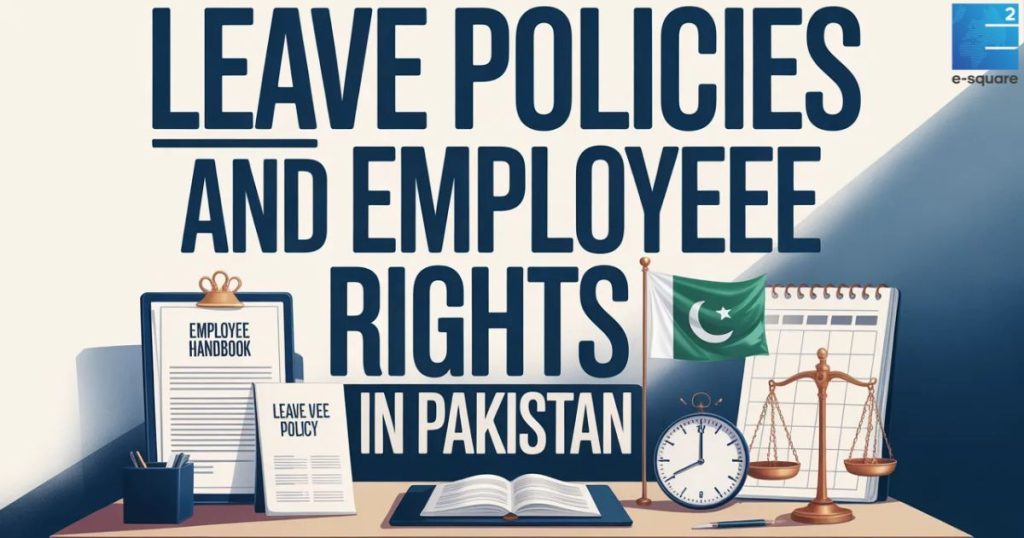
Most leave policies under different statutes and standing orders combine typical leave types (Paid Annual Leave in Pakistan, Casual Leave in Pakistan, Sick Leave in Pakistan, Public Holidays in Pakistan/Festival Leave in Pakistan). Many HR teams create internal employee handbooks that detail leave policies and guidelines for line managers.
As maternity/paternity rights receive increasing focus, employers must monitor maternity leave (typically 12 weeks in Pakistan), evolving standards regarding maternity leave (e.g., 12 – 16 weeks), and emerging standards for paternity leave in Punjab. Additionally, in some sectors, Pilgrimage Leave (Hajj) is considered a cultural practice under leave entitlements under Pakistan labor law?
The core health and safety obligations remain in place and are primarily rooted in the Factories Act 1934 in Pakistan, and are supplemented by provincial legislation and regulations. Clean air, safe equipment/machinery, adequate lighting and medical services form the foundation of occupational safety frameworks for both factories and many commercial establishments.
Regulatory bodies have increasingly strict expectations for high-risk industries. Regulators require evidence of risk assessments, training records and incident reports, particularly where workman’s compensation Act 1923 liabilities may be involved. Where serious accidents occur, inspectors and Labor Courts in Pakistan evaluate whether employers have complied with their reasonable safety obligations under employment and labor laws in Pakistan.
The reason why employers find it difficult to terminate employees lawfully in Pakistan is that they do not follow the termination notice period required by law in Pakistan, due process, or documented reasons for termination. Therefore, employers who fail to comply with these processes run the risk of facing charges of unfair dismissal in Pakistan and also face potential claims for wrongful termination in Pakistan against them at tribunals or courts.
End-of-service payments will be based on either the gratuity formula required in Pakistan, severance pay required in Pakistan, retrenchment formulas in Pakistan, or 30 days’ wages per year severance pay equivalent in Pakistan depending on applicable law or policy. In order to answer the type of question asked such as; How much severance pay should I provide in Pakistan, the employer needs to read the contracts, standing orders and case law to determine what the relevant amount of severance pay is required prior to terminating the employee.
Having an internal grievance mechanism will reduce the likelihood of a grievance proceeding to external labor dispute resolution. Once a grievance does proceed to external dispute resolution mechanisms, the Labor Court in Pakistan and the Industrial Tribunal in Pakistan will govern the procedure of the grievance. The majority of disputes that are submitted to the Labor Court or Industrial Tribunal in Pakistan relate to wages, terminations, trade unions, and whether workers are correctly classified as employees or independent contractors in Pakistan.
Under the Industrial Relations Act 2012, workers and trade unions have collective bargaining rights in Pakistan. Collective bargaining rights in Pakistan are typically facilitated by trade union registration rules in Pakistan. Often formal dispute resolution in Labor Courts in Pakistan and Industrial Tribunals in Pakistan can be lengthy, therefore employers who wish to resolve disputes quickly and efficiently invest in Dispute Resolution in Pakistan through negotiation and documented settlement agreements.
Smart HR departments view compliance as building blocks for their organizations and not merely as paperwork. To begin creating a compliance strategy, most HR departments start by mapping out their requirements for HR documentation across the following six categories:
1. Employment contracts and documentation
2. Minimum wage and payroll compliance
3. Social security and contributions
4. Leave and working hours regulation
5. Termination and dispute resolution
6. Provincial law differences and HR compliance and employer risk
Some of the common errors that employers make are failing to create legally sufficient employment contracts, ignoring the implications of gig worker contract in Pakistan, failing to keep adequate time records and violating the maximum number of hours per week and maximum number of overtime hours per quarter required by the 48 hours per week and 150 overtime hours per quarter concept, and improperly handling wage theft in Pakistan allegations. This Employment and Labor Laws in Pakistan (2026): A Complete Compliance Guide suggests that instead of waiting until they receive a penalty from the Labor Department in Pakistan, employers should perform regular audits.
At e-square Global Partner, compliance is integrated into each phase of workforce management. At e-square Global Partner we help companies to comply with both federal and provincial laws in Pakistan by drafting legally correct employment contracts, registering statutory requirements, and developing HR policies that are consistent with present labor laws. Whether the employer has employees in Karachi, Lahore, or in multiple provinces in Pakistan, our structure ensures that all employees are in compliance with the minimum wage notification, the limitations of working hours, social security requirements, and termination procedures in Pakistan. By utilizing this structured approach, employers will minimize their exposure to labor penalties in Pakistan, inspections in Pakistan, and wrongful termination claims in Pakistan.
As an Employer of Record (EOR) service provider in Pakistan, foreign companies can hire employees in Pakistan without forming a subsidiary or branch office in Pakistan while maintaining full compliance with all applicable employment and labor laws. As the employer of record in Pakistan, we will be responsible for onboarding new hires, documenting employment relationships, registering with the Employees Old-Age Benefits Institution (EOBI), paying social security contributions to the various provinces in Pakistan, and providing statutory benefits. Through our Professional Employer Organization (PEO) services in Pakistan, employers that already have an entity in Pakistan can engage in co-employer relationships for HR administration, labor law compliance management, and employee benefit design.
Our payroll outsourcing services in Pakistan manage tax compliance, payroll processing, payslips, and statutory deductions within a single controlled system. We will manage income tax withholdings, EOBI and social security contributions in addition to maintaining payroll records that are compliant with the laws of the federal and provincial governments of Pakistan. With ongoing compliance monitoring, multi-province payroll management, and risk mitigation strategies, e-square empowers employers to focus on business growth while we manage the compliance with the laws governing the labor environment in Pakistan.
With 67% of the population being below the age of 30 and lower operational costs compared to other countries, Pakistan offers a large workforce that is attractive for international expansion. However, compliance with the Industrial and Commercial Employment Ordinance 1968, provincial wage rules, and social security laws is the cost of entry for serious employers. (Ahmed & Qazi).
Many multinational companies today use a combination of Employer of Record in Pakistan, EOR Services in Pakistan, Payroll Outsourcing in Pakistan and HR Outsourcing in Pakistan to allow foreign employers to hire employees in Pakistan without first having to establish an entity in Pakistan, and to also manage Multi-Province Payroll Management in Pakistan. If you are unsure about What are employer payroll obligations in Pakistan? Or How to Register Employees with EOBI in Pakistan, using specialized Labor Law Compliance Services in Pakistan can convert this complicated chart into a manageable road map.
Core laws include the Factories Act 1934, Industrial Relations Act 2012, Minimum Wages Ordinance 1961, and Employees Old-Age Benefits Act 1976, along with provincial labor regulations after the 18th Amendment.
Employees are entitled to minimum wage, regulated working hours, overtime pay, social security benefits, safe working conditions, and protection against unlawful termination.
Recent updates focus on revised provincial minimum wages, stronger maternity protections, enhanced workplace safety enforcement, and stricter payroll and social security compliance.
The Industrial Relations Act, Minimum Wage laws, and Employees Old-Age Benefits Act are considered foundational for employment contracts, wage compliance, and employee benefits.
The seven pillars typically include recruitment, onboarding, payroll & compensation, performance management, compliance, employee relations, and training & development.

Explore our EOR, payroll and HR services across our key markets. Learn about employment contracts, labor laws and hiring requirements.





Get a free consultation on EOR, payroll and recruitment services tailored to your business needs.