Explore Recruitment Process Outsourcing (RPO) in Pakistan: costs, benefits, hiring models and expert advice for employers in 2026
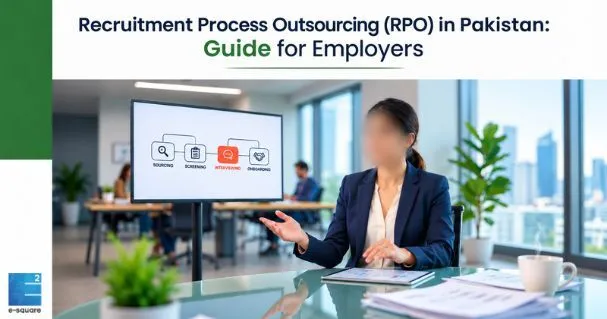
Hiring the right people can make or break a growing business in Pakistan. Yet finding skilled candidates, arranging interviews and filling vacancies often drains valuable time. Recruitment Process Outsourcing in Pakistan offers a smarter way to manage these challenges without expanding your internal hiring team. Through professional RPO services in Pakistan, employers can streamline candidate sourcing and screening, improve hiring decisions and reach talent across different cities.
Whether you're a local startup or an international company entering Pakistan, flexible talent acquisition outsourcing can support your growth plans. This guide explains RPO models, costs, benefits and provider selection while showing how recruitment cost reduction and better hiring processes work in practice.
In pakistan recruitment process outsourcing (RPO), is the delegation of certain aspects of the recruitment process to third-party experts. Companies can now delegate the hiring process to service providers instead of handling it by themselves. The relationship between RPO service providers and human resources departments are close; however, RPO service providers ensure that they maintain the pre-agreed upon quality standards.
RPO service providers, as opposed to general recruitment agencies, specialize in optimizing each step of the recruitment process. This includes workforce forecasting, identification of potential candidates, assessments and reporting of the recruitment process. Good RPO Services enable employers to receive consistent results from hiring processes and maintain total control over decision-making regarding final employment.
Recruitment process outsourcing enables employers to hire specialist recruiters without increasing permanent staffing within their organizations. Service providers create recruitment processes, facilitate hiring activities and track results. As per the Recruitment Process Outsourcing Association, RPO represents transfer of responsibility for managing specified recruitment processes to a third party supplier.
Typical professional RPO Services usually involve job analysis, candidate sourcing, screening, scheduling interviews and assessments, as well as managing offers. Additionally, the service providers may also provide assistance with the verification of candidates' credentials and Onboarding documentation. However, the payment of wages to employees, provision of Employee benefits, and compliance with statutory employment law obligations require separate agreements unless those obligations have been specifically included in the agreement.
For Pakistani companies, RPO provides increased recruitment capabilities at times of growth or staff shortages. Internationally based companies obtain access to the local talent pool and knowledge of the labor market. Nonetheless, simply finding and hiring candidates does not necessarily mean that foreign companies have established lawful employment relationships with them. Those foreign companies must make their own determination of how they will employ any successful candidates.
Effective Recruitment begins with determining which individuals your organization actually requires. A recruiter associated with an RPO provider assesses job descriptions, hiring projections, salary expectations, and workforce requirements. The RPO provider then develops a structured recruitment plan as opposed to simply seeking out random candidates.
Once the plan has received approval from the client, recruiters start searching for and evaluating potential applicants. All stages are performed according to predetermined screening and reporting standards. Due to the consistent candidate sourcing and screening process, hiring managers can reduce their time spent evaluating unsuitable applicant resumes. Ultimately, the employer selects the final candidates.
Each successful recruitment campaign begins with a clearly written hiring brief. Recruiters review job responsibilities, technical competencies required, reporting lines and salary range and desired years of experience. In addition to strong workforce planning and recruitment, future vacancies, Employee turnover rates and whether internal promotions can satisfy organizational needs should also be considered.
Locating qualified applicants requires much more than posting job advertisements. Recruiters research professional networks such as linkedin, job boards and other online platforms, referrals from current employees or professionals within specific industries or sectors, professional associations and/or alumni networks. Recruiter s also reach out to passive candidates who are currently employed but interested in changing jobs.
Talent mapping identifies areas in which there are significant concentrations of relevant skills as well as what types of positions/roles candidates are looking for in terms of compensation etc.
An efficient screening process relies on evidence-based evaluations rather than "resume-only" comparisons. Recruiter s evaluate whether candidates possess the necessary experience related to the position being advertised and conduct relevant skill assessments. How do RPO providers manage the candidate screening and interviewing process? By utilizing consistent evaluation methods (criteria), structured questioning techniques, documented feedback mechanisms and coordinated interview schedules.
After employers have selected candidates, recruiters arrange offers of employment including salaries/comparative salaries, discuss compensation packages with candidates and finalize commencement dates. After candidates have accepted offers, recruiter s perform reference checks (if approved) and verify educational backgrounds (with consent). In addition to facilitating background verification processes, effective Onboarding coordination also verifies completion of necessary paperwork/documentation from new hires relative to their new role/workplace environment and facilitates communication among the new hire's manager(s)/HR department personnel.
Recruitment does not conclude once an individual accepts a job offer. The RPO service providers continuously monitor source data/success rates/interview outcomes/candidate withdrawals/recruitment delays relative to the clients recruitment processes. The various recruitment performance metrics facilitate employers to continually assess/recommend opportunities for improvement in their hiring processes. For example, repeated rejection of employment offers may indicate unrealistically low salary budgets or poor candidate sourcing practices.
Recruitment Process Outsourcing Workflow
Stage | RPO provider's role | Employer's role |
Workforce planning | Review hiring needs and develop recruitment strategy | Approve headcount and budget |
Job analysis | Prepare role profiles and selection criteria | Confirm responsibilities and requirements |
Candidate sourcing | Identify and approach relevant candidates | Approve sourcing priorities |
Screening | Review applications and conduct initial assessments | Review shortlisted candidates |
Interviews | Coordinate interviews and consolidate feedback | Evaluate candidates and make decisions |
Job offers | Assist with offer administration and negotiations | Approve compensation and appointment |
Onboarding | Coordinate joining documentation and schedules | Complete employment and workplace arrangements |
Reporting | Monitor recruitment outcomes and recommend improvements | Review performance and adjust requirements |
While full-service RPO is best suited for long-term recruitment commitments/requirements, many employers only require occasional/limited recruitment support. Therefore, there are different RPO options that allow employers to tailor their recruitment resource utilization to fit their actual hiring needs.
If you understand the available RPO Models you will avoid excessive operational expenditures due to misaligned RPO Models or confusing operational procedures. Full-service RPO fits larger organizations with ongoing recruitment needs as it provides consistent recruitment processes and performance tracking across numerous divisions/departments. Limited-scope Models suit organizations with less frequent recruitment requirements/projects/functions.
The full-scale (End-to-End) RPO model delegates the entire recruitment life cycle to a single service provider. That provider handles everything from developing a formalized recruitment strategy/planning through locating/evaluating/selecting candidates/communicating offers/maintaining records on each candidate's progress throughout the recruitment process/recruitment performance reporting to employers. Many large businesses rely on standardized processes for recurring recruitments/consistent performance measurement across multiple departments/ dedicated recruiters.
When a company has a need to hire employees at short notice as a result of business expansion (for example, if they are about to open up a new production site), it is likely to be best to use a project-based recruitment outsourcing approach. A project will have clear objectives (such as hiring 150 people by month 4) and a timeline, and there will be a designated recruitment team working on the project. Once the recruitment campaign is finished, the team members involved will go back into their normal roles as part of the permanent HR team.
An on-Demand RPO service provides flexible access to recruitment expertise for those times when a business suddenly experiences an unexpected surge in recruitment activity. Businesses using this type of recruitment outsourcing may employ recruiters for several weeks or months at a time and then discontinue the arrangement once their recruitment needs have returned to "normal". This model is often used during peak seasonality, for sudden staff replacements, and/or unforeseen growth in the business.
Selective recruitment outsourcing involves outsourcing only certain aspects of the recruitment process rather than the overall hiring process. For example, a business may decide to outsource only the tasks of sourcing potential job candidates, conducting technical skills assessments, performing background checks, and coordinating interviews. This type of outsourcing would typically make sense where internal recruiters do most things well but are stretched thin in other areas.
A hybrid recruitment outsourcing model blends internal hiring teams with external recruitment professionals. An example could be an organization retaining executive-level recruitment efforts in house while outsourced its front-line hiring needs. Similarly, embedded recruiters can work within the client's current HR systems and support the same brand identity as the employing organization.
What are the different types of RPO services? -- full-service RPO, project-based RPO, on-Demand RPO, selective RPO and hybrid RPO/embedded recruitment teams -- will you select for your business? Each of the five models has distinct characteristics based on volume of jobs available, urgency of hiring needs, specialized recruitment requirements, capacity limitations of the firm's internal HR department(s) and how much control over the hiring process the firm desires.
RPO model | Suitable requirement | Typical contract structure | Main advantage |
Full-service RPO | Continuous organization-wide recruitment | Ongoing service agreement | Comprehensive recruitment coordination |
Project-based RPO | New branches, facilities, or large projects | Fixed-duration engagement | Dedicated hiring capacity |
On-demand RPO | Temporary recruitment surges | Flexible short-term agreement | Rapid access to recruiters |
Selective RPO | Specific recruitment functions | Activity-based agreement | Specialized recruitment expertise |
Hybrid RPO | Shared internal and external recruitment | Customized service arrangement | Balance between control and flexibility |
Regardless of whether your company chooses to pursue recruitment through a recruitment agency, in-house hiring department, or recruitment process outsourcing (RPO) solution; each choice impacts both how much money is spent on the recruitment process and how much control your company will maintain over each stage of the hiring process. Traditionally, agencies focus solely on providing a single applicant per job opening. While firms using an in-house recruiting department directly oversee their own recruiting processes, firms utilizing an RPO provider are responsible for managing their end-to-end recruitment processes (and agreed-upon performance metrics).
While many would argue that traditional recruitment agencies only find qualified individuals to apply for openings identified by clients (and charge clients a placement fee upon successfully placing an individual in that role); RPO providers manage defined recruitment tasks across all job openings identified by clients. Often, these defined tasks may include developing recruitment plans; improving the recruitment process; preparing reports for clients regarding various recruitment-related issues; and collaborating with client hiring managers throughout the recruitment cycle.
There are two major advantages to having in-house recruiters: they know the culture of your organization and can assist with building relationships with potential recruits. There are two significant disadvantages to having an in-house recruitment team: first, you pay their salaries; second, you must purchase recruitment software as well as administer overhead costs associated with them being employed by your organization. When comparing RPO to an in-house recruitment team; the decision comes down to volume of job postings, specialized recruitment needs, organizational capabilities, and costs of supporting your internal recruiters.
Recruitment process outsourcing refers to identifying and evaluating potential employees. Staffing refers to supplying employees under separate employment agreements from your company. Payroll outsourcing includes administering payroll for your employees. Human resource outsourcing includes managing other aspects of employee life cycles such as training, communications, etc... Clearly define what services your selected vendor will provide.
Lowered recruitment expense is contingent upon both the quantity of job postings and the organizational needs of the firm. For instance; a small business that conducts limited hiring may benefit from working with an agency. Conversely; a large business that hires frequently may justify an internal recruitment group or an RPO. Therefore; compare total recruitment expenditures per hire versus total invoice payments received from suppliers instead of simply viewing the invoice payment amounts.
Comparison factor | RPO | Recruitment agency | In-house recruitment |
Main purpose | Manage defined recruitment processes | Fill individual vacancies | Manage company recruitment |
Recruitment planning | Usually included | Often limited | Internally managed |
Candidate sourcing | Continuous or project-based | Vacancy-based | Based on internal capacity |
Hiring decisions | Usually employer-controlled | Usually employer-controlled | Employer-controlled |
Pricing | Retainer, project, resource or per-hire | Usually placement-based | Salaries and operating expenses |
Reporting | Contractually defined recruitment KPIs | Primarily placement reporting | Depends on internal systems |
Scalability | Adjustable through provider agreement | Additional assignments | Requires more internal resources |
Suitable employers | Businesses with recurring or complex hiring | Occasional or specialized vacancies | Employers with stable hiring needs |
Businesses experience lost productivity due to unfilled job openings. These losses do not always surface immediately in the form of increased recruitment budget lines. Existing employees may absorb additional workload responsibilities; and senior management may spend considerable time reviewing resumes of unqualified candidates. A strong professional RPO program helps organizations manage their recruitment processes and alleviate these challenges.
In addition to expediting the hiring process; effective recruitment programs also improve planning; enhance communication with job applicants; and promote consistent quality within the recruitment processes. But like any strategy; using an RPO does not automatically translate to reduced costs or better-quality employees unless properly implemented and measured accordingly.
Shared resources; improved pre-screening of applicants; and decreased repeat hiring can contribute to lower costs related to recruitment. Additionally; measuring advertising costs; Recruiter time; assessment costs and placement fees against successful placements can optimize Cost-per-hire.
Expert recruiters know many people who work in various fields. As such, they are familiar with salary ranges, rare skill sets, and most effective recruitment sources. This is especially true for companies that recruit for experienced engineers, technology experts, financial specialists, etc., or hard-to-recruit technical candidates.
A shorter Time-to-hire is achievable by ensuring clear assignment of responsibility for all recruitment functions. Dedicated recruiters will track candidate progression through the hiring process and communicate with hiring managers. However, if there are too many approval steps involved in the hiring process, it can slow things down. To avoid this delay, you (the employer) need to respond quickly to interviewee comments about compensation options, etc.
How does RPO improve candidate quality and employee retention? Identifying job-related skills using standardized evaluations; providing candidates with realistic job expectations based on job postings; providing professional communications with applicants – these are all key elements of building your organization’s reputation. Management quality, compensation, and workplace environment ultimately determine long term retention rates.
Most organizations experience varying levels of recruitment needs over Time. For example, a retail business may be hiring additional staff during peak season. On the other hand, a manufacturing business may add additional Headcount due to receiving significant orders. Flexibility exists within RPO engagements that enable clients to scale their recruitment efforts without adding full-Time Headcount to their internal hiring departments.
How does RPO improve hiring efficiency? Data and reporting reveal why candidates disappear, which recruitment channel(s) produce the best results, and why some openings stay vacant. Based upon data-driven insights instead of assumptions, managers can utilize evidence to improve their compensation offers, evaluation methodologies, interview scheduling, and overall recruitment strategies.
The Cost of outsourced recruitment (or RPO) is variable. Fees charged by RPO providers depend on several factors including the amount of hiring needed; the type/complexity of positions being recruited for; deadlines associated with the recruitment process; and/or the types of activities that are included. Generally speaking, senior level search assignments require much more resources than recruiting lower level (entry level) Employees.
Prior to making comparisons regarding prices charged by RPO providers in Pakistan, businesses should obtain detailed proposals outlining each provider’s terms and conditions. Commonly, RPO providers charge fixed retainers (i.e. Flat fees), placement fees (based on a percentage of successfully placed candidates), or fee-for-service based on the number of recruiters used. Some providers blend their pricing models.
What are the common RPO pricing models?
Common pricing models utilized by RPO providers in Pakistan include:
project-based pricing (fixed retainers)
placement-based pricing (Cost-per-hire)
* recurring retainer pricing (monthly fees)
* fee-for-service pricing (recruiter-based fees)
* blended pricing models (a combination of above)
According to ADP’s RPO white paper, pricing for RPO services typically reflect both the quantity of recruits hired and the breadth of recruitment activity required by the client; along with the resources (e.g. Recruiters) and timeframe required to complete the recruitment effort.
Cost-per-hire pricing model directly ties fees paid by the client to successful placements made. monthly Retainer pricing model provides ongoing access to recruitment support. Dedicated recruiter pricing model allows for reserved availability of specific recruiters.
Clients experiencing fluctuating levels of vacancy activity may find flexible pricing models beneficial. Clients anticipating ongoing recruitment may find it easier to budget for fixed monthly expenditures.
Complex or highly specialized positions typically involve more extensive candidate searches and longer evaluations. Regional-wide campaigns may present added logistical and resource challenges (travel, coordination, etc.). Background verifications conducted beyond standard checks; recruitment advertising; applicant tracking systems (ats); dedicated recruiters – all represent increased costs. Clearly defined service contracts help mitigate potential unanticipated charges.
When comparing RPO services versus internal recruitment, simply examining recruiter salaries is insufficient. Organizations should also consider job advertising fees; HR software licensing fees; costs associated with administering interviews; assessment costs; and manager Time spent on the recruitment process. Total recruitment expense divided by successful placements represents an optimized measure of Cost-per-hire, rather than simply considering only the fees charged by RPO providers as part of the total Cost.
Below is a sample illustration that demonstrates a hypothetical plan for a company paying PKR 20,000 per successful hire. The chart illustrates the direct costs of employing a single recruiter for varying amounts of hires. These illustrations are meant to serve as examples of hypothetical planning estimates rather than actual costs charged by RPO providers in Pakistan. Other costs incurred by advertisers and assessors will likely increase total budgetary considerations.
Successful hires | Illustrative fee per hire | Total recruitment fee |
10 | PKR 20,000 | PKR 200,000 |
25 | PKR 20,000 | PKR 500,000 |
50 | PKR 20,000 | PKR 1,000,000 |
100 | PKR 20,000 | PKR 2,000,000 |
Additional example: Monthly retainer versus per-hire pricing
Suppose a company needs 50 employees over three months. One provider charges PKR 250,000 monthly while another charges PKR 20,000 per successful hire.
Cost element | Monthly retainer | Per-hire arrangement |
Engagement period | 3 months | Until required hires are completed |
Base fee | PKR 250,000 monthly | PKR 20,000 per hire |
Successful hires assumed | 50 | 50 |
Total recruitment fee | PKR 750,000 | PKR 1,000,000 |
Average fee per hire | PKR 15,000 | PKR 20,000 |
The monthly retainer appears cheaper in this example. However, results change if fewer employees join or recruitment takes longer. Employers should calculate the effective cost per successful hire before selecting either model.
An RPO provider adds value when current hiring practices cannot meet organizational needs. Fast growth; continuous employment opportunities; limited internal staffing capabilities; or lack of skilled personnel are just a few reasons why a business might want to supplement its existing recruitment function(s).
That said, RPO is not always an ideal solution for every organization. Companies with minimal recruiting needs may choose to either conduct all their own recruiting internally or engage an agency to assist with recruiting. Typically an organization benefits more from engaging an RPO provider in Pakistan when they require scalable recruitment processes that consistently deliver measurable hiring performance.
Bulk hiring service Pakistan supports businesses that open new branches, start up new projects, or increase their output. For example, a large national retail company seeking to hire 100 sales representatives would benefit from a coordinated recruitment process and a single assessment method. Likewise, project based recruitment teams can assist in managing this activity across multiple cities.
All industries have different recruitment solutions. Tech companies are primarily concerned with assessing the technical skills of candidates. On the other hand manufacturing companies may be interested in conducting trade tests to ensure that candidates have the physical abilities to perform specific tasks and/or verifying their ability to work shifts as required. Banks generally seek to determine the level of professionalism displayed by candidates as well as their suitability. In health care it is necessary for employers to consider whether a candidate has the necessary education, license, and specialized experience to fulfill the duties of a particular role.
Will Recruitment Process Outsourcing (RPO) be effective for small businesses? Yes. If there is sufficient volume of recruitment demands that justify employing outside help then it could be beneficial for small businesses. As such they may opt to engage with a recruiter to provide some but not all of their recruitment requirements. Larger organizations, on the other hand, typically require dedicated recruitment teams, recruitment technologies and reporting tools. Global/international employers may also require global/hiring coordination across multiple locations.
Yes. The local recruitment experts can source and assess potential candidates on behalf of overseas employers. Nevertheless, providing recruitment support does not necessarily result in obtaining legal employment status for foreign firms. They are still responsible to directly employ staff, use an employer of record (EOR), or another acceptable form of employment arrangement in addition to utilizing recruitment support services.
There may be cases where RPO provides minimal benefits if you are hiring rarely or have few opportunities for which there is a strong need for confidential individual search processes. Organizations that already have competent internal recruitment teams may find that their only need is occasional specialist support. Therefore prior to entering into any long term contract arrangements for RPO Services it is important to analyze the current volume of work expected along with desired outcomes.
Selecting a reliable recruitment provider is based upon doing thorough research. Having impressive candidate databases means nothing if recruiters do not know how to qualify them or complete hiring within designated timelines. Employers must research and evaluate the following; the RPO's industry expertise, the number of recruiters available to conduct searches at one time, communication practices and client outcomes of previous recruits.
A good RPO provider operates like a reliable accountability partner rather than simply being a database of resumes. They should explain how they source candidates, what screening methods they use, their fee structures and expected performance. Good RPO service providers keep accurate documentation and report fairly when difficulties occur during the recruitment process.
How to choose the best RPO provider in Pakistan? First look at their history of completing recruitment assignments in various industries and locations throughout the country. Identify their existing recruitment network capabilities in areas such as Karachi, Lahore, Islamabad and smaller industrial regions.
An applicant tracking system (ATS) assists in organizing job postings, application submissions, interviews and communications with applicants. Some recruitment process automation technology eliminates much of the routine paperwork associated with recruiting. However, employers should assess an RPO's use of systems security, quality of reporting and user friendliness rather than selecting technology simply because it contains advanced features.
Applicants should be verified as having met relevant qualifications as well as assessed relative to clearly defined specifications. Consistency in interviews can be maintained using structured interviews. Technical skill assessments can be used to determine if candidates possess the technical skills needed for each specific job posting. Additionally, employers should verify how an RPO obtains consent to contact candidates' references and access their personal data.
Recruitment contracts should detail deliverables, fees, payment terms, rehire options and reporting requirements. Employers should inquire about whether additional fees apply when rejected candidates decline an offer of employment, withdraw an accepted offer or leave employment prematurely. Clearly stated contracts minimize misunderstandings regarding changes to recruitment objectives.
Asking questions such as "who manages my account?" And "what number of recruiters will work on my recruitment assignment" can clarify the scope of services provided. Confirming who owns candidates after they pass initial screenings, what interview timelines exist and under what circumstances will you replace candidates should also be clarified. Lastly establishing how frequently reports will be generated, how issues will escalate and whose financial burden is it to pay for third party recruitment costs will help create a solid foundation for the relationship between employer and RPO provider.
Regardless of the amount of experience that a reputable RPO provider has working with clients it is essential that they receive clear direction from clients prior to commencing their services. Failure to define job specifications properly along with delays caused by approval processes can greatly impact the success of the recruitment efforts. Success of implementing RPO thus begins with defining roles/responsibilities, determining realistic hiring goals/targets and creating measurable performance standards.
Clients should plan transitions related to RPO implementation formally instead of transitioning all possible recruitment functions immediately. Meeting regularly, maintaining reliable systems and providing timely feedback helps build trust with both parties. Effective workforce planning and recruitment helps ensure that the provider remains focused on meeting the changing business objectives.
Create descriptions outlining each position including salary expectations, skills required, location(s), and deadlines for new hires. Divide positions into two categories - immediate openings vs. Anticipated future openings. Creating detailed forecasts will allow RPO providers to better utilize its recruiters and sourcing resources so that no time is wasted searching for uncertain future positions.
Identify individuals responsible for approving jobs postings, interviewing/screening candidates, making offers and ultimately selecting qualified candidates. Clients should identify decision makers prior to starting the recruitment process. Maintaining regular communication between employer/client and RPO provider will prevent candidates from waiting excessively due to disagreements among decision makers concerning internal responsibilities.
Employers should have their decision makers identified prior to starting the hiring process. Continuous communication will help prevent candidates from having to wait too long for responses from management as they determine which department(s) are accountable.
What recruitment KPI’s should employers be tracking? The following provide useful measurements for recruitment success; Time to fill, Cost per hire, Interview conversions, Offer acceptances, Early Employee Retention. Each KPI should be defined within a Service Level Agreement. Measuring consistently will eliminate disputes over performance and highlight areas where you need to make changes.
The first 30 days of RPO implementation should be spent reviewing employer requirements and establishing a workflow. During the second month of RPO implementation, focus on actively sourcing qualified candidates through interviews and initiate performance reporting. On the 90th day of RPO implementation, evaluate the recruitment process based upon the completion of hires, total recruitment costs, feedback from candidates, and potential areas of improvement.
Implementation phase | Main activities | Expected output |
Days 1–30 | Review hiring requirements, appoint contacts, configure systems | Approved recruitment strategy |
Days 31–60 | Launch recruitment campaigns, conduct screening and interviews | Qualified candidate pipeline |
Days 61–90 | Complete hiring, review results, improve workflows | Performance report and next-stage plan |
Comparing recruitment spending to real-world results will allow employers to see what value their recruitment efforts are producing. Recruitment performance metrics that employers should track include successful hires, sourcing efficiencies, hiring manager satisfaction, and retention. As SHRM stated in its 2026 recruiting research, hiring performance remains a significant challenge for many organizations.
Recruitment Performance Measurement Table
KPI | Calculation or measurement | Business purpose |
Cost-per-hire | Total internal and external recruitment costs ÷ successful hires | Evaluate recruitment expenditure |
Time-to-fill | Calendar days from opening a requisition to offer acceptance | Measure recruitment speed |
Offer acceptance rate | Accepted offers ÷ total offers × 100 | Assess candidate engagement |
Interview-to-offer ratio | Candidates interviewed ÷ offers issued | Assess screening efficiency |
Candidate withdrawal rate | Withdrawn candidates ÷ candidates in the measured stage × 100 | Identify process problems |
Early retention rate | New hires remaining after a defined period ÷ hires in the cohort × 100 | Evaluate hiring sustainability |
Hiring manager satisfaction | Standardized feedback after recruitment | Assess recruitment service quality |
Practical example: An employer invests PKR 900,000 in the recruitment of 30 new employees. At this rate, the employer has a cost per hire equal to PKR 30,000. After implementing improvements to reduce overall expenditures to PKR 750,000 for the same quantity of new hires, the employer now has a cost per hire of PKR 25,000. In addition to cost reductions, employers should consider both candidate quality and retention when determining if there were any actual savings.
When employers do not provide RPO providers with sufficient information to assist them in resolving issues, it can lead to the failure of recruitment outsourcing. Unspecific job descriptions, delayed interview feedback, unreasonably low salaries budgets, and ambiguous roles/responsibilities all contribute to unnecessary resistance by creating avoidable friction. Not even experienced recruiters can replace poor decision-making by hiring managers.
In addition to concerns surrounding technology and maintaining candidate confidentiality, employers should ensure that their RPO providers implement proper safety protocols to protect candidate confidential information, as well as utilize unbiased evaluation processes. Employment law in Pakistan may also apply to RPO compliance and may require consideration of applicable employment regulations, permissible verifications, duty of confidentiality, and compliance with pertinent data protection laws.
Poorly written job descriptions result in inconsistency in candidate short lists. Employers should differentiate required skills from desired skills/qualifications and describe realistic working conditions. Clearly defining expectations through a comprehensive hiring brief will enable more effective screening as well as fewer unnecessary interviews.
Low fees alone do not guarantee greater value. Weak candidate screening could add interview-related workload and additional replacement hire costs. Prioritize comparisons of recruitment quality, reporting capabilities, service level flexibility, and contractual obligations prior to engaging an RPO vendor.
It is rare that strong candidates remain available indefinitely. Scheduling delays and lack of clarity regarding interview feedback increase the likelihood of losing attractive candidates. Employers should develop a schedule for interviews and decision deadlines as well as establish specific screening parameters at the onset of the recruitment process.
Candidate files maintained by employers often contain candidate identification information, employment history information, contact information, and sometimes sensitive personal identifiable information. Employers should limit access to these documents and/or data and secure consent necessary to conduct permitted activities. Pakistan still continues to evolve its privacy framework, therefore employers are especially encouraged to incorporate responsible contractual provisions that promote compliant uses. Refer to DLA Piper's Pakistan Overview.
How does AI improve Recruitment Process Outsourcing? Yes, AI-based recruitment tools can provide assistance with organizing resumes/cv's and identifying candidate matches, scheduling interviews and generating recruitment reports. While AI-based automation can facilitate the screening process, automated decisions can omit contextual understanding or perpetuate screening bias. Therefore, human evaluators should validate AI-generated evaluations and monitor/research unusual rejection patterns.
While counting submitted cv's provides limited insight into the effectiveness of a recruitment effort, employers should track metrics such as completed hires/candidates selected, candidate fit/suitability, recruitment speed/timeliness, and post-hire retention. Tracking performance regularly will provide evidence as to whether an RPO provider actually improved/hit desired hiring outcomes.
Recruitment is much simpler when an employer works with a firm that understands how to meet local hiring demands. At e-Square Global Partners, we provide recruitment, man power outsourcing, payroll, and Human Resources outsourcing services for those working in both the domestic market of Pakistan and internationally.
At e-square we have helped numerous organizations find specialized recruitment and workforce solutions. Our service offerings connect the hiring needs of clients with the administrative aspects of employment when necessary. Thus providing our clients with the ability to hire and manage their workforce from one experienced local provider.
We provide full cycle recruitment support by conducting candidate sourcing, candidate screening, assessing candidates and coordinating the hiring process. Clients may require on-going recruitment support for similar types of positions or we can assist clients with single position or project based assignments.
The type of recruitment support we provide will be determined by the type of agreement made between us and our client.
Many organizations expand globally and need to hire at various levels (professional, technical, management, etc.). We can support your bulk hiring and executive search needs to attract the best and brightest professionals. In addition, we can customize our recruitment strategy to fit your hiring volume and job complexities.
Evaluating potential employees prior to making a hiring decision can significantly reduce the number of poor hires. As part of our recruitment support, we can conduct initial screenings, coordinate interviews and create all required documents as per your assigned requirements. Ultimately, you retain complete control of the candidate selection and terms of employment.
Companies that recruit nationally in Pakistan typically face challenges managing these dispersed hiring efforts. e-square provides national recruitment and man power outsourcing services which can support your distributed workforce hiring requirements. Depending on the type of service model you elect to utilize with us, we can either support your recruitment needs or provide ongoing outsourced employment administration.
Often times, recruitment is just one aspect of a company’s overall workforce administration. e-square also provides payroll and HR outsourcing services for companies looking to obtain integrated support. For example, if you would like to discuss your recruitment needs along with other employment administration needs (i.e., payroll processing), please contact us at e-square Global Partners.
Recruitment Process Outsourcing (RPO) is a hiring solution where a company assigns some or all recruitment activities to an external specialist. It helps businesses find qualified candidates, reduce hiring delays, and manage recruitment more efficiently.
The seven stages are workforce planning, job advertising, candidate sourcing, applicant screening, interviews and assessments, candidate selection, job offers and employee onboarding. Together, they create a structured hiring process.
Traditional recruitment agencies generally focus on filling individual vacancies. RPO providers manage broader recruitment processes, including workforce planning, candidate sourcing, screening, reporting, and long-term hiring improvements.
RPO typically includes recruitment planning, candidate sourcing, screening, assessments, interview coordination, offer management, and onboarding support. Some providers also offer background verification, recruitment analytics, and employer branding services.
Yes. Startups and small businesses can use on-demand or project-based RPO to access professional recruiters without maintaining large internal HR teams. This provides flexible recruitment support as hiring requirements change.
RPO pricing depends on hiring volume, job complexity, and service requirements. Providers typically charge per successful hire, a monthly retainer, a fixed project fee, or dedicated recruiter charges. There is no standard nationwide rate.
RPO focuses on finding and recruiting employees, while an EOR legally employs workers on a client's behalf and administers employment obligations. Payroll services primarily manage salary calculations, deductions, payments, and related reporting.

Explore our EOR, payroll and HR services across our key markets. Learn about employment contracts, labor laws and hiring requirements.




Get a free consultation on EOR, payroll and recruitment services tailored to your business needs.