EOBI & Social Security in Pakistan: Employer Contributions, Compliance & Payroll Guide (2026) Payroll in Pakistan encompasses much more than simply paying employees—payroll management includes all aspects of statutory benefits, ensuring that an employer has all required information or documentation and compliance with ever-changing laws and regulations. By 2026, organizations will be required to have […]
Payroll in Pakistan encompasses much more than simply paying employees—payroll management includes all aspects of statutory benefits, ensuring that an employer has all required information or documentation and compliance with ever-changing laws and regulations. By 2026, organizations will be required to have their respective payroll processes meet federal as well as provincial requirements; i.e., meeting EOBI Pakistan requirements (retirement pension), social security Pakistan requirements (healthcare) and general payroll compliance requirements Pakistan.
These entities are designed to protect employees financially by providing retirement pensions, health insurance and other work-related benefits. To employers, it is imperative to integrate these statutory contribution Pakistan into a formalized payroll management system in order to avoid fines, loss of employee confidence and/or damage to their reputation. An effective payroll operation not only provides an organization’s compliance with all applicable laws and regulations, but it also helps improve the overall effectiveness of business operations while enhancing long-term employee satisfaction.
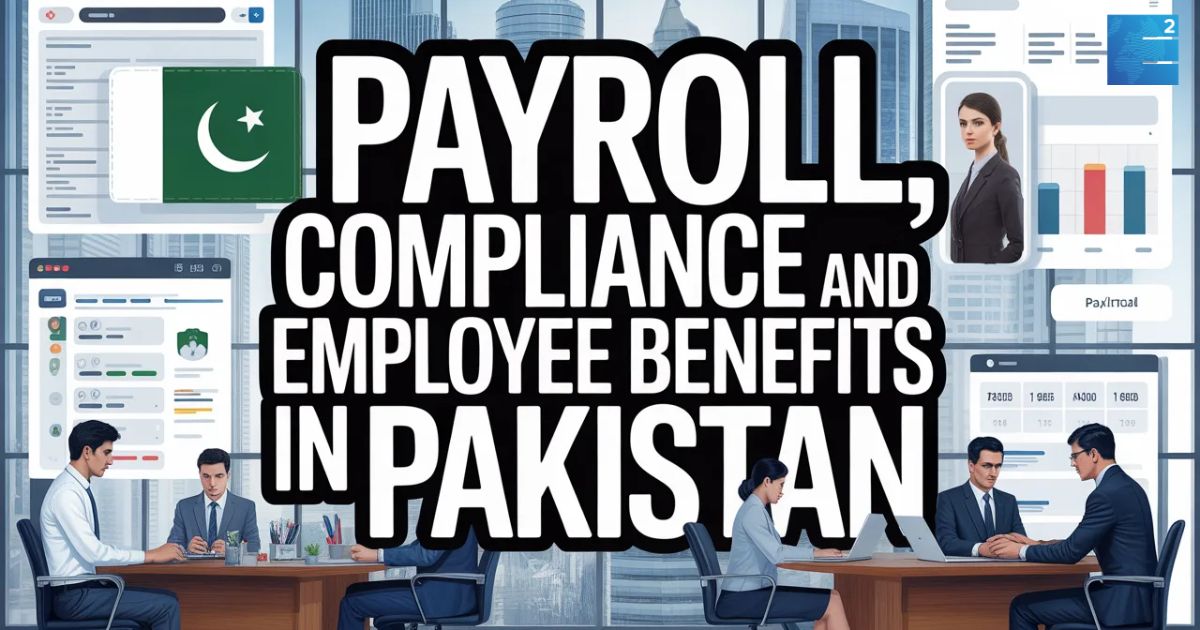
In a single, integrated payroll-compliance system in Pakistan, employers have access to all elements of their employees’ payrolls including payroll taxes withheld, employee benefits and record keeping. To keep their payroll compliance up-to-date in Pakistan, employers must track and maintain accurate data about employment status, and contributions and wages paid for every employee. Therefore, a modern HR-Payroll System is important today; this system integrates attendance tracking, deductions, benefits and filing requirements.
👉Learn how our payroll experts can simplify your payroll and statutory compliance in Pakistan
Protecting the interests of an employer goes far beyond financial considerations. For example, having compliant records helps protect the employer from potential lawsuits and regulatory scrutiny regarding compliance issues associated with employees. If an employer has poor quality or missing payroll contribution records, they may experience arrearages, late-payment exposure to the government, and excessive conflict with their employees as those employees are entitled to lawful coverage and timely salary support.
As a result of these concerns, employers require systems that will accurately calculate contributions owed to EOBI and social-security agencies; manage payments to EOBI and create documentation that proves payment was made. Also, by maintaining strong records, employers can produce compliance reports for payroll purposes to demonstrate accountability for audits, internal reviews and year-end governance over payroll.
Pakistan’s framework of regulations controlling payroll and benefits is split between two levels of authority: federal and provincial. EOBI is the federal body responsible for administering the old age benefit portion of the federal system for eligible workers and employers. Provincial authorities such as SESSI Sindh, PESSI Punjab etc., are responsible for administering provincial based social security coverage to eligible workers and employers. Because of this duality of authority, employers must address both layers simultaneously. An employer could be complying with federal level requirements but failing to comply with provincial level requirements. One reason employer obligations in Pakistan are broader than just paying salary to employees is that employer obligations are part of a larger set of workforce protections.
EOBI stands for Employees’ Old Age Benefit Institute. It is the federally mandated old age benefit system for covered employees and employers. The purpose of EOBI is to provide protected income benefits through the EOBI pension plan to covered employees and their dependents. For employers that fall within EOBI’s mandate, participation in EOBI is mandatory. Therefore, understanding the operation of EOBI prior to establishing a compliant payroll is essential.
👉 Get expert assistance with EOBI registration, contributions, and ongoing compliance
EOBI operates through the following steps:
Employer Registration
Employee Enrollment
Monthly Contributions
Later Benefit Claims
According to Wage Indicator, as per current legal framework, employers are required to deposit employer and employee portions of contribution before 15th of next month through specified banking channels. Therefore, employers must register their employees with EOBI; maintain employee join/exit records; submit EOBI contributions online or through other authorized processes. Accurate management of these processes minimizes disputes when employees request verification of service history or pension entitlements.
Eligible employers and/or employees must satisfy specific criteria. Specifically, employers should determine if they are subject to the EOBI framework and whether their employees qualify for enrollment and contributory coverage. Many non-compliant situations occur due to incorrect assumptions rather than a lack of information. Employers that fail to enroll new hires or casual employees into the EOBI program or delay enrollment until there is enforcement activity risk converting a routine administrative obligation into a retroactive compliance issue.
Wage Indicator provides details on current employer contribution rates (currently 5%) and employee contribution rates (currently 1%), both of which apply to the minimum wage rate. Additionally, Wage Indicator describes the federal collection mechanism based on minimum wage treatment. This requires employers to correctly categorize each employee and make consistent calculations for monthly EOBI contributions using their payroll data.
Automating the calculation of EOBI monthly contributions can reduce errors caused by manual processing. Employers that implement payroll automation solutions with effective validation controls can better automate payroll compliance without experiencing significant variations in manual data entry.
| Contribution area | Commonly cited current structure |
| ——————- | ——————————— |
| EOBI employer share | 5% of minimum wage |
| EOBI employee share | 1% of minimum wage |
| Payment rhythm | Monthly, with due-date discipline |
The obvious function of EOBI is not deducting funds from employees. Rather, its purpose is providing protection through the provision of income replacement benefits upon retirement; however, it also offers survivor and disability benefits to eligible covered workers who meet specified conditions.
So, when employers consider EOBI benefits for Pakistan, they have to think about the long term, not just the monthly payroll. HR Teams have to help them understand the value of EOBI pension eligibility at an early stage so they do not treat EOBI as an unknown deduction.
Social security in the context of Pakistan employment is different then EOBI. EOBI provides the old age protection. The Provincial social security systems provide the health care, sickness, maternity, employment injuries and related cash or medical support for the covered workers and their families.
The difference in payroll design has implications. Employers will assume that there is one contribution for all of the above. There is not. Social Security Pakistan is operated through the Provincial institutions. The test for compliance is usually Province specific. This is why payroll should determine which benefits apply based on location not solely on job title.
Punjab and Sindh demonstrate the Provincial Model clearly. PESSI Pakistan states that the Provincial Employees’ Social Security Ordinance requires employers to make contributions for eligible employees. SESSI Sindh establishes a contribution and benefit platform tied to Provincial wage coverage and services for employees.
As such, for multi-city employers, location will impact compliance. For example, a Karachi payroll stream may require one Institutional Process; however, a Lahore payroll stream will likely require another. Therefore, Provincial Social Security Institutions must be designed into the payroll governance from Day One, particularly for large or distributed teams.
SESSI indicates that the current social security contribution rate is 6% of the salary/wages of the protected worker, capable up to the stipulated maximum amount as defined by the applicable minimum wage structure. PESSI’s overview describes the required 6% employer contribution under the governing ordinance.
Therefore, the practical concern is not whether a contribution exists. Rather, it is whether employers apply the appropriate base (i.e., salary), the correct covered employee, and the proper Institution. These represent key aspects of social security employer contribution oversight and are among some of the most common weaknesses within Pakistani Payroll Administration.
| Institution | Commonly cited contribution approach |
| ———– | ————————————————– |
| SESSI | 6% of coverable wages up to stated limit |
| PESSI | 6% employer contribution under ordinance framework |
Provincial social security offers multiple lines of benefit. SESSI publicly lists sickness benefits, survivor linked support, etc. Other welfare linked medical or cash benefits. As such, the system represents a genuine worker protection mechanism, rather than merely a line item in payroll deductions.
To the worker these represent Employee Health Benefits in Pakistan, Workplace Medical Benefits, etc. To the Employer these represent formal Employee Welfare Programs in Pakistan that promote employee retention and mitigate potential insecurities inherent in informal employment.
Before attempting to design attractive extras, a lawful payroll must establish mandatory benefits. At minimum, covered employers may need to account for EOBI, Provincial social security, and/or other legally/policy mandated entitlements. These represent the foundational elements of both Employee Benefits in Pakistan and broader Mandatory Employee Benefits Design.
This is how many organizations become lost. They offer allowances but disregard mandatory obligations. This is backwards thinking. Designing first for compliance creates a solid foundation for Retirement Benefits in Pakistan, Disability Compensation in Pakistan, and Survivor Benefits in Pakistan as created by statute or plan.
In practice, minimum wage laws/benefits are interrelated. Calculations used by EOBI and social security schemes commonly reference wage practices/treatment/coverage limits/logic tied to minimum wages. As such, poor design in salary structures will similarly result in poorly calculated contributions without anyone realizing it initially.
As such, payroll cannot operate separately from wages. Salary design governs deductions, benefits and records collectively. Many organizations utilizing inadequate Payroll Processing Systems fail to recognize this relationship and subsequently realize that their calculation of benefits does not correspond with their declaration of payroll.
Data regarding work hours impacts payroll. If attendance, overtime and leave balances are not maintained correctly salaries and contributions become unreliable. In short, benefits compliance does not exist independent of payroll; it starts with accurate time entries and compliant treatment of employee absences and paid entitlements.
Manual systems tend to weaken here. Manual systems rarely maintain relationships between leave records and payroll impacts. More robust HR Payroll System can assist in maintaining more accurate employee benefits record tracking and pay related absences thereby reducing potential disputes relating to time, money and coverage.
Pakistan has three types of end-of-employment compensation arrangements; these include gratuity, provident fund style and EOBI pension rights. The type of arrangement will depend on the nature of the establishment and the relevant policies and legislation. Gratuity and provident funds act as alternate minimum protections rather than as an employee’s entitlement to Benefits as a result of their length of service.
As such, employers need to plan for their employees’ exit from employment much earlier than they would need to if the employee resigned. Exit planning needs to be included in the architecture of payroll and should ideally not be treated by employers in a casual manner. Casual treatment of payroll for pensions, gratuities and service records typically results in greater liabilities down the line. This is particularly true when there is a dispute about employment duration and contribution history.
After ensuring that statutory mandatory provisions are met, employers can use additional non-mandatory Benefits to attract employees and retain talent. Examples of such non-statutory Benefits include health insurance top ups, transportation costs, meal support, and education linked family support. Such fringe Benefits have been shown to significantly enhance Retention in highly competitive industries.
In addition to enhancing Retention, non-statutory Benefits work best when used to supplement statutory coverage rather than replace it. For example, a good package begins with a solid foundation of compliant payroll practices and then includes practical Benefits that add value to the employee. When statutory compliance and practical value are combined into one compensation model, employee perceptions of the value of Benefits will increase.
While payroll and Benefits do not occur in isolation from other forms of regulation, they occur as part of broader labor law compliance Pakistan, employer legal obligations Pakistan, and workforce protection laws that govern aspects of employment including contract formation, wage payment timing, records management and termination. Where payroll does not comply with labor laws, the consequences of that failure compound rapidly.
Given this reason alone, HR and payroll should not operate in two separate silos. What might begin as a payroll problem could ultimately evolve into an employment dispute. Typically, companies that synchronize their payroll systems with their attendance, contract and termination procedures experience fewer difficulties in responding to regulatory inquiries.
Employee compensation impacts far more than just the employee’s net earnings. It impacts taxable income, employee contributions, and the total cost of headcount to the employer. As such, designing payroll processes needs to account for all elements of employee compensation including tax implications, benefit considerations and compliance requirements. Specifically, the interplay between formal salary structures and statutory mandates requires consideration prior to commencing hiring activities.
Poorly designed compensation plans can lead to distorted budgets. On paper, salaries may appear reasonable; however, the actual employment costs to employers increase dramatically upon accounting for statutory obligations, compliance expenditures and record maintenance. Therefore, good payroll organizations consider all variables associated with employee compensation early in the decision-making process as opposed to finding them out after the fact.
Some common payroll compliance problems encountered by employers in Pakistan are often quite routine. These include delayed registration with authorities responsible for collecting taxes and other levies. Incorrect determination of the contribution base. Failure to maintain accurate records regarding employee status. Poor reconciliation processes. Lack of coordination between HR and finance departments. These represent some of the primary causes of payroll errors in Pakistan, compliance challenges faced by payroll managers, and manual payroll errors that subsequently become larger regulatory concerns.
These common errors also create miscalculations related to payroll and broader HR compliance issues for employers. While the response to these errors is not necessarily panic; it is structured approaches. Employers who implement regular validation controls, discipline related to maintaining employee service histories and automated payroll processes generally achieve the greatest Benefits from automating payroll over time.
The employer of record (EOR) model can provide employers seeking to employ people in Pakistan with relief from many compliance-related burdens while avoiding the expense of developing internal capabilities necessary to develop all local functions. Through this model, the EOR assumes responsibility for providing compliant payroll services, managing statutory obligations, keeping track of all employees’ personnel files and managing relationships with government agencies.
The EOR model provides particular advantages to employers based outside of Pakistan that wish to initiate operations in the country quickly with minimal upfront capital investment. In general terms, using an employer of record in Pakistan enables clients to better manage eobi and social security; collect accurate employee information and minimize uncertainty related to compliance issues while entering new markets or expanding operations domestically.
👉 Explore our Employer of Record (EOR) services for hassle-free hiring in Pakistan
When creating a comprehensive employee benefit package, begin with the legal base, not with “perks”. Create a map of all EOBI, provincial social security, record requirements and payroll flow first. Once you have established a stable statutory basis for your organization’s benefit offerings then add optional Benefits on top. Establishing this order ensures that you are establishing a lawful benefit package which is simpler to administer going forward.
Secondly, keep it simple. Employees will struggle to understand a benefit package that is overly complex. If the benefit design is too confusing for employees, they will likely find ways to misinterpret its value, potentially leading to grievances. Good benefit design establishes clear communication between employees and the organization relating to what is statutorily mandated; what is voluntary; and how all Benefits are reflected in payroll; records; and claims support. Clarity leads to reduced disputes down the road.
Outsourcing is not merely a method for avoiding responsibilities as a business owner; it is frequently a superior method of executing those duties. Specialized outsourcing vendors offer their clients process discipline; system controls and knowledge specific to regional jurisdictions which many small businesses lack internally when they attempt to fulfill multiple obligations simultaneously via their own internal resources.
The reason many organizations today will put their Service Support functions in conjunction with Technology (IT) is because they need to be able to offer more than just “better” Payroll Software, HR Software or Cloud Based Payroll Systems etc. The most capable vendors have all three of these features built-in to their offerings so as to assist the organization to minimize the amount of manual errors made during both report and contribution processing. Also, by using this type of solution; they will be able to make reporting and contribution processing more consistent.
If you would like to simply your process for payroll and benefit administration in Pakistan then E-Square can assist in unifying the various components of an operation. That means that we can provide assistance with regard to payroll coordination, employee on-boarding input, contribution management services, compliance-focused documentation, and practical direction throughout the entire hire/payroll/benefit administrative process.
In addition to supporting the operation of compliant payroll processes for domestic employers operating in Pakistan; E-Square also supports the operation of compliant payroll processes for international employers entering into the Pakistani marketplace via structured payroll processing and managed support models. As such, our services enable clients to operate payroll with greater certainty while managing their respective Employee Old Age Benefits Institute (EOBI), Social Security, and other employee compliance requirements with greater precision.
👉 Partner with e-square Global Partners for reliable payroll, HR, and compliance solutions
EOBI and social security are not side issues in Pakistan payroll. They are central pillars of lawful employment. Employers who understand the split between federal old-age protection and provincial social security can build cleaner payroll systems, stronger records, and better employee trust. The smartest approach is simple: register correctly, contribute on time, document everything, and design payroll around compliance from the start.
👉 Ready to simplify payroll compliance? Contact our experts
EOBI payroll refers to the process of calculating, deducting, and submitting contributions to the Employees’ Old-Age Benefits Institution. It ensures employees receive pension and related benefits after retirement or in case of disability or death.
The employer contributes 5% of the minimum wage for each eligible employee. This amount must be paid monthly as part of statutory payroll compliance in Pakistan.
EOBI contribution is calculated based on the minimum wage, not actual salary. Employers pay 5% and employees contribute 1%, which is deducted from the employee’s monthly salary.
Employers must submit EOBI contributions monthly through designated banks or approved payment channels. Timely payment and proper documentation are required to remain compliant.
The monthly EOBI charge includes 5% employer share + 1% employee share of the minimum wage. The exact amount depends on the current minimum wage set by the government.

Explore our EOR, payroll and HR services across our key markets. Learn about employment contracts, labor laws and hiring requirements.




Get a free consultation on EOR, payroll and recruitment services tailored to your business needs.